The screw pitch is a critical parameter in the design and operation of a screw press thickener. As a supplier of Screw Press Thickener, I have witnessed firsthand how the screw pitch can significantly impact the performance and efficiency of these machines. In this blog post, I will delve into the relationship between screw pitch and the operation of a screw press thickener, exploring its effects on throughput, dewatering efficiency, and overall process performance.
Understanding Screw Press Thickeners
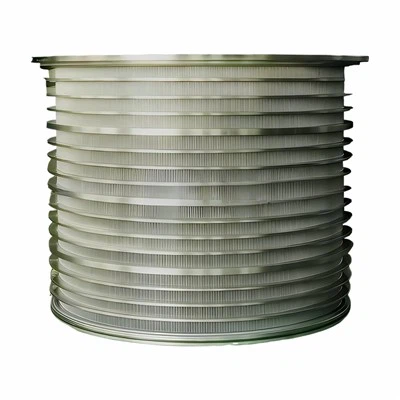
Before we discuss the influence of screw pitch, let's briefly review the basic principles of a screw press thickener. A screw press thickener is a mechanical device used to separate solids from liquids in a slurry or suspension. It consists of a rotating screw inside a cylindrical housing, which conveys the material along the length of the press while applying pressure to squeeze out the liquid. The liquid is then drained through a screen or perforated plate, leaving behind a thickened solid cake.
Screw press thickeners are widely used in various industries, including pulp and paper, wastewater treatment, food processing, and mining. They offer several advantages over other dewatering methods, such as high throughput, low energy consumption, and compact design. However, the performance of a screw press thickener depends on several factors, including the design of the screw, the properties of the material being processed, and the operating conditions.

The Role of Screw Pitch
The screw pitch refers to the distance between adjacent threads on the screw. It is an important design parameter that determines the volume of material that can be conveyed per revolution of the screw and the rate at which the material is compressed along the length of the press. A larger screw pitch allows for a greater volume of material to be conveyed, resulting in higher throughput. However, it also reduces the compression ratio and may lead to lower dewatering efficiency. On the other hand, a smaller screw pitch increases the compression ratio and improves dewatering efficiency but reduces the throughput.
Throughput
The throughput of a screw press thickener is defined as the amount of material that can be processed per unit of time. It is directly proportional to the screw pitch and the rotational speed of the screw. A larger screw pitch allows for a greater volume of material to be conveyed per revolution of the screw, resulting in higher throughput. However, increasing the screw pitch beyond a certain point may lead to a decrease in the compression ratio and a reduction in the dewatering efficiency. Therefore, it is important to optimize the screw pitch to achieve the desired balance between throughput and dewatering efficiency.
Dewatering Efficiency
The dewatering efficiency of a screw press thickener is defined as the percentage of liquid removed from the material being processed. It is influenced by several factors, including the screw pitch, the compression ratio, the screen opening size, and the properties of the material. A smaller screw pitch increases the compression ratio and improves the dewatering efficiency by applying more pressure to the material. However, it also reduces the throughput and may increase the power consumption. Therefore, it is important to select the appropriate screw pitch based on the specific requirements of the application.

Process Performance
The overall process performance of a screw press thickener is determined by the combination of throughput and dewatering efficiency. A well-designed screw press thickener should be able to achieve high throughput while maintaining a high level of dewatering efficiency. The screw pitch plays a crucial role in achieving this balance by controlling the volume of material conveyed and the compression ratio. By optimizing the screw pitch, it is possible to improve the process performance and reduce the operating costs of the screw press thickener.
Factors Affecting Screw Pitch Selection
The selection of the appropriate screw pitch for a screw press thickener depends on several factors, including the properties of the material being processed, the desired throughput and dewatering efficiency, and the operating conditions. Here are some of the key factors to consider:
Material Properties
The properties of the material being processed, such as its viscosity, particle size, and solids content, can have a significant impact on the selection of the screw pitch. For materials with high viscosity or large particle size, a larger screw pitch may be required to ensure proper conveyance and prevent clogging. On the other hand, for materials with low viscosity or small particle size, a smaller screw pitch may be more suitable to achieve higher dewatering efficiency.
Throughput Requirements
The desired throughput of the screw press thickener is another important factor to consider when selecting the screw pitch. If high throughput is required, a larger screw pitch may be necessary to increase the volume of material conveyed per revolution of the screw. However, it is important to ensure that the dewatering efficiency is not compromised by increasing the screw pitch beyond a certain point.
Dewatering Efficiency Requirements
The desired dewatering efficiency of the screw press thickener is also a critical factor in the selection of the screw pitch. If high dewatering efficiency is required, a smaller screw pitch may be necessary to increase the compression ratio and apply more pressure to the material. However, it is important to balance the dewatering efficiency with the throughput requirements to ensure that the process is economically viable.
Operating Conditions
The operating conditions of the screw press thickener, such as the rotational speed of the screw, the feed rate of the material, and the temperature and pressure of the process, can also affect the selection of the screw pitch. For example, a higher rotational speed may require a smaller screw pitch to maintain proper conveyance and prevent slippage. Similarly, a higher feed rate may require a larger screw pitch to accommodate the increased volume of material.
Case Studies
To illustrate the influence of screw pitch on the operation of a screw press thickener, let's consider two case studies from different industries.
Pulp and Paper Industry
In the pulp and paper industry, screw press thickeners are commonly used to dewater pulp before it is sent to the paper machine. In one case study, a paper mill was experiencing low throughput and poor dewatering efficiency with their existing screw press thickener. After analyzing the process, it was determined that the screw pitch was too large for the pulp being processed. The screw pitch was reduced, and the compression ratio was increased, resulting in a significant improvement in the dewatering efficiency and an increase in the throughput.
Wastewater Treatment Industry
In the wastewater treatment industry, screw press thickeners are used to dewater sludge before it is disposed of or further processed. In another case study, a wastewater treatment plant was struggling to meet their sludge disposal requirements due to the high moisture content of the sludge. After evaluating different options, it was decided to install a new screw press thickener with a smaller screw pitch. The new screw press thickener was able to achieve a higher dewatering efficiency, reducing the moisture content of the sludge and meeting the disposal requirements.

Conclusion
In conclusion, the screw pitch is a critical parameter in the design and operation of a screw press thickener. It has a significant impact on the throughput, dewatering efficiency, and overall process performance of the machine. By understanding the relationship between screw pitch and the operation of a screw press thickener, it is possible to optimize the design and operation of these machines to achieve the desired balance between throughput and dewatering efficiency.
As a supplier of Screw Press Thickener, we have the expertise and experience to help you select the appropriate screw pitch for your specific application. Our team of engineers can work with you to analyze your process requirements, evaluate different options, and recommend the best solution for your needs. If you are interested in learning more about our screw press thickeners or other High-speed Washer products, please contact us to discuss your requirements and explore the possibilities. We look forward to working with you to improve the efficiency and performance of your process.

References
- Perry, R. H., & Green, D. W. (Eds.). (2008). Perry's Chemical Engineers' Handbook. McGraw-Hill.
- Svarovsky, L. (1990). Solid-Liquid Separation. Butterworth-Heinemann.
- Tiller, F. M. (1996). Dewatering of Sludges. CRC Press.