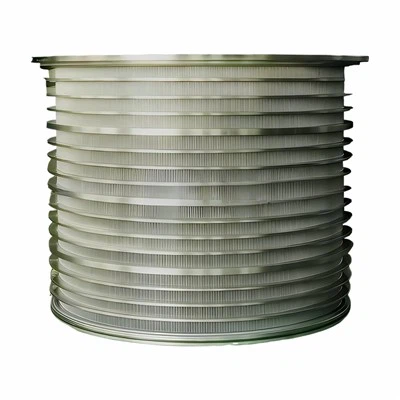
Selecting the appropriate screen aperture for a screw press thickener is a critical decision that significantly impacts the efficiency and performance of the equipment. As a supplier of Screw Press Thickener, I have witnessed firsthand the importance of this choice in various industrial applications. In this blog, I will share some insights and guidelines on how to make the right selection.
Understanding the Role of Screen Aperture in Screw Press Thickener
The screen aperture in a screw press thickener plays a crucial role in the separation process. It determines the size of the particles that can pass through the screen while retaining the solids to be thickened. A proper screen aperture ensures efficient dewatering, maximizes the solids recovery, and prevents the clogging of the screen.
Factors Influencing Screen Aperture Selection
1. Particle Size Distribution of the Feed Material
The particle size distribution of the feed material is one of the most important factors to consider when selecting the screen aperture. If the feed contains a wide range of particle sizes, a larger screen aperture may be required to prevent clogging. However, if the goal is to recover fine particles, a smaller screen aperture may be necessary. For example, in the pulp and paper industry, the particle size of pulp fibers can vary significantly. If the pulp contains a high proportion of fine fibers, a smaller screen aperture will be needed to ensure good retention of these fibers.
2. Desired Solids Concentration
The desired solids concentration in the thickened product also affects the screen aperture selection. A smaller screen aperture generally allows for a higher solids concentration in the thickened product, as more fine particles are retained. However, this may also lead to a lower throughput and increased risk of screen clogging. On the other hand, a larger screen aperture may result in a lower solids concentration but a higher throughput. Therefore, a balance needs to be struck between the desired solids concentration and the throughput requirements.
3. Type of Material
The type of material being processed is another important consideration. Different materials have different physical and chemical properties, which can affect the performance of the screen. For example, materials with high viscosity or stickiness may require a larger screen aperture to prevent clogging. In addition, materials that are prone to abrasion may require a more durable screen material with a larger aperture to withstand the wear.
4. Operating Conditions
The operating conditions, such as the feed rate, pressure, and temperature, can also influence the screen aperture selection. A higher feed rate may require a larger screen aperture to ensure sufficient throughput. Similarly, a higher operating pressure may allow for the use of a smaller screen aperture, as the pressure can help to force the liquid through the screen. Temperature can also affect the viscosity of the material and the performance of the screen.
Methods for Selecting the Appropriate Screen Aperture
1. Laboratory Testing
Laboratory testing is one of the most reliable methods for selecting the appropriate screen aperture. By conducting tests on a small scale, it is possible to evaluate the performance of different screen apertures under controlled conditions. This can help to determine the optimal screen aperture for a specific application. During the laboratory testing, the feed material is passed through screens with different apertures, and the solids concentration, throughput, and screen clogging are measured. Based on the test results, the most suitable screen aperture can be selected.
2. Pilot Plant Trials
Pilot plant trials are another effective method for screen aperture selection. A pilot plant is a scaled-down version of the full-scale production plant, which allows for the testing of the equipment under more realistic conditions. By conducting pilot plant trials, it is possible to evaluate the performance of the screw press thickener with different screen apertures and make adjustments as needed. Pilot plant trials can provide valuable information on the long-term performance of the equipment and help to optimize the screen aperture selection.
3. Experience and Industry Standards
Experience and industry standards can also be valuable resources for screen aperture selection. By consulting with experts in the field and referring to industry standards, it is possible to get an idea of the typical screen apertures used in similar applications. However, it is important to note that every application is unique, and the optimal screen aperture may vary depending on the specific requirements of the process.
Case Studies
Let's take a look at some case studies to illustrate the importance of selecting the appropriate screen aperture for a screw press thickener.
Case Study 1: Pulp and Paper Industry
In a pulp and paper mill, a screw press thickener was used to thicken the pulp before the bleaching process. Initially, a screen aperture of 0.5 mm was used, but the throughput was low, and the screen was prone to clogging. After conducting laboratory testing and pilot plant trials, it was found that a screen aperture of 0.8 mm provided a better balance between throughput and solids retention. By using the larger screen aperture, the throughput increased by 20%, and the screen clogging was significantly reduced.
Case Study 2: Wastewater Treatment
In a wastewater treatment plant, a screw press thickener was used to thicken the sludge. The initial screen aperture of 1.0 mm resulted in a low solids concentration in the thickened sludge. After analyzing the particle size distribution of the sludge and considering the desired solids concentration, a screen aperture of 0.6 mm was selected. This change led to an increase in the solids concentration from 15% to 20%, improving the efficiency of the subsequent sludge dewatering process.


Importance of Regular Maintenance and Monitoring
Once the appropriate screen aperture has been selected, it is important to ensure regular maintenance and monitoring of the screw press thickener. Regular cleaning of the screen can prevent clogging and ensure optimal performance. In addition, monitoring the solids concentration, throughput, and screen condition can help to detect any issues early and take corrective actions.
Conclusion
Selecting the appropriate screen aperture for a screw press thickener is a complex decision that requires careful consideration of various factors. By understanding the role of the screen aperture, considering the factors influencing the selection, and using appropriate methods such as laboratory testing and pilot plant trials, it is possible to make an informed decision. Regular maintenance and monitoring of the equipment are also essential to ensure optimal performance.
If you are interested in learning more about Screw Press Thickener or other related products such as High-speed Washer, or if you have any questions regarding screen aperture selection or other aspects of the equipment, please feel free to contact us for further discussion and potential procurement negotiations.
References
- "Handbook of Industrial Separation Processes"
- "Principles of Chemical Engineering"
- Industry reports on pulp and paper, wastewater treatment, etc.