


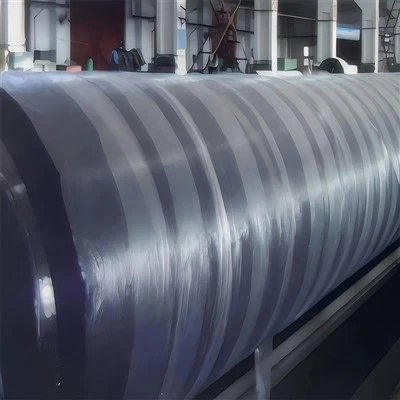
Screw Press Thickener
Application
Used for thickening the pulp.
Features
- For screw shaft, the compression ratio is axially distributed reasonably. Thereby, efficiently ensure normal running of equipment.
- On discharge side, fitted with inner dewatering assembly with holes, which can efficiently secure uniformity of dewatering of inside and outside pulp layer. If necessary, use back-flushing device to wash the inner dewatering assembly to make sure of smoothness of inner dewatering channel.
- Pneumatic back-push assembly can secure the stability and adjusting state of discharge consistency.
Structural Components
1.Screw Shaft
Typically fabricated from high-strength alloy steel that undergoes specialized heat treatment and strengthening processes. This material exhibits outstanding wear resistance and torsional resistance, capable of withstanding the significant extrusion forces and frictional forces during long-term operation without undergoing excessive wear or deformation.
The screw blades feature a unique design where the pitch gradually decreases from the feed end to the discharge end. This gradual reduction in pitch effectively increases the extrusion pressure on the pulp, allowing water to be gradually squeezed out as the pulp moves along the screw shaft.
The surface of the screw shaft might undergo special coating treatments, such as hard chromium plating or the application of polymer wear-resistant materials, further enhancing its wear resistance and prolonging its service life.
2.Cylinder
Manufactured from thick and robust metal materials, typically high-quality carbon steel or stainless steel. The wall thickness of the cylinder is meticulously calculated and designed to withstand the internal high pressure and friction.
The inner surface of the cylinder undergoes fine machining to achieve an extremely high level of smoothness, thereby minimizing resistance during the pulp flow and preventing adhesion and accumulation of the pulp within the cylinder.
The cylinder is evenly equipped with numerous fine drainage holes. The size and distribution of these holes are precisely designed to efficiently discharge the extruded water while ensuring that the pulp fibers are not lost.
3.Feed Inlet
The feed inlet is designed to be spacious and funnel-shaped to facilitate the uniform and smooth entry of a large volume of pulp into the cylinder of the screw press thickener. The edges of the feed inlet are typically rounded to avoid the formation of vortices and blockages during the feeding process.
The feed inlet might be equipped with adjustable baffles or valves for controlling the speed and volume of the feed to accommodate the requirements of different production processes and pulp characteristics.
4.Discharge Outlet
The shape and size of the discharge outlet are optimally designed to ensure the smooth and rapid discharge of the concentrated pulp under pressure, avoiding blockages and accumulations.
The discharge outlet might be fitted with monitoring devices such as pressure sensors or concentration sensors to monitor the status and quality of the discharged pulp in real-time, providing a basis for the control and adjustment of the production process.
5.Drive System
Comprises a high-performance motor and a precise speed reducer. The motor provides a powerful output, and through the speed reducer, the high-speed rotation is converted into a low-speed, high-torque rotation suitable for the screw shaft.
The speed reducer employs advanced gear transmission technology, featuring high transmission efficiency, low noise, and stable operation. Additionally, the speed reducer might be equipped with overload protection and speed adjustment devices, enabling flexible adjustment of the rotational speed of the screw shaft based on production needs.
6.Support and Fixing Structure
Composed of a sturdy steel structure, including components such as the base, brackets, and beams. These structural components undergo rigorous mechanical calculations and strength analyses to withstand the vibrations and impact forces generated during the equipment's operation.
The support and fixing structure is also equipped with shock absorption devices and anchor bolts to reduce the influence of equipment vibrations on the ground and ensure stability and safety during operation.
Working Principle
1.Feeding
The pulp is fed into the cylinder of the screw press thickener through the feed inlet via a conveying pipeline or other feeding equipment at a certain pressure and speed. During the feeding process, under the action of gravity and the feeding pressure, the pulp rapidly fills the front section of the cylinder.
2.Screw Propulsion
Driven by the drive system, the screw shaft rotates at a preset speed uniformly. The screw blades continuously push the pulp along the cylinder, forming a continuous conveying process.
3.Extrusion Dewatering
As the pulp moves along the screw shaft, due to the gradual decrease in the pitch of the screw blades, the extrusion pressure on the pulp gradually increases. Under the powerful extrusion pressure, the water in the pulp is squeezed out from the fiber gaps.
The extruded water is discharged through the drainage holes on the cylinder, while the pulp fibers are gradually compressed and tightly combined under pressure, forming the concentrated pulp.
4.Concentrated Discharge
The concentrated pulp that has undergone sufficient extrusion and dewatering is finally discharged from the discharge outlet under the propulsion of the screw shaft. The discharged concentrated pulp has a higher concentration and better fiber binding, providing high-quality raw materials for the subsequent papermaking processes.
Performance Characteristics
1.Efficient Dewatering and Concentration:Capable of achieving significant dewatering and concentration of the pulp in a short period, increasing the pulp concentration and reducing the moisture content, thereby lowering the energy consumption and costs of the subsequent drying process.
2.Stable and Reliable:The structure is robust, and the operation is stable. It possesses good overload resistance and fault self-diagnosis capabilities. Even during long-term continuous operation, it can maintain stable performance and high production efficiency.
3.Minimal Fiber Damage:Utilizing a gentle extrusion method, it has a minimal impact on the physical properties of the pulp fibers, maximizing the retention of the length and strength of the fibers and ensuring the quality of the paper.
4.High Degree of Automation:Equipped with an advanced control system that enables functions such as automatic feeding, speed regulation, pressure control, and fault alarm. This reduces manual intervention and enhances the accuracy and consistency of production.
5.Strong Adaptability:Capable of handling different types and qualities of pulp, such as wood pulp, straw pulp, waste paper pulp, etc. Moreover, it can flexibly adjust the working parameters according to changes in the production process and requirements.
Maintenance and Upkeep
1.Regular Cleaning:After the machine is shut down, promptly clean the interior of the cylinder, the screw shaft, and the residue pulp and dirt at the feed inlet and discharge outlet to prevent blockages and corrosion.
2.Inspection of Component Wear:Regularly inspect the wear conditions of components such as the screw shaft, screw blades, the inner wall of the cylinder, and the drainage holes. Replace severely worn components in a timely manner to ensure the normal operation and dewatering effect of the equipment.
3.Lubrication Maintenance:Regularly lubricate the components in the drive system, such as the motor, speed reducer, and bearings. Select the appropriate lubricating oil or grease and add and replace them according to the prescribed cycle and dosage.
4.Tightening of Connecting Parts:Regularly inspect all the connecting parts and fasteners of the equipment, such as bolts and nuts, to ensure they are securely fastened and prevent vibrations and faults caused by looseness.
5.Electrical System Inspection:Regularly inspect the circuits, sensors, controllers, and other components of the electrical control system to ensure their normal operation and promptly eliminate electrical faults.
Main Technical Parameters
|
Type |
ZNJ12 |
ZNJ13 |
ZNJ14 |
ZNJ15 |
ZNJ16 |
ZNJ17 |
ZNJ18 |
|
Diameter of screw:mm |
Φ400 |
Φ450 |
Φ600 |
Φ700 |
Φ800 |
Φ900 |
Φ1100 |
|
Consistency of inflow pulp:% |
10~14 |
8~12 |
|||||
|
Consistency of outflow pulp:% |
25~35 |
||||||
|
Capacity of production:% |
40~50 |
60~80 |
100~150 |
150~200 |
200~300 |
280~350 |
350~450 |
|
Power of motor:kw |
30 |
37 |
55 |
110 |
132 |
200 |
280 |
|
(L×W×H):mm |
5200×1650×1300 |
5730×1785×1400 |
6000×2610×1600 |
7170×2836×1435 |
7180×2840×1450 |
7800×3280×1780 |
9150×3800×2000 |
Hot Tags: screw press thickener, China screw press thickener suppliers, factory, 3600 400 Calender Machine, dispersering system, HB Pressure Screen, pressure screens, PaperRetrofitting PaperMachine Energy Saving and Efficiency Improvement Renovation Project, Paper Machine Chain Conveyor
Previous
High-speed WasherNext
No InformationYou Might Also Like


Send Inquiry