


Multi-functional CLeaner
Introduce
In the paper industry, "Multi-functional Cleaner" is an advanced equipment highly integrated with multiple slag removal functions. It is designed to address the removal needs of various complex impurities in the pulp. It can not only precisely and efficiently remove traditional heavy impurities such as sand grains, stones, and metal debris but also effectively separate those difficult-to-handle light impurities such as plastic sheets, foams, and waxy particles. At the same time, it also has a significant removal effect on small fiber bundles, adhesives, incompletely dissociated fiber masses, and other tiny impurities that may affect the paper quality.
Its main function is to comprehensively improve the purity of the pulp to the greatest extent, minimizing the interference and influence of impurities on the papermaking process. By effectively removing these impurities, high-quality and clean pulp raw materials are provided for the subsequent papermaking processes, thereby strongly guaranteeing the smooth progress of the papermaking process and significantly enhancing the quality and performance of the paper, enabling the produced paper to meet higher standards in terms of strength, flatness, uniformity, and printability.
Application
Used for the removal of heavy and light impurities in the pulp.
Working Principle
1.Multiple Separation Mechanisms
Skillfully combines multiple advanced physical and chemical separation principles such as centrifugal separation, flotation separation, and screening filtration. When the pulp enters the equipment, the first step is that the strong centrifugal force generated by the high-speed rotation causes the heavy impurities with a larger specific gravity to move outward rapidly and be separated and discharged along a specific channel.
At the same time, the flotation device inside the equipment will generate a large number of fine and uniform bubbles. These bubbles will attach to the light impurities, increasing their buoyancy and floating to the liquid surface, thereby achieving the separation of light impurities from the pulp.
In addition, the finely designed screen structure can effectively intercept those smaller-sized impurities and fiber bundles, ensuring that only pure pulp can pass through the screen and further improving the accuracy and effect of slag removal.
2.Intelligent Adjustment
Equipped with an advanced intelligent control system composed of high-precision sensors, a powerful controller, and efficient actuators. The sensors can monitor the characteristics of the pulp in real-time, such as key parameters such as concentration, flow rate, impurity type, and content.
The controller will quickly and accurately analyze and determine the current slag removal requirements based on these real-time data by using complex algorithms and preset models.
Subsequently, the actuators will automatically and precisely adjust the operating parameters of the equipment according to the instructions of the controller, such as the rotation speed of the rotating components, the size and quantity of the flotation bubbles, the pore size and vibration frequency of the screen, etc., to ensure the best slag removal effect under different pulp conditions.
Structural Components
1.Pulp Inlet System
Includes a well-designed pulp inlet pipeline and a high-precision flow control device. The pulp inlet pipeline is usually made of wear-resistant and corrosion-resistant materials to ensure good performance and sealing during long-term pulp transportation.
The flow control device can precisely regulate the entry speed and flow rate of the pulp, ensuring that the pulp enters the multi-functional cleaner in a stable and uniform state, avoiding unstable slag removal effects caused by flow fluctuations.
2.Separation Chamber
This is the core area for realizing multiple separation principles, and its internal structure is extremely complex and precise. It contains high-speed rotating components such as impellers or centrifugal drums. Through their high-speed rotation, a strong centrifugal force field is generated to drive the separation movement of impurities.
The flotation device usually consists of a bubble generator, gas distributor, and agitation mechanism, which can effectively generate uniform and fine bubbles and ensure that the bubbles are fully mixed with the pulp to improve the flotation effect of light impurities.
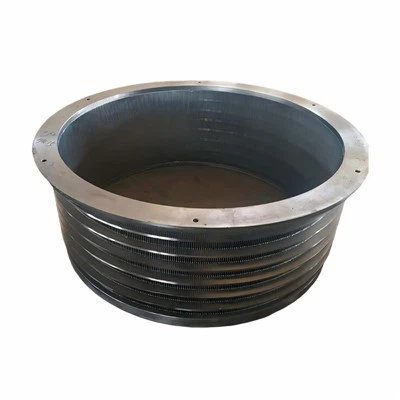
The fine screen is usually made of high-strength, wear-resistant materials with appropriate pore sizes and is installed at a specific position in the separation chamber to achieve precise interception of small impurities and fiber bundles.
3.Slag Discharge System
Independent slag discharge ports are respectively set for heavy impurities, light impurities, and small impurities. The heavy impurity discharge port is usually located at the bottom or the lower part of the side of the equipment. Through the action of gravity and centrifugal force, the heavy impurities fall naturally and are discharged.
The light impurity discharge port is generally located near the upper liquid surface of the equipment, and the light impurities are smoothly discharged by utilizing the floating effect after flotation.
The small impurity discharge port is connected to the collection area of the screen, and the intercepted small impurities are discharged from the equipment through a specific conveying device.
4.Intelligent Control System
Composed of a series of high-precision sensors, including pressure sensors, flow sensors, concentration sensors, impurity detection sensors, etc., which can obtain various key parameters of the pulp and equipment operation in real-time and accurately.
The powerful controller usually adopts an advanced microprocessor or industrial computer, with fast data processing capabilities and complex control algorithms, which can conduct in-depth analysis and judgment of the data collected by the sensors.
Efficient actuators include electric valves, variable frequency drives, hydraulic or pneumatic actuators, etc., which can quickly and accurately adjust the operating parameters of the equipment, such as rotation speed, flow rate, pressure, etc., according to the instructions of the controller to achieve precise control of the slag removal process.
Performance Characteristics
1.Efficient and Comprehensive Slag Removal:With its unique multiple separation mechanisms and intelligent adjustment functions, it can process a large amount of pulp in a short time and conduct comprehensive and in-depth removal of various impurities, significantly improving the slag removal efficiency and effect.
2.High-Precision Impurity Removal:It can achieve high-precision separation and removal of various impurities of tiny sizes and complex properties, ensuring that the purity of the pulp reaches an extremely high level, providing a strong guarantee for the production of high-quality paper.
3.Strong Adaptability:It can adapt to different types, concentrations, and qualities of pulp raw materials, as well as different production processes and requirements. Through the automatic adjustment of the intelligent control system, it always maintains good slag removal performance.
4.Stable and Reliable:Adopting advanced structural design and high-quality material manufacturing, the key components undergo strict testing and optimization to ensure stable performance during long-term continuous operation, reducing faults and downtime.
5.Energy Conservation and Environmental Protection:In the design and operation process, full consideration is given to the efficient utilization of energy and environmental protection. Through the optimized separation process and intelligent control, the energy consumption of the equipment is reduced; at the same time, an effective impurity collection and treatment method is adopted to reduce environmental pollution.
Operation and Maintenance
1.Operation Key Points
Before starting the multi-functional cleaner, the operator must conduct a comprehensive and meticulous equipment inspection, including the connection status of each component, the normality of the electrical system, the lubrication condition, and the initial readings of the instruments.
According to the production task and the characteristics of the pulp, set the appropriate initial operating parameters through the intelligent control system, and closely monitor the operating status of the equipment after startup to ensure a smooth startup.
During the operation of the equipment, the operator should monitor the various parameters displayed by the intelligent control system in real-time, including the pulp flow rate, pressure, concentration, slag removal effect, etc., and make necessary fine-tuning according to the actual situation.
Regularly conduct sampling tests on the treated pulp to evaluate the performance of the cleaner and adjust the operating parameters in a timely manner based on the test results to ensure the best slag removal effect is always achieved.
2.Maintenance Work
Regularly clean the pulp inlet pipeline and each slag discharge port to prevent clogging and impurity accumulation. Check the wear condition of the pipeline and replace the damaged components in a timely manner.
Regularly inspect and maintain the rotating components, flotation devices, and screens inside the separation chamber. Clean the attached impurities and sediments, and check the wear, deformation, and damage of the components, and repair or replace them in a timely manner.
Regularly conduct software updates and hardware checks on the intelligent control system to ensure the accuracy of the sensors, the stability of the controller, and the responsiveness of the actuators.
According to the recommendations of the equipment manufacturer, regularly lubricate and maintain the key components to extend the service life of the equipment.
Establish a detailed equipment maintenance file, recording the time, content, replaced components, and operating status of each maintenance, providing reference and basis for subsequent maintenance work.
Application Advantages
1.Effectively removing various impurities significantly improves the physical properties of the paper, such as strength, toughness, and folding resistance; improves the appearance quality of the paper, reducing the occurrence of flaws, spots, and holes; enhances the printability of the paper, making the printing effect clearer, brighter, and more uniform.
2.Protecting Production Equipment:Reduces the wear and damage of impurities to the subsequent papermaking equipment, such as the wire section, press section, and drying section of the papermaking machine, prolongs the service life of the equipment, reduces maintenance costs and downtime, and improves the operational efficiency and stability of the entire production line.
3.Optimizing the Production Process:The stable and efficient slag removal effect enables the subsequent papermaking processes, such as bleaching and papermaking, to proceed more smoothly, reducing process adjustments and quality fluctuations caused by impurity issues. At the same time, it improves the utilization rate of the pulp and reduces production costs.
4.Enhancing Enterprise Competitiveness:Producing high-quality paper products can meet the market demand for high-quality paper, increase the enterprise's market share and reputation. At the same time, by improving production efficiency and reducing costs, the competitiveness of the enterprise in the market is enhanced.
Main Technical Parameters
|
Type |
SJMDC-Ⅰ |
SJMDC-Ⅱ |
SJMTC450-Ⅰ |
SJMTC450-Ⅱ |
|
Flow rate:L/min |
600~800 |
1800 |
450 |
450 |
|
Consistency of inflow pulp:% |
0.5~1.0 |
0.5~1.2 |
0.8~2.0 |
0.8~2.0 |
|
Pressure of inflow pulp:MPa |
0.2~0.3 |
0.2~0.35 |
0.2~0.4 |
0.2~0.4 |
Hot Tags: multi-functional cleaner, China multi-functional cleaner suppliers, factory, Reject Separator, washing or thickening equipment, Paper Machine Ragger, Screw Press Thickener, p m auxiliary and parts, flotation and deinking equipment
Previous
Light Rejects CleanerNext
No InformationYou Might Also Like


Send Inquiry