


Sewage and Sludge Dewatering Equipment
Application
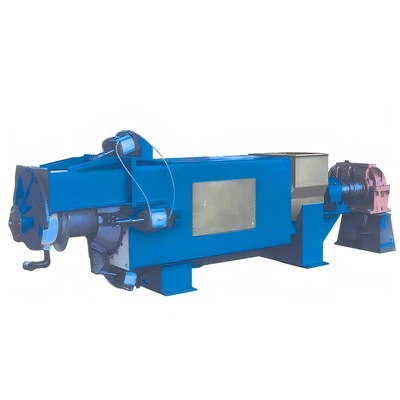
Sludge with about consistency 20% will be compressed into about consistency 50% under the action of the reduced-diameter screw shaft and reduced-diameter screw, moisture of sludge can be quickly separated through the perforated screening plate,compressed sludge will be discharged from the machine by the cylinder adjusting device at the end.
Structural Components
1.Variable Diameter Screw Shaft
Meticulously fabricated from high-strength wear-resistant alloy steel, which undergoes special heat treatment and surface hardening processes, significantly enhancing its hardness and wear resistance. During long-term contact and extrusion with the sludge, it can effectively resist wear and corrosion, ensuring the stable operation and long service life of the equipment.
The diameter of the screw shaft gradually changes along the conveying direction, typically decreasing from the feed end to the discharge end. This variable diameter design can exert a gradually increasing extrusion force on the sludge, causing it to be continuously compressed during the conveying process, achieving volume reduction and density increase.
The surface of the screw shaft is usually finely processed and polished to reduce the adhesion and resistance of the sludge on its surface, improving the conveying efficiency and dewatering effect.
2.Variable Diameter Screw
Works closely with the variable diameter screw shaft to jointly complete the compression and conveying tasks of the sludge. The shape and size of the screw blades are precisely designed to adapt to the variable diameter structure of the screw shaft and the characteristics of the sludge.
The pitch and thickness of the screw blades may also gradually change along the conveying direction. At the feed end, the pitch is larger to facilitate the smooth entry of a large amount of sludge; at the discharge end, the pitch gradually decreases and the thickness increases to enhance the extrusion and pushing force on the sludge.
The blades of the variable diameter screw are usually made of wear-resistant materials or undergo surface strengthening treatment to improve their wear resistance and service life.
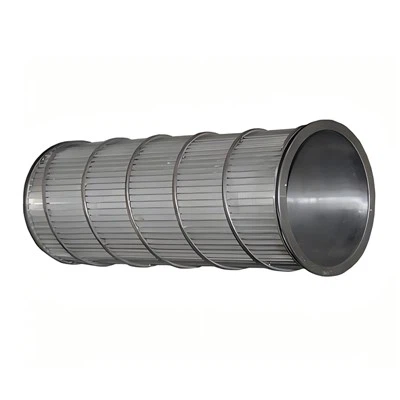
3.Perforated Sieve Plate
Made of high-quality stainless steel, it has excellent corrosion resistance and good water permeability. Fine holes are evenly distributed on the sieve plate, and the size and shape of these holes are carefully designed to allow water to pass through quickly while effectively blocking the loss of sludge particles.
The installation position and angle of the perforated sieve plate are precisely calculated to ensure that during the sludge extrusion process, water can flow out smoothly while avoiding clogging and accumulation of sludge on the surface of the sieve plate.
The structure of the sieve plate is sturdy, capable of withstanding the pressure and impact force generated during sludge extrusion, and is not prone to deformation and damage.
4.Housing
Generally welded from thick carbon steel or stainless steel plates, it has sufficient strength and rigidity to withstand the internal pressure and vibration during operation.
The shape and size of the housing are designed according to the layout of the internal components and the working requirements. The internal space is reasonable to facilitate the flow and treatment of the sludge.
The surface of the housing may undergo anti-corrosion treatment to prevent erosion by chemicals in the sludge.
5.Drive Device
Comprises components such as the motor, reducer, and coupling. The motor is usually selected as a high-power model with good speed regulation performance to meet the operational requirements under different working conditions.
The reducer converts the high speed of the motor into a low speed suitable for the operation of the screw shaft and screw and provides sufficient torque output.
The coupling is used to connect the motor and the reducer to ensure stable and reliable power transmission.
6.Feed Inlet and Discharge Outlet
The feed inlet is usually designed as a large opening to facilitate the rapid and uniform entry of the sludge into the interior of the equipment. The feed inlet may be equipped with a feed hopper or feed pipe to guide the entry of the sludge.
The discharge outlet is located at the tail of the equipment, and the speed and quantity of the discharge are controlled by the cylinder adjustment device. The shape and size of the discharge outlet are designed according to the characteristics of the treated sludge and the requirements of the subsequent treatment process.
7.Cylinder Adjustment Device
Composed of cylinders, control valves, sensors, etc., it can automatically or manually adjust the pressure and speed of the discharge according to the treatment situation of the sludge and the operating parameters of the equipment.
The stroke and thrust of the cylinder are precisely calculated to ensure the effective control of the discharge state and guarantee the stable operation and treatment effect of the equipment.
8.Support and Installation Components
Include the base, brackets, anchor bolts, etc., used to stably support the entire equipment and ensure that it does not shift or shake during operation.
The design and manufacture of the support and installation components need to consider factors such as the weight of the equipment, the vibration generated during operation, and the conditions of the installation site.
Working Principle
1.Feeding:Sludge with a concentration of approximately 20% enters the sludge screw press through the feed inlet.
2.Compression and Dewatering:Under the action of the variable diameter screw shaft and the variable diameter screw, the sludge is subjected to gradually increasing extrusion and shear forces. As the material is conveyed forward, the volume is continuously compressed, and the moisture therein is rapidly discharged through the perforated sieve plate under pressure.
3.Concentration Increase:During the continuous compression process, the moisture content of the sludge gradually decreases from the initial approximately 20% to about 50%.
4.Discharge:The treated sludge is controlled by the cylinder adjustment device at the tail and is discharged out of the machine at an appropriate speed and pressure, entering the subsequent treatment or disposal stage.
Performance Characteristics
1.Efficient Dewatering:Capable of quickly and effectively dewatering the low-concentration sludge to a high dryness, improving the treatment efficiency and reduction degree of the sludge.
2.Continuous Operation:Can achieve continuous feeding, dewatering, and discharging, adapting to the sludge treatment needs of large-scale paper mills.
3.Good Stability:The structure is sturdy, the operation is stable, and it can maintain stable performance during long-term operation.
4.Simple Operation:The degree of automation is relatively high, and the operation and maintenance are relatively simple, reducing the labor intensity and operation difficulty of manual work.
5.Energy Saving and Consumption Reduction:Compared with traditional dewatering methods, it can save energy and operating costs.
Main Technical Parameters
|
Type |
YZJ50 |
YZJ65 |
YZJ90 |
|
Feeding moisture:% |
20-30 |
20-30 |
20-30 |
|
Discharding moisture:% |
40-50 |
40-50 |
40-50 |
|
Treating capacity:t/d |
3-5(oven dry) |
5-6(oven dry) |
15-20(oven dry) |
|
Feeding inlet:mm |
550×900 |
550×550 |
800×800 |
|
Discharding outlet:mm |
Opening type |
Opening type |
Opening type |
|
W.W.outlet:kw |
DN250 |
DN250 |
DN300 |
|
Flushing water inlet:mm |
G1"-2pieces |
G1"-2pieces |
G1"-2pieces |
|
Main motor power:kw |
5.5(frequency conversion) |
7.5(frequency conversion) |
15(frequency conversion) |
|
(L×W×H)Dimensions:mm |
8250×1600×1260 |
7960×2260×1470 |
10000×2720×1850 |
Hot Tags: sewage and sludge dewatering equipment, China sewage and sludge dewatering equipment suppliers, factory, Pulp Residue Sarew Press, paper machine concentration system, Sewage and Sludge Dewatering Equipment
Previous
Pulp Residue Sarew PressNext
No InformationYou Might Also Like



Send Inquiry