


Wet Broke Pulper
Why Choose Us
Quality Assurance
We have an experienced and technically strong R&D team, focusing on the design, research and development, and production of paper machine accessories.
Good Service
Set up a 24-hour technical support hotline, at any time for you to answer technical problems encountered in the use of products.
Complete Process System
From raw material screening to finished product delivery, every process is strictly controlled to ensure that every product meets the industry's top standards.
Product Export
Our company has been deeply involved in the paper processing industry for many years and has established long-term and stable strategic cooperation relationships with many well-known paper mills at home and abroad.
What is Wet Broke Pulper
Wet Broke Pulper is a specialized equipment designed for the efficient processing of wet broke in the papermaking industry. The main purpose of a Wet Broke Pulper is to break down and disintegrate wet broke - which refers to paper that has become damaged or defective during the papermaking process, or excess paper that needs to be recycled - into a fibrous suspension. This pulper works by using a mechanical and hydraulic action to achieve this disintegration.
Related Product

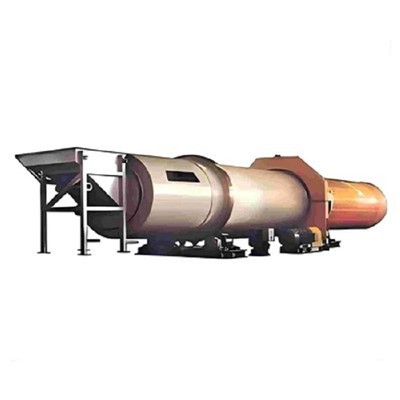
The structure of the drum pulper mainly includes a roller-shaped drum, as well as the feeding hopper, transmission device, supporting roller device, blocking roller device, sealing device, shield and pulp pool, etc. The outer wall of the drum is inlaid with two large supporting rollers and a large gear.

Its main function is to effectively separate different types and qualities of fibers from the mixed pulp based on the physical properties of the fibers (such as length, fineness, flexibility, specific gravity, etc.), chemical properties (such as the surface charge and hydrophilicity of the fibers), or other related characteristics.

The Type D Hydra pulper is a device used for pulping various raw materials such as waste paper and pulp boards. Through the hydraulic action and mechanical agitation, the materials put into it are quickly decomposed into a fiber suspension.

The "Semi-dry Broken Pulper" is a professional equipment used for processing semi-dry waste paper and plays an important role in the field of papermaking and paper product recycling and reuse. In terms of working principle, the semi-dry broken pulper puts the semi-dry waste paper into the pulping tank. Through the rotating impeller or stirring device, with the assistance of water and chemical additives, the waste paper is stirred, rubbed, and impacted. Under the combined action of mechanical force and hydraulic force, the paper fibers are separated from other impurities to form a pulp suspension.

"High Consistency Hydro Pulper" is a piece of equipment used in the papermaking industry. It is designed to disintegrate and blend high-concentration (typically referring to a high solid content in the pulp) waste paper, pulp boards, or other fibrous materials to prepare a fiber suspension suitable for subsequent papermaking processes.

In the paper industry, the Drum Screen is an indispensable and crucial piece of equipment primarily utilized for the meticulous screening and profound purification of pulp. Its core function lies in precisely separating the fiber components that meet specific size, shape, and quality standards from the pulp mixture while efficiently eliminating various impurities such as sand grains, fiber bundles, plastic fragments, stickies, and overly large or small fiber segments.
Its main function is to effectively separate different types and qualities of fibers from the mixed pulp based on the physical properties of the fibers (such as length, fineness, flexibility, specific gravity, etc.), chemical properties (such as the surface charge and hydrophilicity of the fibers), or other related characteristics.

The Hydraulic Pulper is a key equipment in the pulp and paper manufacturing industry, designed for the efficient breakdown of waste paper, pulp boards, and other raw materials into a fibrous suspension.

In the papermaking industry, a "Ragger rope twisting machine" is a piece of equipment used to handle long and strip-shaped debris such as ropes, plastic bands, and cloth strips that are generated during the process of papermaking from waste paper.
Advantages of Wet Broke Pulperr
Turns paper-containing garbage into homogeneous slurry, which can be processed as fluid: The special crusher mixes and crushes paper-containing garbage and a large amount of water together to form a slurry, which turns the garbage into homogeneous slurry, which is easy to be processed as fluid.
No noise, heat and explosion hazard: Wet crushing process does not generate noise, heat and explosion hazards to ensure the safety of operation.
No mosquitoes and flies, no bad odor, good sanitary conditions: No mosquitoes and flies will be bred in the process, and it meets the sanitary conditions, avoiding bad odor and sanitary problems.
The quality, particle size and moisture of dehydrated organic residue are small: The quality, particle size and moisture of dehydrated organic residue after wet crushing are small, and the stability of the residue is maintained.
Suitable for recycling paper fibers, glass, iron and non-ferrous metals: Wet crushing technology is suitable for recycling paper fibers, glass, iron and non-ferrous metals, improving the recycling rate of resources.
Residual sludge can be composted: Residual sludge after treatment can be used as compost, further increasing the ways of recycling resources.
Can be used in the treatment of chemicals, paper and pulp, minerals, etc: Wet crushing technology is widely used in the treatment of chemicals, paper and pulp, minerals, etc., showing its wide range of applications.
Working Principle of Wet Broke Pulper
The working principle of wet loss pulper mainly relies on the force of water flow and mechanical agitation of the dual role of the waste paper raw materials for crushing, dispersion and wetting treatment.
Wet paper pulper is one of the key equipments in the paper industry, its working principle is delicate and efficient. During the pulping process, bundles of waste paper, which may contain different types of paper, impurities or even small amounts of metal fragments, are fed into the inlet of the hydro pulper. As the machine starts, a powerful stream of water is sprayed into the pulper from the bottom or side, creating a high-speed vortex. This vortex not only has a huge impact force, which can instantly break up the waste paper mass, but also has excellent penetration ability, which penetrates deep into the waste paper fibers and promotes the separation of the fibers.
At the same time, the hydro pulper is equipped with special blades or rotors inside, and these rotating parts are driven by the motor to rotate at a certain speed to further physically crush the waste paper. The design of the blades often takes into account the optimal combination of shear force and impact force, which can effectively cut off the long fiber bundles in the waste paper, but also avoid over-crushing resulting in fiber damage and affecting the quality of the pulp. In order to accelerate the removal of ink, adhesive and other impurities in the waste paper, the pulping process will also be added to the appropriate amount of chemicals, such as deinking agent.
These chemicals, assisted by the water flow, can be more fully in contact with the waste paper to improve the deinking efficiency. Over time, the waste paper is gradually broken down into a mixture of fine fibers and water, i.e., preliminary pulp. Finally, the fully broken down and deinked pulp through the screen or centrifugal equipment to further remove the residual large particles of impurities, to obtain a more pure pulp. This process not only improves pulp utilization, but also provides high-quality raw materials for subsequent papermaking processes.
How to Use the Wet Broke Pulperr

Check before starting
Check whether the fastening bolts of impeller screen plate, bearing seat and motor seat are tight.
Check whether the mechanical parts rotate freely and whether the safety precautions are tightened.
Start operation
After checking that there are no problems, press the start button on the operating panel to start the motor and pay attention to the current and voltage conditions on the operating panel.
After successful startup, drain the water into the machine and feed the material.
Precautions for normal operation
Note that the motor current must not exceed the rated current of the motor.
When the hydraulic pulper is running, it is prohibited to work on the top of the pulper.
Stopping operation
Thirty minutes before stopping the machine, stop supplying material to the pulper.
Press the stop button to cut off the power supply and stop the operation of the hydraulic pulper.
Maintenance
Slag discharge once a shift, slag discharge and maintenance of hydraulic pulper, at least two people to carry out, cut off the power supply, and set up a person beside the operating panel to monitor.
At least once a week to check the screen plate aperture size, to ensure that the wear does not exceed the process regulations.

Wet Broke Pulper of Structure Composition
Slot body
Used to hold the pulp, the material is usually 1Cr18Ni9Ti steel, with good corrosion resistance.
Transmission Assembly
Includes the motor and transmission system to provide the rotor with the necessary rotational power.
Sprayer
Used for spraying the slurry, which helps to mix and cool the slurry evenly.
Skid
Used for guiding and conveying the slurry.
Rotor
Generates centrifugal force by rotating to help the slurry broken and mixed.
Sieve plate
Used for filtering and removing impurities in the slurry.
Pulping Efficiency: The efficiency of the pulper directly affects the capacity of the production line. A highly efficient pulper will be able to complete the pulping job in a short period of time and increase production efficiency.
Equipment Material: The material of the equipment is directly related to its durability and maintenance costs. Stainless steel pulpers are widely used in the paper industry due to their corrosion resistance and ease of cleaning.
Equipment Volume: Choose a pulper with the right volume for your production needs to ensure that you can meet your line's stock requirements.
Ease of operation and maintenance: Choosing a pulper that is easy to operate and maintain reduces labor costs and increases equipment availability.
Energy and noise consumption: A pulper with low energy consumption and low noise levels will help to reduce operating costs and improve the quality of the working environment.
Safety: Ensure that the pulper is designed with operational safety in mind to avoid potential safety hazards.
Maintenance Tips for wet broke pulper
Proper use: Ensure that the operator is familiar with and follows the operating procedures, avoiding over-range and overload measurements to protect the instrument from damage.
Mechanical part of the maintenance: Keep the mechanical parts of the moisture, rust, dust, shock, regular calibration level, and inject the required type of lubricant.
Electronic control part of the maintenance: The electrical parts of the machine, and the maintenance of the machine, and the maintenance of the machine.
Electronic control part of the maintenance: The electronic control part of the original device, power supply, sensors, touch screen and other good insulation, rodent-proof, temperature control, in order to reduce oxidation, aging, leakage, short-circuit, circuit damage caused by components.
Measuring instrument maintenance: Protect the various measuring instruments on the knife edge, scale, indicator from damage, keep clean, and regularly calibrated by the measurement department.
Mechanical system failure: By looking, listening, measuring, touching and other means to check whether the mechanical system due to wear and tear, corrosion, dust, oil, cracks, breaks, falling into the foreign body or loosening and other reasons leading to the instrument to appear dead, skidding, vibration, running out of sync and other issues.
Electrical troubleshooting: Check whether the switch, fuse, filament, electrical components leakage or poor contact, through the measurement of resistance, voltage, current signals, replacement of the original device in doubt to identify electrical faults.
Failure of reading part: Replace the deformation of pointer, scale wear, paint peeling, blurring and other problems on the reading part to ensure normal display and accurate reading.
What should be paid attention to when using wet broke pulperr?
Inspection before starting: The operator should carefully check whether all parts of the equipment are intact and undamaged, especially the key parts such as rotor, stator and screen, to make sure that there is no blockage, wear and tear or loosening phenomenon. At the same time, check whether the electrical system, lubrication system and water supply are normal to ensure that the equipment is started in the best condition.
Gradually increase the load: In the start-up process, the water flow and speed should be gradually increased to avoid the impact of instantaneous high load operation on the equipment. At the same time, monitor the instrumentation to ensure that the parameters fluctuate within the preset range, in order to ensure the efficiency and stability of crushing.
Reasonable control of feeding amount: According to the type of raw materials, moisture content and target pulp quality, reasonably control the feeding amount, crushing time and hydraulic impact strength. By adjusting the water inlet valve and rotating speed, the raw materials can be fully broken under the action of hydraulic force to achieve the ideal state of fiber dispersion.
Slag removal and cleaning: After the completion of crushing, use the slag removal system of the hydraulic pulper to remove the un-crushed impurities and coarse fibers to keep the system clean. Subsequently, the equipment is fully cleaned to prevent residues from affecting subsequent production.
Routine inspection and maintenance: After completing the cleaning, close all the valves and power supply, and carry out routine inspection and maintenance of the hydro pulper, such as replacing worn parts, replenishing lubricating oil, etc., so as to be ready for the next use.
Safe operation: During operation, avoid bringing your fingers or other body parts close to the rotating parts, especially on machines without safety sensors, you must be more careful and keep your attention to avoid injury.
Regular cleaning: The confetti box must be emptied in time when it is full to prevent overfilling leading to paper jam or affecting the performance of the machine. After a long period of work, the machine should be allowed to rest properly to avoid overheating.
Pay attention to maintenance and renewal: Regular lubrication of the shredder is the key to keep it in good working condition. Use specialized lubricants and follow the manufacturer's instructions for maintenance. Considering the continuous updating of technology and features, choose the right model of shredder for different office needs and security requirements.
Our Factory
Our company has been deeply involved in the paper processing industry for many years and has established long-term and stable strategic cooperation relationships with many well-known paper mills at home and abroad. This not only witnesses our profound foundation in the industry, but also cultivates our profound understanding and exquisite skills in the manufacturing of paper machine accessories. We have an experienced and technically strong R&D team, focusing on the design, research and development, and production of paper machine accessories. We can accurately grasp market demand and provide customers with customized and high-performance solutions. Relying on strong technological strength, we are equipped with several advanced large-scale machining center machines. These high-precision equipment ensure the precision and consistency of product processing, greatly improving production efficiency and product quality. From raw material screening to finished product delivery, every process is strictly controlled to ensure that every product meets the industry's top standards. As the source manufacturer of direct sales, we eliminate intermediate links and directly face customers. This not only allows us to quickly respond to market changes, but also allows customers to enjoy more affordable prices and thoughtful services. We firmly believe that high-quality products and reasonable prices are the key to winning the market, and it is also our commitment to every customer. Looking ahead to the future, we will continue to adhere to the business philosophy of "quality first, customer first", constantly innovate, pursue excellence, and be committed to providing higher quality and efficient paper machine accessory solutions for the global paper processing industry, working together to create a better future.

FAQ
Hot Tags: wet broke pulper, China wet broke pulper suppliers, factory, roller equipment, 700X3850 Vacuum Suction Box, winding equipment and rewinding equipment, Sewage and Sludge Dewatering Equipment, separator category, Fibernet Screen
Previous
RotorNext
HydrapulperYou Might Also Like



Send Inquiry