


Fiber Separator
Introduce
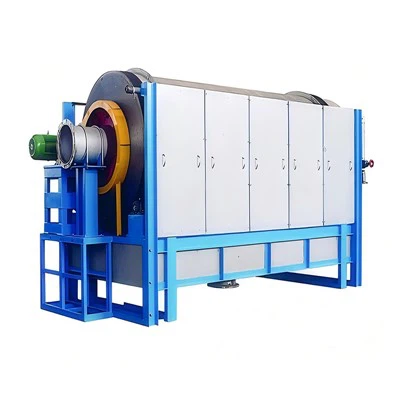
Fiber Separator is a key piece of equipment specifically designed to separate fibers in pulp.
Its main function is to effectively separate different types and qualities of fibers from the mixed pulp based on the physical properties of the fibers (such as length, fineness, flexibility, specific gravity, etc.), chemical properties (such as the surface charge and hydrophilicity of the fibers), or other related characteristics.
For example, it can separate longer and better-quality fibers from shorter and poorer-quality fibers. The former may be used to produce high-quality paper products, while the latter can be used to manufacture paper types with lower requirements.
It also removes impurities from the pulp-such as fine sand particles, incompletely defibered fiber bundles, and stickies-thereby enhancing the pulp's purity and cleanliness. This has a significant impact on key performance indicators of the paper in the subsequent papermaking process, such as quality, strength, and smoothness.
In addition, by precisely controlling the operating parameters of the fiber separator, papermaking mills can flexibly adjust the separation effect of the fibers according to different production needs and product specifications to achieve a more efficient and targeted production process.
Application
Used for further breaking the waste pulp broken by hydrapulper,at the same time separating the light and heary impurities from the pulp.
Features
Special-shaped impeller and conic shell body can benefit by light and heavy impurities to remove. Be able to equip deflaker with it, which can avoid breaking impurities and reduce load of back screening equipment. And meantime, be able to increase hole dia. of extraction disc of hydrapulper to increase the capacity of breaking system.
Definition and Function
In the paper industry, the Fiber Separator is a key equipment used to separate pure fibers from waste pulp or mixed pulp and remove impurities.
Working Principles
1.Hydrocyclone Separation
Utilizing the centrifugal force and hydrodynamic force when the pulp is in a high-speed rotating flow field, different trajectories are produced for fibers and impurities, thereby achieving separation.
Heavier impurities are thrown to the wall and move downward along it, while lighter fibers move upward in the central area.
2.Screening Separation
Through screens with specific apertures and shapes, only fibers that meet the size and shape requirements can pass through, blocking larger impurities and fiber bundles.
Sometimes combined with high-pressure water flushing to improve the screening effect.
Types
1.Pressure-Type Fiber Separating Machine
Structural Characteristics: Usually has a closed cavity with rotating components and screens inside, operating under certain pressure.
Advantages: Large processing capacity, good separation effect, suitable for large-scale production lines.
2.Atmospheric-Type Fiber Separating Machine
Structure: Relatively simple, usually consisting of a feed inlet, separation chamber, and discharge outlet.
Applicable Scenarios: Suitable for small and medium-sized paper mills or as a pretreatment equipment.
Advantages
1.Improve Pulp Quality
Remove impurities and short fibers, making the fiber length and purity of the pulp more uniform, and improving the strength and smoothness of the paper.
2.Optimize the Production Process
Reduce the burden of subsequent processing steps and improve the efficiency of the entire production line.
3.Reduce Costs
Effectively utilize waste paper resources, reduce waste of raw materials, and lower production costs.
Key Parameters
1.Separation Efficiency
Measures the proportion of pure fibers that can be effectively separated.
2.Processing Capacity
The amount of pulp that can be processed per unit time.
3.Energy Consumption
The energy consumed during the operation of the equipment, affecting production costs.
Maintenance Points
1.Regular Cleaning of Screens
Prevent screen clogging to ensure the separation effect.
2.Check Seals
Ensure there is no leakage in the equipment to maintain normal working pressure.
3.Lubrication Component Maintenance
Ensure the smooth operation of rotating components and reduce wear.
Main Technical Parameters
|
Type |
ZDF22 |
ZDF23 |
ZDF24 |
ZDF25 |
ZDF26 |
||
|
Diameter of impeller:mm |
Φ520 |
Φ720 |
Φ980 |
Φ1100 |
Φ1250 |
||
|
Consistency of inflow pulp:% |
2.5~4.0 |
||||||
|
Pressure of inflow pulp:MPa |
0.15~0.25 |
||||||
|
Capacity of production |
ONP&LOCC |
Diameter of plate hole Φ2.5~Φ4 |
45~65 |
75~100 |
130~180 |
155~220 |
190~240 |
|
Diameter of plate hole Φ4~Φ5 |
65~85 |
100~130 |
180~230 |
220~270 |
260~300 |
||
|
AOCC |
Diameter of plate hole Φ2.5~Φ4 |
35~55 |
60~90 |
105~165 |
125~200 |
145~200 |
|
|
Diameter of plate hole Φ4~Φ5 |
55~75 |
90~120 |
165~210 |
200~250 |
240~280 |
||
|
Power of motor:kw |
45 |
75 |
110 |
132 |
160 |
||
|
(L×W×H):mm |
2220×2110×1800 |
2350×2460×2180 |
3020×2800×2520 |
3160×3120×2470 |
3400×3350×2600 |
||
Hot Tags: fiber separator, China fiber separator suppliers, factory, Hydrapurge , Drum Scream, Fiber Separator, Hydra Purge , separate the screening equipment
Previous
Fiber SeparatorNext
Hydra PurgeⅡYou Might Also Like



Send Inquiry