


Inflow Pressure Screen
Introduce
The Inflow pressure screen is a crucial equipment used for pulp screening and purification in the papermaking process.
Its main structure includes a sturdy screen body, a precise screen drum, a uniquely designed rotor, and properly arranged inlet and outlet ports for pulp.
During operation, the pulp enters the screening chamber under pressure through the inlet port. The high-speed rotating rotor causes the pulp to have complex flows. The separation of good pulp and impurities is achieved through the screen holes on the screen drum. The good pulp flows out from the good pulp outlet, and the impurities are discharged from the residue pulp outlet.
The Inflow pressure screen has advantages such as high screening accuracy, efficiency, and stable operation. It can effectively improve the quality of the pulp and provide a good foundation for the subsequent papermaking processes.
Structural Components
1.Screen Body
Typically fabricated with high-strength metal materials, such as premium stainless steel, which exhibits excellent mechanical strength and corrosion resistance. This ensures its durability and stability during long-term operation, capable of withstanding the pressure and chemical erosion of the pulp.
The design of the screen body emphasizes sealing performance. Advanced sealing techniques and materials, such as high-quality sealing rings and sealants, are employed to effectively prevent pulp leakage under high pressure. This avoids wastage and environmental pollution during the production process.
The internal surface of the screen body undergoes special treatments, such as polishing or coating, to reduce pulp adhesion and resistance, thereby enhancing the screening efficiency.
2.Screen Drum
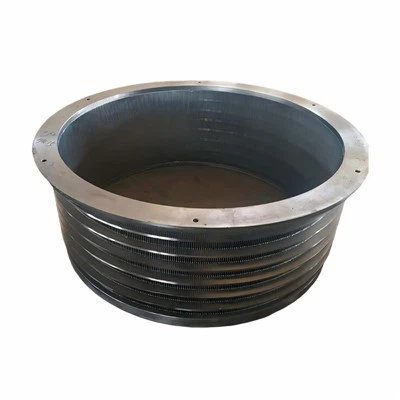
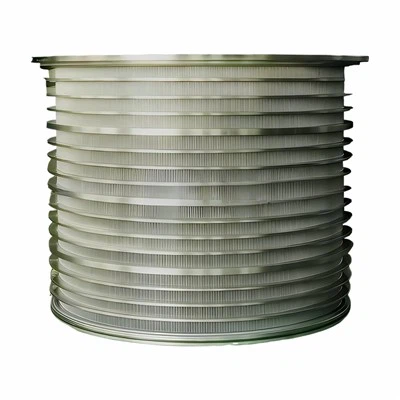
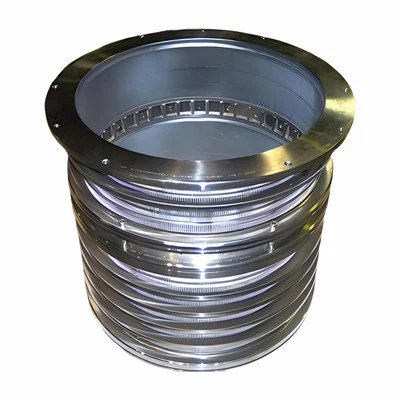
As a key component for screening, it is made of a special high-strength alloy material and undergoes precise processing to ensure a smooth and highly flat surface.
The surface of the screen drum is covered with uniformly fine and dense screen holes. The size and shape of these screen holes are precisely designed based on strict screening requirements and pulp characteristics. The distribution of the screen holes is uniform, and the density is reasonable to achieve an efficient screening effect.
To enhance the wear resistance and service life of the screen drum, its surface is usually subjected to hardening treatment or coated with a special wear-resistant coating.
3.Rotor
Manufactured from high-quality steel, it undergoes fine machining and heat treatment to obtain favorable comprehensive mechanical properties.
The shape and blade design of the rotor are unique. Through fluid dynamics analysis and optimization, it can generate an appropriate flow field during rotation, promoting the uniform dispersion of the pulp and effective contact with the screen drum.
The rotational speed of the rotor can be precisely adjusted through an advanced speed control system to adapt to different pulp characteristics and concentrations, as well as different production scales and quality requirements.
4.Inlet and Outlet Ports
The inlet port is designed rationally and precisely. Usually, a gradually expanding or guiding structure is adopted to ensure the pulp flows uniformly and steadily into the screen, avoiding local impacts and uneven pressure.
The outlet ports are divided into good pulp outlets and reject pulp outlets. The good pulp outlet is typically located at the upper part or side of the screen body and is designed to be smooth to ensure the smoothly discharge of the screened high-quality pulp, reducing resistance and pressure loss. The reject pulp outlet is located at the bottom or a specific position of the screen body and is equipped with control valves or adjustment devices to flexibly control the discharge volume and frequency of the reject pulp based on the screening effect and impurity content.
Working Principle
1.Inlet Stage
Under the external pressure, the pulp enters the interior of the inflow pressure screen through the inlet pipeline and the elaborately designed inlet port at a stable and uniform flow rate and pressure.
During the inlet process, pressure sensors and flow controllers monitor the pressure and flow of the inlet pulp in real-time to ensure they comply with the equipment's design requirements and the parameter settings of the production process.
The special structure and guiding design of the inlet port enable the pulp to distribute evenly and rapidly within the screen body, creating favorable conditions for the subsequent screening process.
2.Screening Stage
Once the pulp enters the screen body, the high-speed rotating rotor generates a strong centrifugal force and turbulence, creating a complex flow state within the screen drum.
Due to the size of the screen holes on the screen drum being smaller than the size of impurities and non-compliant fibers, under the combined action of centrifugal force, pressure, and turbulence, fine fibers and qualified pulp pass through the screen holes, while larger impurities and non-compliant fibers are blocked on the surface of the screen drum.
Simultaneously, the blade design and rotational speed of the rotor can effectively promote the renewal and mixing of the pulp, improving the screening efficiency and accuracy.
3.Reject Discharge Stage
The impurities and non-compliant fibers blocked on the surface of the screen drum gradually move towards the reject pulp outlet under the impetus of the rotor.
The control device at the reject pulp outlet opens or adjusts the opening degree timely based on the preset parameters and the actual screening situation to discharge the reject pulp from the screen body.
The reject discharge process is carried out continuously or intermittently to ensure the stability of the screening process and the consistency of the screening effect.
Performance Characteristics
1.High-Efficiency Screening Performance
The inflow pressure screen adopts an advanced structural design and working principle, enabling it to handle a large amount of pulp in a short period and achieve efficient screening and separation.
Its high screening efficiency allows for the rapid removal of impurities and non-compliant fibers from the pulp, enhancing the purity and quality of the pulp.
2.High-Precision Screening
With the finely designed screen drum and optimized working parameters, it can achieve high-precision screening of the pulp, ensuring the consistency of fiber length, fineness, and quality of the screened pulp.
It can effectively remove tiny impurities and fiber bundles, providing high-quality pulp raw materials for the production of high-quality paper.
3.Stable and Reliable Operation
All components are made of high-quality materials and undergo advanced manufacturing processes. Coupled with a reasonable structural design, the equipment can maintain stable performance during long-term continuous operation.
It is equipped with a comprehensive monitoring and protection system that can monitor the operating status of the equipment in real-time, promptly detect and handle faults, ensuring the continuity and stability of production.
4.Energy Saving and Low Noise
The optimized design and efficient power system enable the equipment to effectively reduce energy consumption during operation, saving production costs.
Simultaneously, through reasonable structural design and noise reduction measures, the noise level during equipment operation can be significantly reduced, improving the working environment.
5.Easy Operation and Maintenance
It is equipped with an intelligent control system with a simple and intuitive operation interface. Operators can master the operation and control of the equipment proficiently after simple training.
The maintenance of the equipment is convenient. Key components such as the screen drum and rotor are easy to disassemble and replace, reducing maintenance costs and downtime.
Application Fields
1.Papermaking Pulping Production Lines
In processes such as chemical pulping, mechanical pulping, and waste paper pulping, it is used to remove impurities, fiber bundles, and fine particles from the raw materials, improving the quality and purity of the pulp.
It can be used in conjunction with other pulping equipment to optimize the pulping process, enhance production efficiency, and product quality.
2.Paper Production
It provides pulp that meets the quality requirements for various types of paper production, such as cultural paper, packaging paper, and specialty paper.
It helps improve the physical properties, surface quality, and printing performance of the paper, meeting the high-standard requirements of different types of paper for various uses.
3.Pulp Recycling and Reutilization
In the process of waste paper recycling and re-pulping, it conducts in-depth screening and purification of the waste paper pulp to remove ink, adhesives, impurities, etc., improving the utilization rate and quality of the recycled pulp.
It promotes the recycling of resources, reduces the dependence on virgin fibers, lowers production costs, and eases environmental pressure.
Operation and Maintenance Points
1.Operation Points
Operators should be familiar with the operation manual and process flow of the equipment and strictly follow the operating procedures for startup, operation, and shutdown.
During the equipment's operation, closely monitor the changes in parameters such as pressure, flow rate, and concentration, and adjust the operating parameters in a timely manner to ensure the stable operation of the equipment and the screening effect.
Regularly conduct inspections of the equipment, check the operating status, sound, vibration, etc., and handle any abnormalities promptly.
2.Maintenance Points
Regularly inspect and clean the screen drum to remove blockages from the screen holes and ensure the permeability and screening efficiency of the screen drum.
Regularly lubricate and maintain the moving components such as the rotor and bearings, inspect their wear conditions, and replace worn components in a timely manner.
Regularly check the performance of the sealing components and replace the sealing components promptly in case of leakage.
Conduct regular overhauls and maintenance in accordance with the equipment's maintenance plan, and conduct a comprehensive inspection, repair, and commissioning of the equipment.
Particular model
Inflow pressure screen:ZSL71,ZSL72,ZSL73,ZSL74,ZSL75,ZSL76
ZSL81,ZSL82,ZSL83,ZSL84,ZSL85,ZSL86
Hot Tags: inflow pressure screen, China inflow pressure screen suppliers, factory, w w treating equipments, pulping and breaking equipment, 4200 450 Headbox, Pulp Residue Sarew Press, Fiber Grading Sieves, cleaning and screening equipment
You Might Also Like



Send Inquiry