


Vertical Centrifugal Sieve
Introduce
In the papermaking industry, "Vertical centrifugal screen" is a key equipment used for pulp screening and purification. Its main function is to separate impurities, fiber bundles and fibers that do not meet the requirements from the pulp through the action of centrifugal force, thereby improving the quality and purity of the pulp and providing high-quality raw materials for the subsequent papermaking processes.
Working Principle
1.Generation of Centrifugal Force through High-Speed Rotation
Driven by a high-performance motor, the screen cylinder rotates at an extremely high speed, creating a strong and uniform centrifugal force field inside the cylinder. The magnitude of the centrifugal force directly depends on the rotational speed of the screen cylinder and its radius. Typically, a higher rotational speed and a larger radius result in a stronger centrifugal force.
To achieve a stable and adjustable centrifugal force, the equipment is usually equipped with an advanced speed control system that enables precise control of the motor's rotational speed based on the characteristics of the pulp and production requirements, thereby achieving the optimal screening effect.
2.Separation of Pulp under the Action of Centrifugal Force
Once the pulp is introduced into the rapidly rotating screen cylinder, under the powerful centrifugal force, different components in the pulp are subjected to significantly different forces. Fine fibers and high-quality good pulp, due to their smaller mass and favorable morphology, can smoothly pass through the tiny pores of the screen mesh under the action of the centrifugal force.
In contrast, larger-sized impurities, fiber bundles, and undispersed fiber masses, due to their larger mass and irregular morphology, experience a relatively smaller centrifugal force and are unable to pass through the pores of the screen mesh, and are thus effectively retained inside the screen cylinder. Additionally, the centrifugal force causes these retained impurities and fiber masses to accumulate towards the inner wall of the screen cylinder, preparing for subsequent discharge.
3.Continuous Screening and Separation
To meet the demands of large-scale papermaking production, the vertical centrifugal screen adopts a continuous feeding and continuous discharging working mode. The pulp to be screened is continuously fed into the screen cylinder, while the screened good pulp and separated impurities are also continuously discharged, achieving an uninterrupted screening and separation process.
This continuous operation mode not only enhances production efficiency but also ensures the stability and consistency of pulp quality. By precisely controlling the feeding rate, the magnitude of the centrifugal force, and the discharge flow rate, a stable screening effect can be maintained during long-term operation, adapting to the requirements of different production scales and pulp characteristics.
Structural Components
1.Drive System
Comprises a powerful motor, a speed reducer, and precise transmission components. The motor provides sufficient power, the speed reducer converts the high rotational speed of the motor to a suitable low speed for the screen cylinder rotation, and the transmission components ensure smooth and efficient power transmission to the screen cylinder, guaranteeing its stable and high-speed rotation.
The drive system usually features speed adjustment functionality, allowing flexible adjustment of the rotational speed of the screen cylinder based on actual production needs to achieve different screening effects and processing capacities.
2.Screen Cylinder
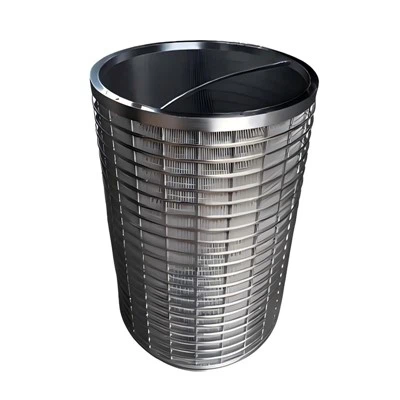
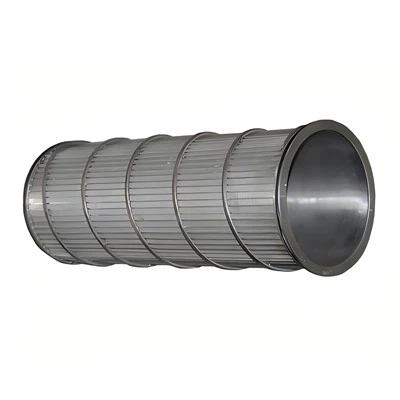
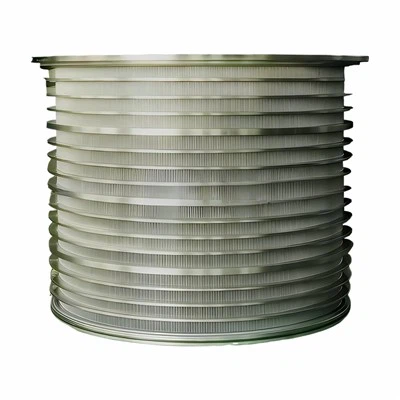
Made of high-strength and corrosion-resistant materials, typically stainless steel or special alloys. The screen cylinder is cylindrical in shape, and its surface is covered with meticulously designed screen pores, and the size and distribution of the pores are precisely processed according to the screening requirements.
The interior of the screen cylinder usually incorporates reinforcing ribs or support structures to enhance its stability and resistance to deformation during high-speed rotation, ensuring that the shape and size of the screen pores do not change due to the centrifugal force and the impact of the pulp.
3.Screen Mesh
Installed on the inner wall of the screen cylinder, it is a key component for achieving the screening function. The material of the screen mesh typically has good wear resistance, corrosion resistance, and air permeability, such as stainless steel wire mesh or polymer synthetic material mesh.
The pore size and porosity of the screen mesh are strictly designed to effectively separate impurities and fibers of the target size while ensuring a sufficient throughput of good pulp to improve production efficiency.
4.Feeding Device
Responsible for uniformly and stably delivering the pulp to be screened into the interior of the screen cylinder. The feeding device typically includes components such as the feeding pipeline, feeding pump, and feeding nozzle. It can precisely control the flow rate and pressure of the feeding based on the rotational speed and processing capacity of the screen cylinder.
To avoid vortex formation and uneven distribution during the feeding process, the design of the feeding nozzle is usually optimized to ensure that the pulp enters the screening area uniformly along the axial direction of the screen cylinder.
5.Discharge System
Divided into the good pulp outlet and the impurity outlet. The good pulp outlet is usually located at the lower part or the side of the screen cylinder, and the screened high-quality pulp is conveyed to the subsequent processing procedures through pipelines. The impurity outlet is set at the upper part or a specific position of the screen cylinder for discharging the retained impurities and fiber masses.
The discharge system is usually equipped with valves and flow control devices to regulate the speed and flow rate of the discharge, ensuring the balance and stability of the screening process.
6.Shell and Support Structure
The shell is typically made of sturdy metal materials, serving the purpose of protecting the internal components and the safety of the operators. Simultaneously, the shell can also reduce noise and prevent pulp splashing.
The support structure is used for installing and fixing the entire vertical centrifugal screen, ensuring its stability during operation without vibration and displacement. The support structure is usually fabricated from thick steel and is designed for seismic resistance and stability.
7.Control System
Composed of sensors, a controller, and an operation interface. The sensors monitor the operating parameters of the equipment in real-time, such as rotational speed, feeding flow rate, discharge flow rate, pressure, etc., and feed this data back to the controller.
The controller precisely controls the drive system, feeding device, and discharge system based on the preset process parameters and the information feedback from the sensors, enabling automatic operation and optimized operation. The operation interface provides an intuitive and convenient monitoring and operation platform for the operators, facilitating adjustment and management of the equipment.
Performance Characteristics
1.Efficient Screening
With the powerful centrifugal force generated by high-speed rotation, it can handle a large volume of pulp in a short time, achieving efficient impurity separation and pulp purification.
Compared to traditional screening equipment, the vertical centrifugal screen typically has a higher screening efficiency and can meet the high-output requirements of modern large-scale papermaking production lines.
2.High-Precision Separation
By selecting a screen mesh with the appropriate pore size and porosity, precise separation of impurities and fibers of different sizes and shapes can be achieved, ensuring a high degree of consistency and stability in pulp quality.
Even for fine impurities and short fibers, effective separation can be carried out, thereby significantly enhancing the purity and quality of the pulp.
3.Strong Adaptability
It can adapt to different types, concentrations, and temperatures of pulp, as well as changes in production processes and quality requirements. Through adjusting the rotational speed, screen mesh parameters, and feeding speed, it can flexibly adapt to various complex production conditions.
For new pulp raw materials and production formulations, adjustments and optimizations can be made quickly to ensure the desired screening effect is always achieved.
4.Stable and Reliable Operation
Utilizing advanced design and manufacturing techniques, the key components have good strength and wear resistance and can maintain stable performance during long-term continuous operation.
Equipped with a comprehensive monitoring and protection device, it can promptly detect and handle abnormal situations during equipment operation, such as overload, overheating, clogging, etc., reducing the incidence of faults, and improving the availability and production efficiency of the equipment.
5.Energy Saving and Consumption Reduction
Through optimizing the structural design and operating parameters, energy consumption can be reduced while achieving efficient screening. For example, a reasonable design of the screen cylinder shape and rotational speed can minimize unnecessary energy losses.
Compared to traditional screening equipment, it typically has lower energy consumption and operating costs, in line with the energy-saving and emission-reduction requirements of modern industry.
6.Easy Maintenance and Upkeep
The design of each component considers the requirements of easy disassembly and installation, facilitating daily inspection, cleaning, and maintenance work. The replacement of the screen mesh and wearing parts is also relatively simple and quick, reducing equipment downtime.
Simultaneously, the maintenance cycle of the equipment is relatively long, and the maintenance cost is relatively low, contributing to reducing the operating costs and management difficulties of the enterprise.
Operation and Maintenance
1.Operation Key Points
Before starting the machine, the operator must conduct a comprehensive equipment inspection, including checking whether the connections of each component are firm, whether the electrical system is normal, whether the lubrication is in good condition, and whether the screen mesh is intact.
Based on the production process requirements and the characteristics of the pulp, accurately set the operating parameters of the equipment, such as rotational speed, feeding speed, and discharge flow rate, and closely observe the operating status after the equipment starts to ensure a smooth startup and normal operation.
During the operation of the equipment, the operator should monitor the various operating indicators of the equipment in real-time, such as pressure, flow rate, temperature, and motor current. Through the observation window and sampling analysis, promptly understand the screening effect of the pulp.
Regularly conduct quality tests on the screened pulp and adjust the operating parameters of the equipment in a timely manner based on the test results to ensure the best screening effect and product quality are always achieved.
2.Maintenance Work
Regularly clean the feeding system to prevent debris from blocking the feeding pipeline and the feeding nozzle, affecting the uniformity and stability of the feeding.
Regularly inspect and clean the screen cylinder and the screen mesh, remove impurities and fibers attached to the screen mesh, and check whether the screen mesh is damaged or deformed. If there are issues, replace the screen mesh promptly.
Check the lubrication condition of the drive system and replace the worn transmission components in a timely manner to ensure the normal operation of the motor, speed reducer, and other equipment.
Regularly inspect and maintain the discharge system to ensure the discharge pipeline is unobstructed, and the valves and flow control devices are sensitive and reliable.
Regularly inspect the shell and support structure of the equipment to check for corrosion, deformation, cracks, etc. Repair and reinforce in a timely manner to ensure the safety and stability of the equipment.
Establish detailed equipment maintenance files, recording the time, content, replaced components, and maintenance personnel of each maintenance to provide a reference basis for the long-term operation and management of the equipment.
Application Advantages
1.Significantly Improve Paper Quality
By removing impurities and undesirable fibers from the pulp, the paper surface becomes smoother and flatter, reducing flaws and defects, and improving the physical properties of the paper, such as strength, air permeability, and water absorption, to meet the production requirements of high-end paper products.
Improve the printability and writing performance of the paper, making the printed patterns clearer and brighter, and the writing smoother.
2.Protect Subsequent Equipment
Provide pure pulp, reducing the wear and clogging of impurities and fiber masses on subsequent papermaking equipment, such as the wire section, press section, and drying section of the papermaking machine, reducing equipment maintenance costs and extending the service life of the equipment.
Stabilize the operating status of subsequent equipment, improving production efficiency and product qualification rate.
3.Optimize the Production Process and Flow
The efficient screening effect helps maintain the continuity and stability of the production process, reducing process adjustments and production interruptions caused by pulp quality fluctuations, improving production efficiency and product consistency.
It can flexibly adjust the screening parameters according to different pulp raw materials and production requirements to adapt to various complex production conditions, providing technical support for enterprises to achieve diversified production and customized services.
4.Reduce Production Costs
Increase the utilization rate of pulp and the output of good pulp, reducing the waste of raw materials and energy consumption. At the same time, reduce the cost of equipment maintenance and component replacement, thereby reducing the overall production cost.
Improve product quality, reduce the production of substandard and waste products, and indirectly reduce production costs.
5.Comply with Environmental Protection Requirements
Effectively reduce the discharge of waste residues and impurities, reducing environmental pollution and complying with increasingly strict environmental protection regulations and sustainable development requirements.
Specific model(size)
Vertical centrifugal screen:Φ400,Φ600
Hot Tags: vertical centrifugal sieve, China vertical centrifugal sieve suppliers, factory, dispersering system, 4200 500 Calender Machine, FSizing Roll Operate Speed 1200m, H C Hydrapulper, PaperRetrofitting PaperMachine Energy Saving and Efficiency Improvement Renovation Project, Paper Machine Grapple
Previous
Screen CylinderYou Might Also Like



Send Inquiry