


WPS Pressure Screen
Structure
1.Screen Drum
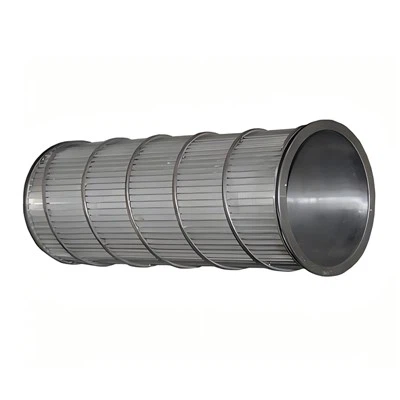
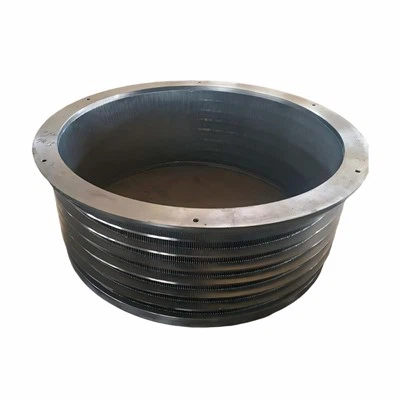
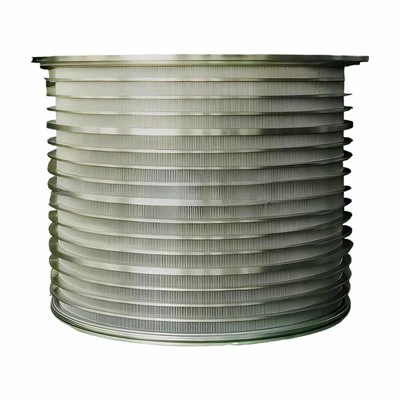
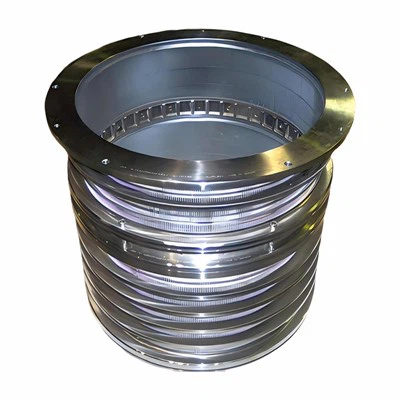
The screen drum is one of the core components of the WPS pressure screen. It is typically made of high-quality stainless steel or other wear-resistant and corrosion-resistant materials. The surface is equipped with elaborately designed screen holes or slots. The shape, size, and distribution density of the screen holes (slots) directly affect the screening accuracy and efficiency. The size and shape of the screen drum are customized according to different models and production requirements to adapt to different scales of papermaking production lines.
To ensure the stability and durability of the screening effect, the manufacturing process of the screen drum is very strict. It requires precise processing and heat treatment to ensure the flatness of the surface and the consistency of the screen holes (slots). At the same time, the internal structure of the screen drum may also be specially designed to enhance its strength and resistance to deformation, maintaining good performance in the working environment of high-speed rotation and pulp impact.
2.Shell
The shell of the pressure screen is usually made of strong metal materials, such as cast iron or cast steel. Its shape is mostly cylindrical or conical, capable of effectively withstanding the internal pressure and pulp impact. The design of the shell not only considers mechanical strength but also the convenience and sealing of the connection with the inlet and outlet pulp pipes.
On the surface of the shell, observation windows and access ports are usually provided for operators to observe the internal working conditions and conduct daily maintenance. In addition, the shell is also equipped with some reinforcing ribs and support structures to improve its overall stability and seismic performance.
3.Rotor
The rotor is a key component in the WPS pressure screen used to promote pulp flow and generate the screening effect. It usually consists of multiple blades. The shape, angle, and number of the blades are optimized according to different screening requirements. The rotation speed and direction of the rotor can be precisely controlled through the motor and transmission system to achieve the best screening effect.
To improve the wear resistance and service life of the rotor, its surface is usually subjected to hardening treatment or covered with a wear-resistant coating. In some advanced WPS pressure screens, the rotor may also be equipped with an automatic cleaning device that can remove impurities and fibers attached to the blades in time during operation to ensure its working efficiency and stability.
Working Principle
1.Inlet Stage
Pulp enters the interior of the screen body under a certain pressure through the inlet pipe from the bottom or side of the pressure screen. The position and design of the inlet affect the initial distribution and flow state of the pulp, thereby influencing the subsequent screening process. During the inlet process, the pressure and flow rate of the inlet pulp are usually precisely controlled through the flow control valve and pressure sensor to ensure the pressure screen operates under the optimal working conditions.
2.Screening Process
Once the pulp enters the screen body, the rotor starts to rotate at high speed, driving the pulp to form a strong turbulence on the inner surface of the screen drum. This turbulence fully disperses the fibers and impurities in the pulp and brings them into contact with the surface of the screen drum under the action of centrifugal force and pressure. Since the size of the screen holes (slots) is smaller than the size of impurities and fiber bundles, fine fibers and good pulp can pass through the screen holes (slots), while larger impurities, pulp bundles, and undispersed fibers are blocked on the surface of the screen drum.
Simultaneously, the rotation of the rotor also generates an axial thrust, promoting the blocked impurities and fiber bundles to move towards the slag discharge port along the surface of the screen drum. During this process, the pulp on the surface of the screen drum is constantly updated to ensure the continuous progress of screening and the stability of the screening effect.
3.Slag Discharge Stage
The blocked impurities and fiber bundles gradually accumulate near the slag discharge port under the impetus of the rotor. The slag discharge port is usually located at the upper part or side of the screen body. Through the control of the slag discharge valve, impurities can be discharged from the screen body periodically or continuously. To prevent good pulp from being discharged along with impurities, the design of the slag discharge port usually adopts a special structure or device, such as a reverse flow device or a throttle plate, to ensure the purity and efficiency of the slag discharge.
Performance Characteristics
1.Screening Efficiency
The WPS pressure screen adopts advanced screening technology and optimized structural design, capable of efficiently separating impurities and fiber bundles from the pulp. The screening efficiency can usually reach more than 90%. Compared with traditional screening equipment, its screening accuracy is higher, and it can effectively remove tiny impurities and fiber bundles, thereby improving the quality and purity of the pulp.
In addition, the high-speed rotation and turbulence effect of the pressure screen can make the pulp fully contact the surface of the screen drum in a short time, greatly shortening the screening time and improving the production efficiency. At the same time, its continuous operation mode can also ensure the stability and continuity of production, reducing production losses caused by equipment shutdown and switching.
2.Production Capacity
Due to its compact structure and stable operation, the WPS pressure screen has a large production capacity. Different models of pressure screens can be selected according to the scale and requirements of the papermaking production line, with processing capacities ranging from several tons to tens of tons per hour. Through reasonable design and configuration, the pressure screen can adapt to different concentrations and flows of pulp, meeting the requirements of large-scale papermaking production.
At the same time, the automatic control system of the pressure screen can automatically adjust the operating parameters, such as rotation speed and inlet pressure, according to changes in production load to ensure stable production capacity and screening effect under different production conditions.
3.Operational Stability
During the design and manufacturing process, the WPS pressure screen fully considers the requirements of mechanical performance and operational stability. Key components such as the screen drum, rotor, bearings, etc., all adopt high-quality materials and advanced processing techniques, with good wear resistance, corrosion resistance, and fatigue resistance.
At the same time, the transmission system and support structure of the pressure screen are carefully designed and optimized to effectively reduce vibration and noise, ensuring long-term stable operation of the equipment under high-speed rotation and high-pressure working conditions. In addition, the pressure screen is also equipped with a complete monitoring and protection system, such as temperature sensors, pressure sensors, vibration sensors, etc., which can monitor the operating status of the equipment in real-time. Once abnormal conditions occur, it can alarm and shut down in time to avoid equipment damage and production accidents.
Operation and Maintenance
1.Operational Convenience
The operation interface of the pressure screen usually adopts an intelligent control system, which is intuitive, simple, and easy to operate. Operators can easily set and adjust the operating parameters of the equipment, such as inlet pressure, rotation speed, slag discharge time, etc., through the touch screen or control panel. At the same time, the system also displays the operating status, screening effect, fault information, etc. of the equipment in real-time, facilitating the monitoring and management of the operators.
To improve the safety and reliability of the operation, the pressure screen is also equipped with a series of safety protection devices, such as overload protection, short-circuit protection, emergency stop buttons, etc. In addition, the start-up and shutdown processes of the equipment are also optimized to achieve a smooth transition, reducing the impact on the equipment and production.
2.Maintenance
Regular maintenance is very important to ensure the long-term stable operation of the pressure screen. In daily maintenance, it is necessary to regularly check the wear condition of the screen drum and replace the severely worn screen drum or screen plate in time to ensure the screening accuracy. At the same time, it is also necessary to conduct lubrication and fastening checks on the rotor, bearings, transmission components, etc., to ensure their normal operation.
Regularly clean the residual impurities and accumulated pulp inside the screen body to prevent the clogging of the screen holes (slots) and the impact on the performance of the equipment. For some wearing parts, such as seals and belts, it is also necessary to inspect and replace them regularly to ensure the sealing and transmission efficiency of the equipment. In addition, it is also necessary to regularly inspect and maintain the electrical system of the equipment to ensure its safe and reliable operation.
Impact on Paper Quality
1.Paper Quality
Through the fine screening of the WPS pressure screen, impurities and fiber bundles in the pulp are removed, making the pulp purer and more uniform. This helps to improve the physical properties of the paper, such as strength, air permeability, and flatness. The reduction of impurities can also avoid the formation of spots, holes, and other defects on the paper surface, improving the appearance quality and printability of the paper.
In addition, the pressure screen can effectively control the length and distribution of fibers, thereby improving the uniformity and fiber bonding force of the paper, further improving the quality and performance of the paper. For some paper grades with high requirements for paper quality, such as high-grade cultural paper and specialty paper, the role of the pressure screen is particularly important.
2.Adaptability to Paper Grades
The WPS pressure screen has strong adaptability to different paper grades and can be flexibly adjusted and optimized according to the production requirements of different paper grades. For example, for the production of cultural paper, finer screening accuracy may be required to remove tiny impurities and fiber bundles to ensure the surface smoothness and print quality of the paper. For the production of packaging paper, more attention may be paid to the screening efficiency and processing capacity to meet the requirements of large-scale production.
By adjusting parameters such as the size of the screen holes (slots) of the screen drum, the rotation speed of the rotor, and the inlet pressure, the pressure screen can adapt to the production processes and quality requirements of different paper grades, providing strong support for papermaking mills to produce diversified products.
Energy Saving and Environmental Protection
1.Energy Saving
The WPS pressure screen adopts efficient screening technology and optimized structural design, which can reduce energy consumption while ensuring the screening effect. The high-speed rotation of the rotor and the turbulence effect can complete the screening of the pulp in a short time, reducing the number of pulp circulation treatments and power consumption.
At the same time, the automatic control system of the pressure screen can automatically adjust the operating parameters according to changes in production load, avoiding idling and excessive operation of the equipment, and further reducing energy consumption. In addition, some advanced pressure screens also adopt energy-saving motors and transmission systems to improve energy utilization efficiency and save production costs for papermaking mills.
2.Environmental Significance
The use of pressure screens can effectively reduce the discharge of waste pulp and impurities, reducing environmental pollution. Through screening and separation, recyclable fibers are reused in the production process, improving resource utilization and reducing waste generation.
At the same time, the efficient screening effect of the pressure screen can reduce the load of subsequent treatment processes, reducing the difficulty and cost of wastewater treatment. It is of great significance for papermaking mills to achieve clean production, energy conservation, emission reduction, and sustainable development.
Position in the Papermaking Process
1.Position Connection
In the papermaking process, the WPS pressure screen is usually located after the fine pulp stage in the pulping process. After the previous processes such as pulp breaking, impurity removal, and beating, the pulp enters the pressure screen for further screening and purification to remove residual impurities and fiber bundles and improve the quality and purity of the pulp.
The good pulp processed by the pressure screen is transported to subsequent papermaking processes, such as the headbox, wire section, press section, etc., for paper production. The pressure screen plays a key connection role between the pulping and papermaking processes, ensuring the smooth and stable operation of the entire papermaking process.
Particular model
WPS pressure screen:WPS400,WPS600,WPS700,WPS800,WPS900,WPS1000
Hot Tags: wps pressure screen, China wps pressure screen suppliers, factory, UV Pressure Screen, expanded metal screen basket, barbecue screen basket, veneering screen basket, oval wire screen basket, plastic screening basket
Previous
Vertical Centrifugal SieveYou Might Also Like


Send Inquiry