


FT Pressure Screen
Structural Components
1.Screen Drum
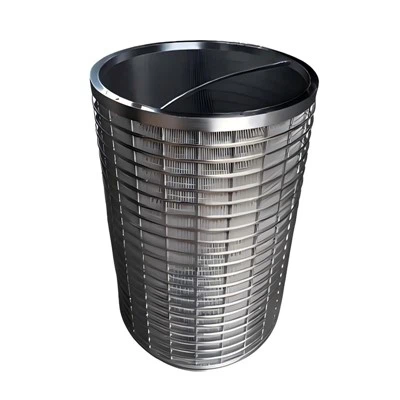
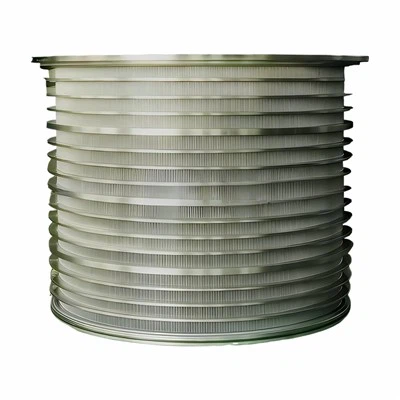
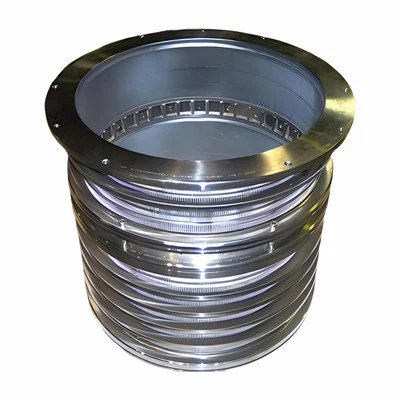
The screen drum is one of the core components of the FT pressure screen. It is typically fabricated from high-quality stainless steel or special alloy materials to ensure excellent wear and corrosion resistance. The surface of the screen drum is evenly distributed with elaborately designed screen holes, and the size and shape of these screen holes are crucial for the screening effect. The size of the screen holes can be customized according to specific production requirements, ranging from the micrometer level to the millimeter level, to achieve precise screening of fibers of different thicknesses and impurities.
The diameter and length of the screen drum directly determine the screening area and processing capacity. Larger diameter and longer screen drums can handle more pulp per unit time and are suitable for large-scale papermaking production lines; while smaller-sized screen drums are more suitable for small-scale or special production scenarios.
2.Shell
The shell provides a sturdy support and protection for the FT pressure screen. It is usually made of heavy metal materials such as cast iron or cast steel. The design of the shell must not only be able to withstand the forces generated by the internal pulp flow and pressure but also ensure good sealing to prevent pulp leakage during operation, avoiding production accidents and environmental pollution.
The surface of the shell is usually treated with special processes, such as painting or anti-corrosion coatings, to enhance its corrosion and wear resistance and extend the service life of the equipment. On the shell, there are also observation windows and access doors for operators to observe the internal operation and conduct daily maintenance work.
3.Rotor
The rotor is a key component in the FT pressure screen that drives the pulp flow and realizes the screening effect. Its shape and the design of the blades directly affect the flow state and screening effect of the pulp inside the screen drum. The rotor usually consists of multiple blades, and the shape of the blades can be linear, curved, or other complex shapes to generate different flow fields and pressure distributions.
The rotational speed of the rotor can be adjusted through the motor and transmission system to adapt to pulps of different properties and concentrations. At high speeds, the rotor can generate strong centrifugal force and turbulence, promoting the full dispersion of fibers and impurities in the pulp and effectively passing through the screen holes or being blocked on the surface of the screen drum.
4.Inlet and Outlet Ports
The position and design of the inlet port determine the initial state and distribution of the pulp as it enters the screen body. A reasonable inlet port design enables the pulp to be uniformly distributed along the entire circumference of the screen drum, improving the screening efficiency. The inlet port is usually equipped with a flow control device to regulate the entry speed and pressure of the pulp.
The outlet port is responsible for discharging the screened good pulp from the screen body. Its position and shape are designed to ensure the smooth outflow of the good pulp, avoiding clogging or backflow phenomena.
Working Principle
1.Inlet Stage
Under a certain pressure, the pulp enters the interior of the FT pressure screen through the inlet pipe and the inlet port. The special design of the inlet port enables the pulp to enter the screen body at a uniform speed and distribution, creating favorable conditions for the subsequent screening process.
During the inlet process, the control of pressure and flow is of paramount importance. Excessive pressure and flow may lead to excessive wear of the screen drum and a decline in the screening effect, while too low pressure and flow will affect production efficiency.
2.Screening Process
Once the pulp enters the screen body, the rotor begins to rotate at high speed. The blades of the rotor drive the pulp to generate intense turbulence and centrifugal force, fully dispersing the fibers and impurities in the pulp and bringing them into contact with the surface of the screen drum under pressure.
Due to the size of the screen holes being smaller than the size of impurities and undispersed fiber bundles, fine fibers and good pulp can pass through the screen holes, while larger impurities and fiber bundles are blocked on the surface of the screen drum. Simultaneously, the rotation of the rotor also generates an axial thrust, pushing the blocked impurities and fiber bundles towards the slag discharge port.
3.Slag Discharge Stage
The blocked impurities and fiber bundles gradually accumulate near the slag discharge port under the impetus of the rotor. The slag discharge port is usually located at the upper part or side of the screen body. Through the control of the slag discharge valve, impurities can be discharged from the screen body periodically or continuously.
To ensure the purity and efficiency of the slag discharge, the design of the slag discharge port usually adopts special structures or devices, such as reverse flow devices or throttle plates, to prevent good pulp from being discharged along with impurities.
Performance Characteristics
1.Efficient Screening
The FT pressure screen adopts advanced screening technology and an optimized structural design, enabling efficient screening of the pulp within a short period. It removes impurities and unqualified fibers, enhancing the quality and purity of the pulp.
Its screening efficiency can typically reach over 90%, far exceeding that of traditional screening equipment, providing a strong guarantee for papermaking mills to produce high-quality paper.
2.High-Precision Screening
With fine screen hole design and precise manufacturing processes, the FT pressure screen can achieve high-precision screening of the pulp. It can effectively remove tiny impurities and fiber bundles, making the fiber length and distribution in the pulp more uniform, thereby improving the physical properties and appearance quality of the paper.
3.Large Processing Capacity
Due to its reasonable structure and powerful power system, the FT pressure screen has a large processing capacity. It can meet the needs of large-scale papermaking production lines and can process dozens or even hundreds of tons of pulp per hour, significantly improving production efficiency.
4.Stable Operation
Utilizing high-quality materials and advanced manufacturing processes ensures the stability and reliability of the equipment. During long-term operation, it can maintain a stable screening effect and mechanical performance, reducing faults and downtime, and lowering maintenance costs and production losses.
5.Energy Saving and Consumption Reduction
Through optimized design and advanced control systems, the FT pressure screen can effectively reduce energy consumption. While ensuring the screening effect, it minimizes the waste of electricity and water resources, conforming to the energy conservation and environmental protection requirements of the modern papermaking industry.
Operation and Maintenance
1.Operational Convenience
The FT pressure screen is equipped with an intelligent operating system with a simple and intuitive interface that is easy for operators to master and use. The operating parameters of the equipment, such as inlet pressure, rotor speed, and slag discharge time, can be easily set and adjusted through the touch screen or control panel.
The system also features real-time monitoring and alarm functions, capable of promptly detecting abnormal conditions during equipment operation and issuing alerts to remind operators to handle them, ensuring the safe operation of the equipment.
2.Maintenance
To ensure the long-term stable operation of the FT pressure screen, regular maintenance is indispensable. In daily maintenance, it is necessary to periodically inspect the wear condition of the screen drum, the balance state of the rotor, the lubrication condition of the bearings, etc., and replace severely worn components in a timely manner.
At the same time, it is also necessary to regularly clean the accumulated pulp and impurities inside the screen body to maintain the cleanliness and smoothness of the equipment. For some key components, such as motors and reducers, they also need to be inspected and maintained according to the prescribed cycle to ensure their performance and reliability.
Application Scope
1.Production of Various Paper Grades
The FT pressure screen is widely used in the production processes of various paper grades, such as cultural paper, packaging paper, and specialty paper. The screening parameters and processes can be adjusted according to the production requirements and quality standards of different paper grades to meet the production needs of different paper grades.
2.Waste Paper Recycling and Utilization
In the field of waste paper recycling and utilization, the FT pressure screen can effectively remove impurities and contaminants from waste paper pulp, improving the quality and utilization rate of waste paper pulp and providing important technical support for the recycling of waste paper.
3.Optimization of Pulping Processes
By using the FT pressure screen, the pulping processes can be optimized and improved to enhance pulping efficiency and quality, reduce production costs, and strengthen the market competitiveness of enterprises.
Particular model
FT pressure screen:FT1,FT2,FT2X,FT3
Hot Tags: ft pressure screen, China ft pressure screen suppliers, factory, HB Pressure Screen, separate the screening equipment, Inflow Fine Pressure Screen, Double Pneumatic Doctor, sizing equipment, flotation and deinking equipment
Previous
UV Pressure ScreenYou Might Also Like



Send Inquiry