


Paper Machine Kneader
Application
Wax dispersion for OCC,ink dispersion for MOW/OMG.
Features
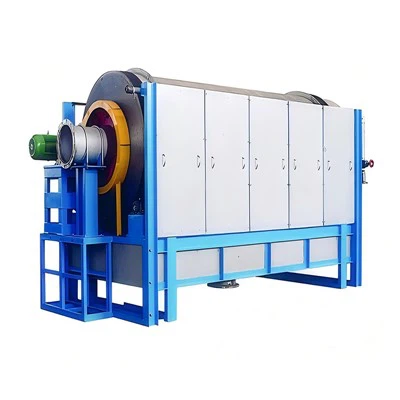
- Rotor and stator optimized with a certain auxiliary angle can assure: freeness of pulp will not be decreased on condition that pulp is strongly kneaded and impurities is efficiently dispersed,meantime, moist-expansion degree of pulp and combination intensity between pulp layers will be enhanced.
- Lined with stainless steel, which can make sure of the impact of heavy-metal ion on chemicals under high temperature state.
- The discharge assembly that is automatically controlled by loading power can effectively prevent steam from escaping, thereby maintaining the temperature needed for dispersion and decreasing steaming consumption.
Structural Components
1.Body
Typically crafted from thick and robust metal materials, such as high-quality stainless steel or high-strength alloys. This material not only provides stable support but also exhibits excellent corrosion and high-temperature resistance, adapting to the complex working environment in the paper industry.
The inner surface of the body is coated with a special wear-resistant layer, usually made of polymer or ceramic materials, which has extremely high hardness and wear resistance. It effectively prevents wear and scratching on the inner surface of the body caused by the materials during the stirring and rubbing process, prolonging the service life of the body.
To enhance the insulation performance of the equipment and reduce heat loss, the outer layer of the body may be equipped with insulation materials, such as asbestos or glass fiber, to lower energy consumption and maintain a stable temperature inside the equipment.
2.Stirring Shaft
The stirring shaft is manufactured from high-strength alloy materials and undergoes strict heat treatment and machining processes to ensure outstanding mechanical properties. It can withstand huge torques and stirring forces and is less prone to deformation or fracture during long-term high-speed operation.
Uniquely shaped and meticulously designed stirring blades are installed on the shaft. These blades may have shapes such as spiral, paddle, or other complex geometries. Their surfaces are typically treated specially, such as polishing or hardening, to reduce material adhesion and increase the service life of the blades.
The arrangement and spacing of the stirring blades are precisely calculated to ensure uniform and intense shearing and rubbing forces during the stirring process, allowing the materials to be fully dispersed and mixed.
3.Heating System
The heating system can adopt either steam heating or electric heating. Steam heating introduces high-temperature steam into the equipment through pipelines for heat exchange with the materials; electric heating generates heat through resistance wires or heating rods installed inside the equipment.
It is equipped with high-precision temperature sensors and an intelligent temperature control system that can monitor the material temperature in real-time and precisely adjust the heating power and duration based on the set process parameters. This ensures the materials are processed within the appropriate temperature range.
To ensure uniform heating, the heating elements are usually evenly distributed inside the equipment to avoid local overheating or uneven temperature.
4.Driving Device
The driving device consists of a high-performance motor and a precise speed reducer. The motor provides powerful output, usually with high power and rotational speed to meet the requirements of high-speed stirring and rubbing of the equipment.
The speed reducer converts the high-speed rotation of the motor into the low-speed and high-torque rotation required by the stirring shaft. Its internal high-precision gear transmission system enables smooth and efficient power transmission while reducing noise and vibration.
The driving device may also be equipped with a frequency converter or speed governor to flexibly adjust the rotational speed of the stirring shaft according to different material characteristics and process requirements for achieving the best dispersion effect.
5.Inlet and Outlet
The inlet is designed to be spacious and reasonable, often in the shape of a funnel or inclined pipe, to facilitate the smooth and uniform entry of the OCC (Old Corrugated Containers) or MOW/OMG (Mixed Office Waste/Old Magazine Paper) to be processed into the interior of the equipment, avoiding blockages or material accumulation.
The inlet may be equipped with a feeding valve or flow controller to precisely control the feeding speed and volume based on production needs, ensuring the stable operation and processing effect of the equipment.
The outlet is equipped with dedicated control devices, such as an outlet valve or discharge screw. These devices can adjust the speed and volume of the discharge to ensure the dispersed and processed materials are discharged smoothly and orderly, and facilitate connection with subsequent production equipment.
Working Principle
1.Feeding
The waste paper materials to be processed, such as OCC containing paraffin or MOW/OMG containing ink, are sent into the interior of the rubbing-type thermal disperser through the inlet via conveying equipment or manual feeding. During the feeding process, the materials are gradually filled into the working chamber of the equipment under the action of gravity and the feeding device.
2.Heating
Once the materials enter the equipment, the heating system starts to operate. If it is steam heating, high-temperature steam evenly enters the interior of the equipment through pipelines and distributors for thorough heat exchange with the materials; if it is electric heating, the resistance wires or heating rods quickly generate heat to increase the temperature inside the equipment.
Under the heating effect, the paraffin or ink in the materials gradually softens, the viscosity decreases, and the fluidity increases, preparing for the subsequent dispersion treatment.
3.Stirring and Rubbing
When the materials reach the preset temperature, the stirring shaft starts to rotate at high speed driven by the driving device. The stirring blades, along with the rotation of the shaft, perform intense stirring and rubbing on the materials.
The specially shaped stirring blades generate strong shearing forces during rotation, stripping the softened paraffin or ink from the fiber surface and dispersing it among the fibers to form a uniform mixture.
Simultaneously, the stirring and rubbing actions also enable the fibers to rub and collide with each other, further promoting the dispersion of the ink and paraffin and improving the uniformity and quality of the materials.
4.Discharging
After a certain period of stirring, rubbing, and dispersion treatment, the paraffin and ink in the materials have been fully dispersed among the fibers, achieving the expected processing effect. At this point, the processed materials are discharged from the outlet and enter the next production process, such as the wire section of the paper machine or subsequent purification treatment equipment.
Performance Characteristics
1.Efficient Dispersion
With its unique stirring and rubbing structure and powerful power drive, it can achieve efficient dispersion of paraffin and ink in a short time. Significantly improving the processing efficiency and quality of waste paper materials, laying a foundation for the production of high-quality paper products.
It can disperse paraffin and ink to the microscopic scale, ensuring uniform distribution among the fibers, effectively improving the appearance and physical properties of the paper, such as whiteness, smoothness, and strength.
2.Precise Temperature Control
The high-precision temperature sensors and intelligent temperature control system can precisely control the heating temperature of the materials within ±1°C. Ensuring the materials are processed under the optimal temperature conditions, improving the dispersion effect and processing efficiency.
Precise temperature control also avoids thermal degradation or fiber damage due to excessive heating, guaranteeing the quality and strength of the fibers, reducing production costs and reject rates.
3.Strong Adaptability
It can handle various types and qualities of waste paper materials, including OCC with high paraffin content and MOW/OMG with complex inks. It can flexibly adjust the operating parameters of the equipment, such as the stirring speed, heating temperature, and processing time, based on the characteristics of the raw materials and processing requirements.
It has good adaptability to different production scales and process requirements and can be seamlessly integrated and work collaboratively with other paper-making equipment to meet diverse production needs.
4.Convenient Operation
Equipped with an advanced automation control system and human-machine interface, operators can easily set and adjust the operating parameters of the equipment through the touch screen or control panel and monitor the operating status and processing effect of the equipment in real-time.
The maintenance and upkeep of the equipment are relatively simple. The design of easily detachable and replaceable components, along with clear maintenance guidelines and fault diagnosis systems, reduces the working intensity and maintenance costs of the operators.
Main Technical Parameters
|
Type |
ZDR2 |
ZDR3 |
ZDR4 |
ZDR5 |
|
Nominal diameter:mm |
Φ500 |
Φ600 |
Φ700 |
Φ800 |
|
Treating consistency:% |
≥28 |
|||
|
Treating temperature:℃ |
90~100 |
|||
|
Capacity of Production:t/d |
30~45 |
60~90 |
100~150 |
160~220 |
|
Power of motor:kw |
110 |
185 |
250 |
315 |
|
(L×W×H):mm |
4145×2550×915 |
5130×2750×1010 |
5450×2850×1100 |
6260×3000×1300 |
Hot Tags: paper machine kneader, China paper machine kneader suppliers, factory, H C Bleaching Tower, PaperRetrofitting PaperMachine Speed and Width Upgrading and Renovation Project, other equipment, screen basket, cleaning and screening equipment, w w treating equipments
Previous
No InformationYou Might Also Like



Send Inquiry