The Sieve of Goldbach is a fascinating concept deeply intertwined with one of the most famous unsolved problems in number theory - Goldbach's conjecture. As a sieves supplier, we are not only interested in the practical applications of sieves in various industries but also intrigued by the mathematical sieves and their theoretical implications. In this blog, we will explore what the Sieve of Goldbach is and its relation to Goldbach's conjecture.
Understanding Goldbach's Conjecture
Goldbach's conjecture was first proposed by the Prussian mathematician Christian Goldbach in a letter to Leonhard Euler in 1742. The conjecture comes in two forms:
- Weak Goldbach Conjecture: Every odd integer greater than 7 can be written as the sum of three odd primes.
- Strong Goldbach Conjecture: Every even integer greater than 2 can be written as the sum of two primes.
The strong Goldbach conjecture implies the weak one. Although the weak Goldbach conjecture has been proven by Harald Helfgott in 2013, the strong Goldbach conjecture remains unproven to this day, despite extensive computational evidence supporting it.
What is the Sieve of Goldbach?
The Sieve of Goldbach is a method or approach related to the study of Goldbach's conjecture. It is a way to sift through numbers to analyze and potentially prove the conjecture. Similar to the well - known Sieve of Eratosthenes, which is used to find all prime numbers up to a given limit, the Sieve of Goldbach aims to explore the possible combinations of prime numbers that can sum up to a given even number.
The basic idea behind the Sieve of Goldbach is to start with an even number (n) and then consider all possible pairs of numbers ((p_1, p_2)) such that (p_1 + p_2=n), where (p_1) and (p_2) are prime numbers. By eliminating non - prime pairs and analyzing the remaining pairs, mathematicians hope to gain insights into the validity of Goldbach's conjecture.


The Process of the Sieve of Goldbach
Let's take an example to illustrate the process. Suppose we want to check Goldbach's conjecture for the even number (n = 10).
We start by considering all possible pairs of positive integers ((a,b)) such that (a + b=10). The pairs are ((1,9),(2,8),(3,7),(4,6),(5,5)).
We then apply the prime - number sieve. We know that 1 is not a prime number, 9 is divisible by 3, 8 is divisible by 2, 4 is divisible by 2, and 6 is divisible by 2 and 3. So, we are left with the pairs ((3,7)) and ((5,5)), both of which consist of prime numbers. This shows that 10 can be written as the sum of two prime numbers, which is in line with Goldbach's conjecture.
In a more general sense, for a large even number (n), we can use a more sophisticated sieve algorithm. We first generate a list of prime numbers up to (n) using the Sieve of Eratosthenes. Then, for each prime number (p) less than (n/2), we check if (n - p) is also a prime number. If it is, then we have found a pair of primes that sum up to (n).
Relation to Goldbach's Conjecture
The Sieve of Goldbach is a powerful tool in the study of Goldbach's conjecture. By using the sieve, mathematicians can systematically analyze the distribution of prime numbers and their sums. Computational experiments using the Sieve of Goldbach have been conducted for extremely large numbers, and in all cases, the strong Goldbach conjecture has held true.
However, a proof of the conjecture requires more than just computational evidence. The sieve helps in formulating hypotheses and understanding the patterns in the distribution of prime numbers. For example, it can be used to study the density of prime pairs that sum to a given even number.
Practical Applications of Sieves in Industry
As a sieves supplier, we are more familiar with the practical applications of sieves in various industries. Sieves are used for a wide range of purposes, such as separating particles of different sizes, filtering impurities, and ensuring the quality of products.
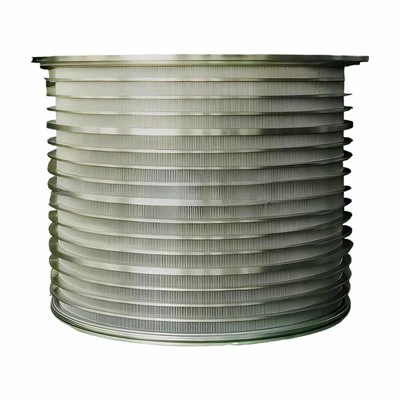
One of our popular products is the Paper Machine Vibrating Screen. This type of sieve is specifically designed for the paper industry. It helps in removing large particles and contaminants from the pulp, ensuring the smooth operation of the paper - making process and the quality of the final paper product.
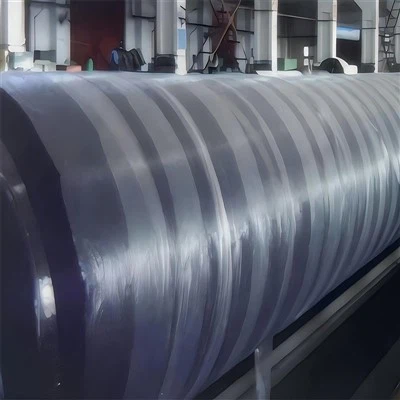
Another important product is the Fibernet Screen. It is used in the fiber - processing industry to separate fibers of different lengths and qualities. This sieve plays a crucial role in producing high - quality fiber products, such as textiles and composite materials.
Conclusion
The Sieve of Goldbach is a valuable concept in number theory, closely related to the famous Goldbach's conjecture. Although the conjecture remains unproven, the sieve provides a way to explore the problem and gain insights into the distribution of prime numbers.
On the other hand, as a sieves supplier, we are committed to providing high - quality sieves for various industries. Our products, such as the Paper Machine Vibrating Screen and the Fibernet Screen, have been widely used and recognized for their reliability and performance.
If you are interested in our sieves or have any questions about our products, we welcome you to contact us for procurement and further discussions. We are looking forward to working with you to meet your sieving needs.
References
- Helfgott, H. A. (2013). Major arcs for Goldbach's theorem. arXiv preprint arXiv:1305.2897.
- Crandall, R., & Pomerance, C. (2005). Prime numbers: A computational perspective. Springer Science & Business Media.