In the dynamic landscape of industrial operations, the demand for equipment that precisely fits specific needs is on the rise. As a seasoned supplier of ancillary equipment, I often encounter inquiries about the possibility of customization. This blog post delves into the question: Can ancillary equipment be customized according to specific needs?
Understanding Ancillary Equipment
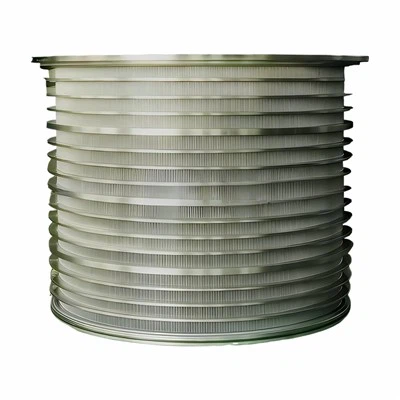
Ancillary equipment plays a crucial role in various industries, complementing the main production machinery and enhancing overall efficiency. In the context of the paper industry, for example, ancillary equipment such as Paper Machine Grapple, Paper Machine Chain Conveyor, and Paper Machine Ragger are essential for smooth and continuous production processes.
The Paper Machine Grapple is designed to handle and transport materials, ensuring a seamless flow of raw materials to the paper - making process. Its ability to grip and move heavy loads efficiently is vital for maintaining productivity. The Paper Machine Chain Conveyor, on the other hand, is responsible for conveying materials along the production line, with its design and functionality directly impacting the speed and reliability of the overall operation. The Paper Machine Ragger is used for removing unwanted fibers and debris, which is crucial for maintaining the quality of the final paper product.
The Case for Customization
One of the primary reasons why customization of ancillary equipment is highly desirable is the diverse nature of industrial processes. Different companies have unique production requirements, influenced by factors such as the type of product being manufactured, the scale of production, and the specific environmental conditions of the production facility.
For instance, a small - scale paper mill may have different space constraints compared to a large - scale industrial plant. In a confined space, a standard - sized Paper Machine Chain Conveyor may not fit, and a customized conveyor with a more compact design may be required. Similarly, the type of paper being produced can also influence the design of the ancillary equipment. If a mill is producing specialty papers with specific fiber requirements, the Paper Machine Ragger may need to be customized to effectively remove the appropriate types of fibers and contaminants.
Another factor is the need for improved efficiency. By customizing ancillary equipment, companies can optimize their production processes. A customized Paper Machine Grapple can be designed to handle materials more quickly and accurately, reducing downtime and increasing the overall throughput of the production line. This can lead to significant cost savings in the long run, as well as a competitive edge in the market.
Technical Feasibility of Customization
From a technical perspective, customizing ancillary equipment is indeed possible. Modern manufacturing technologies, such as computer - aided design (CAD) and computer - numerical control (CNC) machining, have made it easier to design and produce customized equipment. CAD allows engineers to create detailed 3D models of the equipment, taking into account all the specific requirements provided by the customer. These models can then be used to simulate the performance of the equipment, ensuring that it meets the desired specifications before production begins.
CNC machining enables precise manufacturing of components, ensuring that the customized equipment is of high quality and meets the exact design requirements. This technology allows for the production of complex shapes and features, which may be necessary for customized ancillary equipment.
However, it is important to note that customization also presents some challenges. Designing and manufacturing customized equipment requires a high level of expertise and resources. Engineers need to have a deep understanding of the customer's requirements, as well as the technical capabilities of the manufacturing process. There may also be additional costs associated with customization, such as the cost of design, prototyping, and testing.
Cost Considerations
The cost of customizing ancillary equipment is a significant factor that companies need to consider. Customization typically involves additional design and engineering work, as well as the use of specialized materials and manufacturing processes. This can result in a higher upfront cost compared to purchasing standard equipment.
However, it is essential to look at the long - term benefits. As mentioned earlier, customized equipment can lead to improved efficiency, reduced downtime, and higher - quality products. These benefits can translate into significant cost savings over the life of the equipment. For example, a customized Paper Machine Chain Conveyor that operates more smoothly and requires less maintenance can save on repair and replacement costs in the long run.
Companies also need to consider the cost - effectiveness of customization. In some cases, a minor modification to a standard piece of equipment may be sufficient to meet the specific needs, rather than a full - scale customization. A cost - benefit analysis should be conducted to determine the most appropriate approach.
Quality Assurance in Customization
When it comes to customizing ancillary equipment, quality assurance is of utmost importance. As a supplier, we have a rigorous quality control process in place. Before any customized equipment is delivered to the customer, it undergoes a series of tests and inspections.
We start by thoroughly reviewing the customer's requirements and ensuring that the design meets all the specified criteria. During the manufacturing process, we use high - quality materials and follow strict manufacturing standards. Each component is inspected for quality, and the final assembled equipment is tested to ensure that it performs as expected.
We also provide after - sales support, including maintenance and repair services. This ensures that the customer can rely on the customized equipment for a long time and that any issues that may arise can be quickly resolved.
The Process of Customization
The process of customizing ancillary equipment typically begins with a consultation. We work closely with the customer to understand their specific needs, including the production requirements, space constraints, and any other relevant factors. Based on this information, our engineering team creates a preliminary design proposal.
This proposal is then presented to the customer for review and feedback. We encourage open communication during this stage, as it allows us to make any necessary adjustments to the design. Once the design is finalized, the manufacturing process begins. We keep the customer informed about the progress of the production, providing regular updates and ensuring that any concerns are addressed promptly.
After the equipment is manufactured, it is installed at the customer's facility, and our technicians provide training on its operation and maintenance. This comprehensive approach ensures that the customer is fully satisfied with the customized ancillary equipment.
Conclusion
In conclusion, ancillary equipment can definitely be customized according to specific needs. The ability to customize offers numerous benefits, including improved efficiency, better fit for unique production processes, and higher - quality products. While there are challenges and cost considerations associated with customization, the long - term advantages often outweigh these factors.
As a supplier of ancillary equipment, we are committed to providing our customers with customized solutions that meet their exact requirements. If you are interested in exploring the possibility of customizing ancillary equipment for your business, we invite you to contact us for a detailed discussion. Our team of experts is ready to assist you in finding the best solution for your specific needs.


References
- "Industrial Equipment Design and Manufacturing", John Wiley & Sons, 2018
- "Advances in Paper Manufacturing Technology", Elsevier, 2020
- "Customization in the Manufacturing Industry: A Global Perspective", Springer, 2019