

Can separator categories be used in educational systems?
In recent years, there has been a growing interest in integrating advanced industrial technologies into educational curricula to prepare students for the real - world challenges of the future. As a supplier of separator categories, I often wonder about the potential of these innovative devices in educational systems. This blog post aims to explore whether separator categories can indeed find a place within educational institutions.
Understanding Separator Categories
Separator categories encompass a wide range of equipment designed to separate different components of a mixture based on various physical properties such as size, density, and shape. Some common types of separators include the Reject Separator and the Float Purger. The Reject Separator is typically used to remove unwanted materials from a product stream, while the Float Purger is designed to separate floating substances from a liquid mixture. These technologies are widely used in industries such as mining, food processing, and wastewater treatment.
The Relevance of Separator Categories in Science Education
One of the most obvious areas where separator categories can be applied in education is science. In physics and chemistry classes, students often learn about the principles of separation techniques such as filtration, distillation, and centrifugation. By introducing separator categories into the classroom, educators can provide students with hands - on experience of these concepts.
For example, a Reject Separator can be used to demonstrate the process of separating solid particles of different sizes. Students can observe how the separator uses mechanical or fluid - based forces to separate larger particles from smaller ones. This practical demonstration can enhance their understanding of the theoretical concepts taught in textbooks.
In addition, separator categories can also be used to teach environmental science. The Float Purger, for instance, can be used to illustrate how to remove oil or other floating contaminants from water. This is a crucial topic in environmental studies, as water pollution is a global concern. By using real - world equipment, students can gain a better understanding of the challenges and solutions related to environmental protection.
Engineering and Technology Education
Engineering and technology education can also benefit greatly from the integration of separator categories. In engineering courses, students learn about design, manufacturing, and optimization of systems. Separator categories provide an excellent platform for students to apply their engineering knowledge.
Students can be tasked with designing and building a simple separator model. They need to consider factors such as the type of separation required, the properties of the materials to be separated, and the efficiency of the separation process. This project - based learning approach can enhance their problem - solving and critical - thinking skills.
Moreover, the operation and maintenance of separator categories involve advanced control systems and automation technologies. In technology education, students can learn about sensors, actuators, and programmable logic controllers (PLCs) by working with these separators. They can understand how these components work together to ensure the smooth and efficient operation of the equipment.
Vocational and Career - Oriented Education
For vocational and career - oriented education, separator categories can play a vital role in preparing students for jobs in relevant industries. Many industries, such as the mining, chemical, and food industries, rely heavily on separator technologies. By providing students with training on separator categories, educational institutions can increase their employability.
Students can learn about the different types of separators used in these industries, their working principles, and maintenance requirements. They can also gain practical experience by working with actual separator equipment in a laboratory or industrial setting. This hands - on training can give them a competitive edge in the job market.
Challenges of Integrating Separator Categories into Educational Systems
Despite the numerous benefits, there are also several challenges associated with integrating separator categories into educational systems. One of the main challenges is the cost. Separator equipment can be quite expensive, and educational institutions may not have the budget to purchase and maintain these devices.

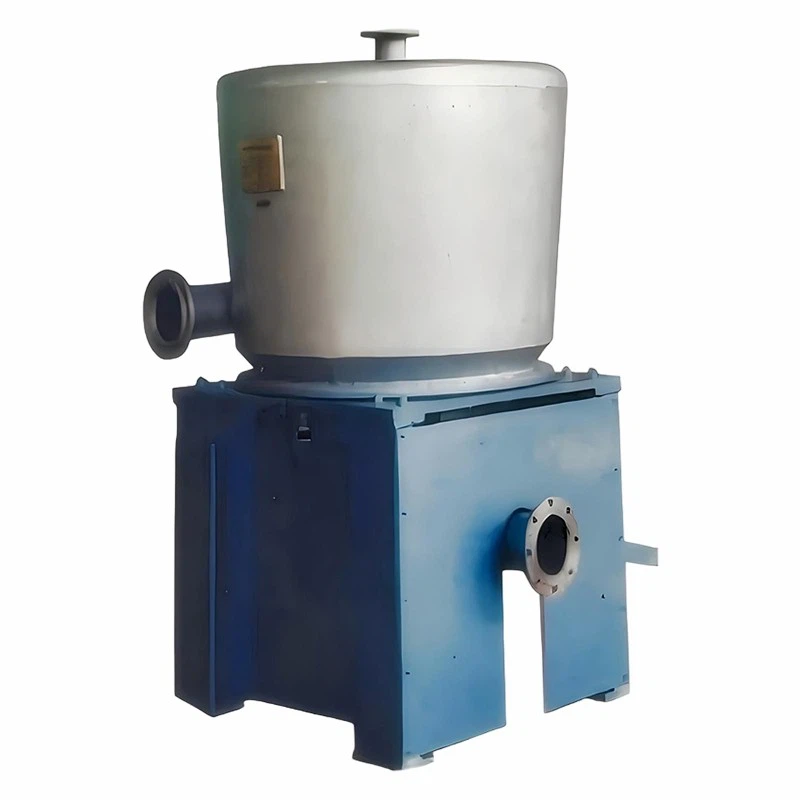
Another challenge is the safety issue. Separator categories often involve moving parts, high - pressure systems, and potentially hazardous materials. Ensuring the safety of students during hands - on experiments is a top priority. Educational institutions need to provide proper training and safety equipment to prevent accidents.
In addition, there may be a lack of qualified educators who are familiar with separator technologies. Teachers need to have a good understanding of the equipment and its operation in order to effectively teach students. Professional development programs for educators may be necessary to address this issue.
Overcoming the Challenges
To overcome the cost challenge, educational institutions can consider partnerships with industry suppliers. As a separator category supplier, I am more than willing to work with schools and colleges to provide equipment on a rental or donation basis. We can also offer technical support and training to ensure the proper use of the equipment.
Regarding safety, educational institutions can develop strict safety protocols and procedures. Before students use the separator equipment, they should receive comprehensive safety training. The equipment should also be regularly inspected and maintained to ensure its safe operation.
To address the lack of qualified educators, industry - academia partnerships can be established. Suppliers can organize training workshops for teachers, where they can learn about the latest separator technologies and teaching methods. This can help to build a pool of well - trained educators who can effectively integrate separator categories into the curriculum.
Conclusion
In conclusion, separator categories have great potential in educational systems. They can enhance science, engineering, and vocational education by providing students with hands - on experience, practical skills, and real - world problem - solving opportunities. Although there are challenges associated with their integration, these can be overcome through partnerships between educational institutions and industry suppliers.
If you are an educator interested in exploring the possibility of integrating separator categories into your curriculum, or if you are a school administrator looking for ways to enhance your educational programs, I encourage you to contact us. We are committed to working with you to bring the benefits of separator technologies to the classroom. Let's work together to prepare the next generation of innovators and problem - solvers.
References
- Smith, J. (2018). "Advances in Separation Technology". Journal of Industrial and Engineering Chemistry.
- Johnson, A. (2020). "Hands - on Learning in Science Education". Educational Research Quarterly.
- Brown, B. (2019). "The Role of Industry - Academia Partnerships in Vocational Education". Journal of Career and Technical Education.
