


Reject Separator
Introduce
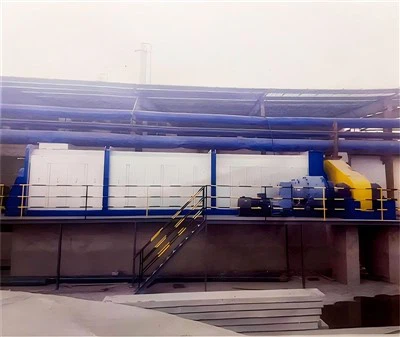
In the paper industry, "Reject Separator" is a crucial and specialized equipment that plays a vital role throughout the entire papermaking production process. Its primary function is to precisely separate and handle various types of waste residues, impurities, and non-compliant fiber materials generated during the papermaking process. Through efficient separation operations, it effectively separates waste residues in the pulp, such as undissociated fiber masses, coarse impurity particles, gravel, metal debris, plastic fragments, as well as poor-quality or oversized fiber components. This process significantly enhances the purity and quality of the pulp, providing highly pure, uniform, and quality-compliant pulp raw materials for subsequent papermaking processes, such as sheet forming, pressing, drying, and coating. This ensures that the produced paper meets or exceeds the expected quality standards in terms of physical properties, appearance quality, and printability.
Application
It is mainly used for treating tailing stock in waste paper coarse screening system.
Features
1.High speed rotary blade can effectively break scrip of paper
2.Throwing function of rotor and washing function of shower, can recycle fiber effectively.
3.The interaction of the multi-pitch rotor, screen plate and internal baffing produce virtually fiber-free rejects that the are suitalbe for transportation and disposal.
4.Working under enclosed statement, clean circumstance.
Working Principle
1.Physical Screening
The equipment is internally equipped with screens or filters with specific pore sizes and structures. The pore sizes of these screens are meticulously designed and selected to allow fine fibers and high-quality pulp that meet the requirements to pass through while effectively blocking larger-sized waste residues, undissociated fiber masses, and coarse impurity particles. The pore size of the screens can be flexibly adjusted according to specific production requirements and pulp characteristics to achieve the best screening effect.
During the screening process, the pulp passes through the screens under pressure or gravity. The accuracy and efficiency of the screening depend on factors such as the material of the screens, the uniformity of the pore sizes, and the flow state of the pulp. To improve the screening effect, some advanced reject separators also adopt multi-layer screens or dynamic screening technologies to further enhance the separation ability of waste residues and impurities.
2.Centrifugal Separation
Utilizing a rotating component to generate a strong centrifugal force. When the pulp enters the rotating separation area, due to the centrifugal force, the waste residues and impurities, due to their larger mass, are subjected to a greater outward centrifugal force and rapidly accumulate towards the edge of the equipment. Meanwhile, the fine fibers and good pulp, which are subjected to a relatively smaller centrifugal force, can remain in the central area or a relatively closer position to the center.
The effect of centrifugal separation depends on parameters such as the rotational speed, diameter of the rotating component, and the residence time of the pulp in the separation area. By precisely controlling these parameters, efficient separation of waste residues and impurities of different densities and particle sizes can be achieved, ensuring a high purity and quality stability of the separated pulp.
3.Fluid Dynamics Principles
The pulp flow inside the reject separator follows the laws of fluid dynamics. The rationally designed flow channels and inlet and outlet structures ensure the uniform distribution and stable flow of the pulp within the equipment, avoiding local vortices or stagnation phenomena, thereby improving the separation efficiency and effect.
By optimizing the fluid dynamic performance, energy loss during the separation process can be reduced, the operating cost of the equipment can be lowered, and the service life of the equipment can be prolonged.
Structural Components
1.Feed System
Comprising feed pipes, feed pumps, and feed inlets, it is responsible for uniformly and stably transporting the pulp to be separated into the interior of the separator.
The feed pumps typically have adjustable flow and pressure control functions to adapt to the feed requirements under different production conditions.
2.Screening Components
Consisting of screens, screen frames, and support structures. The screens are the core components of the screening, and their material and pore size determine the screening accuracy and efficiency; the screen frames are used to fix and support the screens, ensuring their stability during operation; the support structures provide a solid installation foundation for the entire screening components.
3.Centrifugal Components
Usually including rotating shafts, centrifugal discs, or centrifugal drums. The rotating shafts are driven by motors to drive the centrifugal components to rotate at high speed to generate centrifugal force; the shape and structural design of the centrifugal discs or centrifugal drums aim to optimize the centrifugal effect and improve the separation efficiency of waste residues and impurities.
4.Reject Discharge System
Composed of reject outlets, reject pipes, and reject control devices. The reject control devices can automatically or manually control the frequency and quantity of reject discharge based on the accumulation of waste residues during the separation process to ensure the timely discharge of waste residues without affecting the normal operation of the separator.
5.Drive System
Comprising motors, reducers, couplings, and transmission components. The motors provide power, the reducers convert the high rotational speed of the motors to a low rotational speed suitable for the operation of the separator, and the couplings and transmission components smoothly transmit the power to the screening and centrifugal components to ensure the normal operation of the equipment.
6.Shell and Support Structure
The shell is usually made of stainless steel or other corrosion-resistant materials, playing the role of protecting the internal components and maintaining the overall structural stability of the equipment; the support structure is used to install and fix each component to ensure that the equipment does not vibrate or displace during operation.
7.Control System
Composed of sensors, controllers, and operation interfaces. The sensors monitor the operating parameters of the equipment in real-time, such as rotational speed, pressure, flow rate, and waste residue content; the controller automatically controls and regulates the operation of the equipment based on the preset process parameters and the information feedback from the sensors; the operation interface provides an intuitive and convenient operation and monitoring platform for the operators to operate and manage the equipment.
Performance Characteristics
1.High-Precision Separation
Capable of precisely separating minute-sized waste residues and impurities, ensuring the purity of the pulp reaches a high standard.
Employing advanced screening and centrifugal technologies, the separation effect is stable and reliable, not significantly affected by factors such as pulp concentration and temperature.
2.High Processing Capacity
Can handle a large volume of pulp within a unit time, meeting the high-output requirements of modern large-scale papermaking production lines.
The processing capacity can be further enhanced by increasing the size of the equipment, improving the feed and reject discharge systems, etc.
3.Stable and Reliable Operation
The key components are manufactured using high-strength, wear-resistant, and corrosion-resistant materials with a reasonable structural design, capable of maintaining stable performance during long-term continuous operation.
Equipped with a comprehensive monitoring and protection device, it can promptly detect and handle abnormal situations during equipment operation, reducing the incidence of faults.
4.Easy Operation and Maintenance
The control system has a high degree of intelligence, and the operation interface is simple and intuitive. Operators can master the operation methods of the equipment proficiently after a simple training.
Each component is easy to disassemble and install, facilitating daily maintenance and troubleshooting. At the same time, the equipment has a relatively long maintenance cycle and relatively low maintenance costs.
5.Energy Conservation and High Efficiency
By optimizing the structural design and operating parameters, it can achieve efficient separation while reducing energy consumption.
Utilizing advanced energy-saving motors and transmission systems further improves energy utilization efficiency, in line with the energy-saving and emission-reduction requirements of modern industries.
Operation and Maintenance
1.Operation Key Points
Before starting the machine, the operator must conduct a comprehensive equipment inspection, including checking whether the connections of each component are firm, whether the electrical system is normal, whether the lubrication is in good condition, and whether the screen meshes and centrifugal components are damaged.
According to the production process requirements and the characteristics of the pulp, accurately set the operating parameters of the equipment, such as the feed speed, rotation speed, and reject discharge frequency, and closely monitor the operating status of the equipment after startup to ensure a smooth startup and normal operation.
During the operation of the equipment, the operator should monitor the various operating indicators of the equipment in real-time, such as pressure, flow rate, waste residue content, and motor current. Through the observation window and sampling analysis, promptly understand the separation effect of the pulp.
Regularly conduct quality inspections on the separated pulp and adjust the operating parameters of the equipment in a timely manner based on the test results to ensure the best separation effect and product quality are always achieved.
2.Maintenance Work
Regularly clean the feed system to prevent debris from blocking the feed pipes and feed inlets, affecting the uniformity and stability of the feed.
Regularly inspect and clean the screening components, remove impurities and fibers attached to the screen meshes, and check whether the screen meshes are damaged or deformed. If there are problems, replace the screen meshes in a timely manner.
Check the wear condition of the centrifugal components and replace the severely worn components in a timely manner to ensure a good centrifugal effect.
Regularly inspect and maintain the reject discharge system to ensure the reject outlets are unobstructed and the reject control devices are sensitive and reliable.
Regularly maintain and lubricate the drive system, check the insulation condition of the motor, the lubricant level and quality of the reducer, and the connection condition of the coupling. Replace the worn components and replenish the lubricating oil in a timely manner.
Regularly inspect the shell and support structure of the equipment to check for corrosion, deformation, cracks, etc. Repair and reinforce in a timely manner to ensure the safety and stability of the equipment.
Establish detailed equipment maintenance files, recording the time, content, replaced components, and maintenance personnel of each maintenance to provide a reference basis for the long-term operation and management of the equipment.
Application Advantages
1.Significantly Improve Paper Quality
By removing waste residues and impurities, the paper surface becomes smoother and flatter, reducing flaws and defects, and improving the physical properties of the paper, such as strength, air permeability, and water absorption, to meet the production requirements of high-end paper products.
Improve the printability and writing performance of the paper, making the printed patterns clearer and brighter, and the writing smoother.
2.Protect Subsequent Equipment
Provide pure pulp, reducing the wear and clogging of waste residues and impurities on subsequent papermaking equipment, such as the wire section, press section, and drying section of the papermaking machine, reducing equipment maintenance costs and extending the service life of the equipment.
Stabilize the operating status of subsequent equipment, improving production efficiency and product qualification rate.
3.Optimize the Production Process and Flow
The efficient reject separation effect helps maintain the continuity and stability of the production process, reducing process adjustments and production interruptions caused by pulp quality fluctuations, improving production efficiency and product consistency.
It can flexibly adjust the separation parameters according to different pulp raw materials and production requirements to adapt to various complex production conditions.
4.Reduce Production Costs
Increase the utilization rate of pulp and the output of good pulp, reducing the waste of raw materials and energy consumption. At the same time, reduce the cost of equipment maintenance and component replacement, thereby reducing the overall production cost.
Improve product quality, reduce the production of substandard and waste products, and indirectly reduce production costs.
5.Comply with Environmental Protection Requirements
Effectively reduce the discharge of waste residues and impurities, reducing environmental pollution and complying with increasingly strict environmental protection regulations and sustainable development requirements.
Main Technical Parameters
|
Type |
ZSZ1 |
ZSZ2 |
ZSZ3 |
|
Standard:mm |
Φ280 |
Φ380 |
Φ450 |
|
Inlet consistency:% |
1~3.5 |
1~3.5 |
1~3.5 |
|
Reject consistency:% |
15~20 |
15~20 |
15~20 |
|
Capacity:t/d |
10~20 |
20~35 |
45~60 |
|
Power of motor:kw |
37 |
45~55 |
55~75 |
|
(L×W×H):mm |
2610×1925×1010 |
3200×2020×1195 |
4430×1990×1610 |
Hot Tags: reject separator, China reject separator suppliers, factory, Type D Hydrapulper, other equipment, washing or thickening equipment, 750 5150 Suction Roll, 4800 800 Pope Reel, Inclined Nte Filtering Machine
Previous
Float PurgerNext
No InformationYou Might Also Like


Send Inquiry