


Float Purger
Introduce
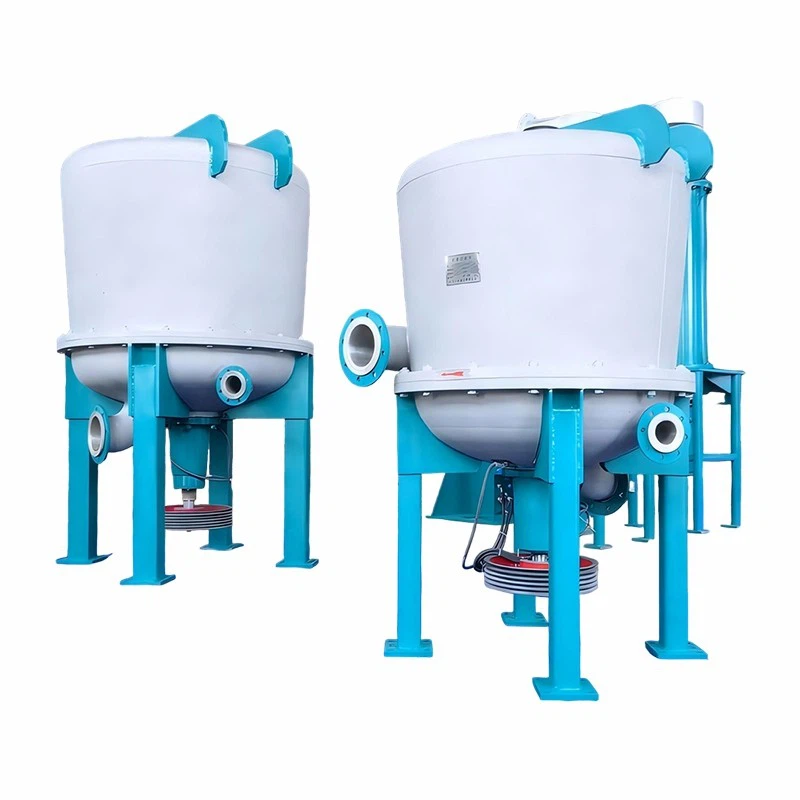
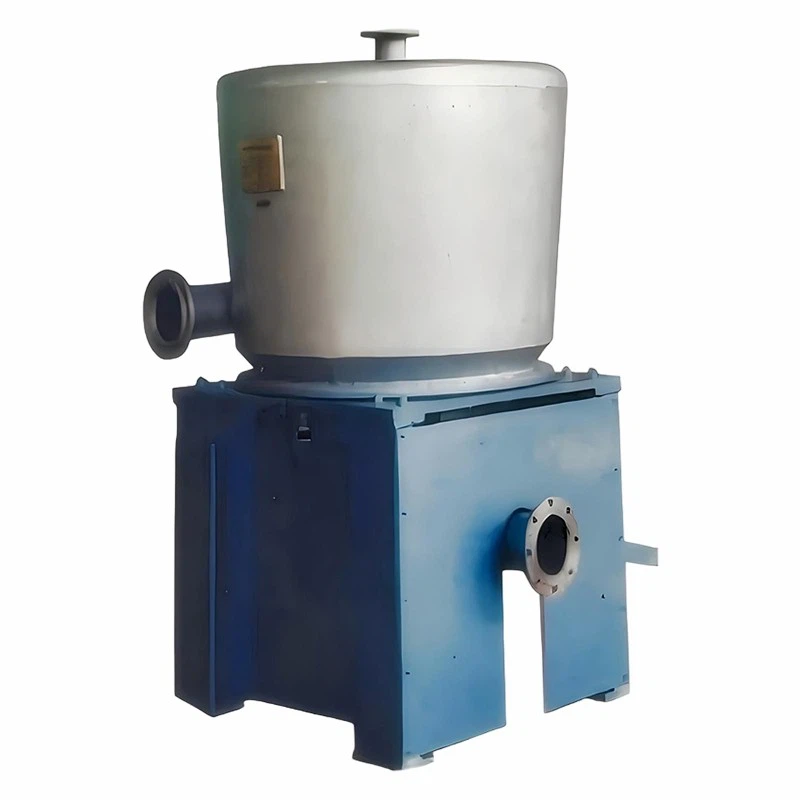
In the paper industry, "Float Purger" is a key equipment specifically designed for handling lightweight impurities and float slag in pulp. It plays an indispensable role in enhancing pulp quality, optimizing the production process, and guaranteeing the final quality of the paper. Its main function is to efficiently and precisely separate lightweight impurities such as foam, plastic sheets, lightweight fiber masses, fine fiber chips, and other lightweight debris from the pulp through a series of meticulous physical and mechanical processes. This separation process can significantly improve the purity and quality consistency of the pulp, thereby providing high-quality and contamination-free pulp raw materials for subsequent papermaking processes such as sheet forming, pressing, drying, and coating. This ensures that the produced paper achieves high standards in terms of physical properties, appearance quality, and printability.
Application
Used for treating light impurities and tailing pulp in coarse screen section.
Features
The main body is an inverse conical design, concave top structure, can form a strong vortex, forming a low pressure area in the top center and getting the light impurities and discharge them outside effectively.
Centrifugal force pushes heavy contaminants into a tapered reject channel the periphery of the extraction plate, then discharge out of the machine continuously.
Working Principle
1.Flotation Separation
Utilizing advanced bubble generation technology, a large number of uniform, fine, and stable bubbles are generated inside the equipment. During the rising process, these bubbles interact with the lightweight impurities in the pulp. Due to the typically strong hydrophobicity of the surface of lightweight impurities, the bubbles can adsorb and carry these impurities to the liquid surface.
By precisely controlling the size, quantity, and distribution of the bubbles, the flotation effect can be optimized for different types and sizes of lightweight impurities, thereby achieving efficient separation of various lightweight impurities.
2.Centrifugal Action
The rotating components inside the equipment rotate at a specific speed, generating a strong centrifugal force. Under the action of the centrifugal force, the lightweight impurities in the pulp are subjected to an outward force, prompting them to gather towards the edge of the equipment more quickly.
This centrifugal action cooperates with the flotation process to further enhance the separation effect of lightweight impurities and improve the speed and accuracy of separation.
3.Scraper Collection
The scraper device installed on the liquid surface moves along a specific trajectory to scrape and collect the lightweight impurities gathered on the liquid surface into a dedicated slag discharge channel. The movement speed and angle of the scraper are meticulously designed to ensure effective removal of impurities while minimizing interference with the good pulp.
Structural Components
1.Flotation Tank:As the main area for accommodating the pulp and conducting flotation separation, it is usually made of corrosion-resistant and high-strength materials to ensure long-term stable operation. The internal shape and size are optimized to promote the uniform distribution of bubbles and the effective separation of impurities.
2.Bubble Generator:It is the core component for generating bubbles required for flotation, adopting advanced gas dispersion technology and precise control devices. It can precisely adjust the size, quantity, and frequency of bubbles according to production requirements.
3.Rotating Components:Composed of a motor-driven rotating shaft and impellers or blades installed on the shaft, it generates centrifugal force through high-speed rotation. The design and manufacturing accuracy of the rotating components directly affect the centrifugal effect and the performance stability of the equipment.
4.Scraper Device:Usually made of wear-resistant and corrosion-resistant materials, the shape and size of the scraper match the liquid surface shape of the flotation tank to ensure comprehensive and efficient collection of lightweight impurities. The driving mechanism of the scraper can precisely control the movement speed and stroke of the scraper.
5.Drive System:Includes components such as the motor, reducer, and coupling, providing stable and reliable power for the rotating components and the scraper device. The power and speed regulation performance of the drive system are customized according to the specifications and production requirements of the equipment.
6.Control System:Composed of sensors, controllers, and operation interfaces, it is used for real-time monitoring of the operating parameters of the equipment, such as liquid level, pressure, rotational speed, etc., and automatically adjusts and controls the equipment according to the preset process parameters to ensure the equipment operates in the best state.
Performance Characteristics
1.Efficient Separation:With advanced flotation and centrifugal technologies, it can quickly and effectively remove lightweight impurities in the pulp within a short time, significantly improving the purity and quality of the pulp.
2.Precise Screening:It has extremely high selectivity and separation accuracy for lightweight impurities, can accurately identify and separate target impurities, while minimizing the loss of good pulp and increasing the recovery rate of the pulp.
3.Large Processing Capacity:Adopting an optimized structural design and a powerful drive system, it can meet the continuous and high-output production requirements of large-scale papermaking production lines, ensuring the efficiency and stability of the production process.
4.Stable Operation:The key components of the equipment are made of high-quality materials and advanced manufacturing processes, with a reasonable structural design and good mechanical strength and stability. At the same time, it is equipped with a complete monitoring and protection device, which can maintain stable performance during long-term continuous operation, reducing faults and downtime.
5.Easy Maintenance:The design of each component considers the requirements of easy disassembly and replacement, facilitating daily inspection, cleaning, and maintenance work. At the same time, the control system of the equipment provides fault diagnosis and alarm functions, which can timely detect and solve potential problems, reducing maintenance costs and improving the availability of the equipment.
6.Energy Saving and High Efficiency:Through optimized design and precise control, it can reduce energy consumption and improve energy utilization efficiency while achieving efficient separation, in line with modern industrial energy-saving and environmental protection requirements.
Operation and Maintenance
1.Operation Key Points
Before starting the machine, the operator must conduct a comprehensive and detailed equipment inspection, including checking the sealing of the equipment to ensure that all components are firmly connected and there are no leakage phenomena; checking the electrical system to ensure the normal operation of electrical equipment such as the motor, controller, and sensor; checking the mechanical components, such as the rotating components and the scraper device, to ensure their flexibility of movement and no jamming; checking the bubble generator and the control system to ensure their normal operation and correct parameter settings.
According to the characteristics of the pulp (such as concentration, temperature, fiber length distribution, etc.) and the impurity content, precisely adjust the working parameters of the bubble generator through the control system, such as gas flow, pressure, bubble size, etc., as well as the rotational speed of the rotating components and the movement speed of the scraper device to achieve the best separation effect.
During the operation of the equipment, the operator should closely monitor the separation effect, observe the quality changes of the pulp in real-time through the observation window and online monitoring instruments, such as the impurity content and foam situation; at the same time, pay close attention to the operating status of the equipment, such as the current, voltage, and temperature of the motor, the vibration and noise of the rotating components, and the overall stability of the equipment. Once any abnormal situation is found, corresponding measures should be taken immediately, such as adjusting parameters and stopping the machine for inspection.
2.Maintenance Work
Regularly clean the inside of the flotation tank to remove accumulated impurities and sediments to maintain a good flotation environment and separation effect. The cleaning work should be carried out based on the production situation and the operating time of the equipment. It is usually recommended to perform at least once a week.
Regularly inspect and clean the bubble generator to prevent the pores from clogging and the uneven distribution of gas. The inspection should be carried out once a month. In case of clogging, the pores should be promptly unclogged and cleaned.
Regularly inspect the wear condition of the scraper device and replace the severely worn scraper in a timely manner. The wear condition of the scraper should be inspected once a month. Whether to replace it depends on the degree of wear. It is usually recommended to replace the scraper every 3-6 months.
Regularly maintain and lubricate the drive system, including components such as the motor, reducer, and coupling. The maintenance work should be carried out every six months, including checking the insulation condition of the motor, the lubricant level and quality of the reducer, the connection condition of the coupling, etc., and promptly replace worn components and replenish lubricating oil.
Establish detailed equipment maintenance records, including maintenance dates, maintenance contents, replaced components, and maintenance personnel. Maintenance records not only help track the maintenance history and operating status of the equipment but also provide reference for subsequent maintenance work, helping to improve the management level and operating efficiency of the equipment.
Application Advantages
1.Improve Pulp Quality:By effectively removing lightweight impurities, significantly reducing their adverse effects on the physical properties of the paper (such as strength, air permeability, flatness, etc.), thereby improving the quality and stability of the paper.
2.Protect Subsequent Equipment:Provide pure pulp to reduce the wear, clogging, and damage of lightweight impurities to subsequent papermaking equipment (such as the wire section, press section, and drying section of the papermaking machine), reducing equipment maintenance costs and downtime, and extending the service life of the equipment.
3.Optimize the Production Process:The stable and efficient separation effect helps maintain the continuity and stability of the production process, reducing process adjustments and production interruptions caused by impurity problems, improving production efficiency and product qualification rate.
4.Reduce Production Costs:Increase the recovery rate and utilization rate of pulp, reduce the waste of raw materials and energy consumption; at the same time, reduce the maintenance cost and repair frequency of the equipment, thereby reducing the overall production cost and improving the economic benefits of the enterprise.
5.Comply with Environmental Protection Requirements:Effectively reduce the discharge of lightweight impurities, reducing environmental pollution and complying with increasingly strict environmental protection regulations and sustainable development requirements.
Main Technical Parameters
1.HLC Float Purger Main Technical Parameters
|
Type |
HLQ75 |
Hlq150 |
|
Nominal volume:m³ |
0.8 |
2 |
|
Pressure of outflow pulp:MPa |
0.2~0.25 |
|
|
Treating Consistency:% |
0.5~2.0 |
|
|
Capacity of production:t/d |
65~85 |
110~140 |
|
Power of motor:kw |
55 |
110 |
|
(L×W×H):mm |
1826×910×1400 |
3100×1700×2570 |
2.ZSQ Float Purger Main Technical Parameters
|
Type |
ZSQ1 |
ZSQ2 |
ZSQ3 |
|
Nominal volume:m³ |
0.4 |
0.8 |
2 |
|
Pressure of outflow pulp:MPa |
0.2~0.25 |
||
|
Treating Consistency:% |
0.5~2 |
||
|
Capacity of production:t/d |
35~45 |
65~85 |
110~140 |
|
Power of motor:kw |
30 |
55 |
110 |
|
(L×W×H):mm |
1825×910×1400 |
2600×1245×1955 |
3100×1700×2570 |
Hot Tags: float purger, China float purger suppliers, factory, Double Pneumatic Doctor, Heavy Rejects Cleaner, sieves, Pneumatic Calibrator, 4200 500 Calender Machine, KZM Series Conical Refiner
Previous
No InformationNext
Reject SeparatorYou Might Also Like


Send Inquiry