


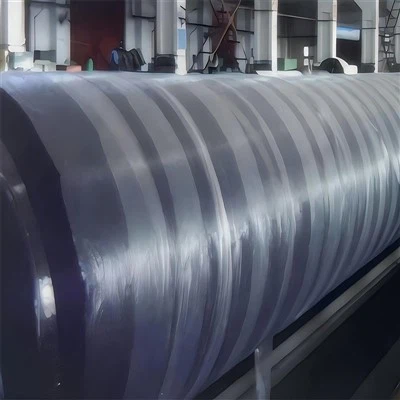
Ф 1100X7921 VAC ROLL
Overview of the Vacuum Roll
The vacuum roll holds an indispensable and crucial position in the papermaking process. As one of the key components, it generates a strong negative pressure through the elaborately designed vacuum system inside, thus playing a vital role in multiple links, including efficient dehydration, stable adsorption, and precise transmission of the paper.
Significance of Specifications Parameters
1.Diameter Ф 1100
The relatively large diameter of 1100 units significantly increases the contact area between the vacuum roll and the paper. This advantage not only can greatly enhance the effect of dehydration and adsorption, ensuring that the moisture in the paper is absorbed more fully and rapidly, but also provides a broader supporting surface during the paper transmission process, strengthening the stability and uniformity of the paper's movement.
Moreover, the larger diameter also enhances the stability and load-bearing capacity of the vacuum roll during high-speed operation, enabling it to withstand higher working loads and pressures, reducing faults and production interruptions caused by vibration or imbalance.
2.Length 7921
The length of up to 7921 units endows the vacuum roll with the ability to process more paper within a unit time. This implies that within the same production cycle, the paper output can be significantly increased, thereby enhancing the production efficiency of the entire production line.
However, the longer length also brings a series of challenges. During the manufacturing process, the requirements for precision indicators such as straightness, cylindricity, and surface roughness are more stringent. Any minor deviation may affect the performance and service life of the vacuum roll.
During the installation and commissioning stages, a higher technical level and sophisticated equipment are required to ensure the horizontality of the vacuum roll, the parallelism with other equipment before and after, and the synergy of the transmission system to avoid operational problems, paper deviation, or wrinkles due to improper installation.
Working Principle
1.Vacuum Effect
The vacuum system inside the vacuum roll generates a strong negative pressure during operation. When the paper comes into contact with the surface of the vacuum roll, due to the presence of negative pressure, the moisture in the paper is rapidly absorbed, achieving an efficient dehydration effect. This process not only helps to reduce the moisture content in the paper, saving a significant amount of time and energy for the subsequent drying process, but also can improve the consistency of the paper's dryness and ensure the stability of the paper quality.
Simultaneously, the pressure magnitude and distribution uniformity of the vacuum system have a direct impact on the dehydration effect. Advanced vacuum rolls are typically equipped with an intelligent pressure regulation system that can adjust the vacuum pressure in real-time based on parameters such as the type of paper, thickness, and machine speed to achieve the optimal dehydration effect.
2.Adsorption and Transmission
In addition to the dehydration function, the vacuum roll also firmly grasps the paper through the negative pressure adsorption force, ensuring the smooth and uniform transmission of the paper on the production line. During the transmission process, the vacuum roll can effectively resist external disturbances and the tension changes of the paper itself, avoiding problems such as deviation, wrinkles, and tears of the paper, and ensuring the integrity and surface quality of the paper.
To achieve precise adsorption and transmission, the surface of the vacuum roll is usually designed with a special pore structure and distribution pattern to ensure the uniform distribution of negative pressure and the stability of the adsorption force. In addition, the close coordination with the transmission system is also a key factor in ensuring the transmission accuracy of the paper, which requires precise synchronous control and speed adjustment to achieve.
Performance Characteristics
1.High-Efficiency Dehydration Performance
With its unique structural design and advanced vacuum technology, it can remove a large amount of moisture from the paper in a very short time, significantly improving the dehydration efficiency. Compared with traditional dehydration methods, it can greatly shorten the residence time of the paper before the drying process, accelerate the production rhythm, and increase the production capacity of the entire production line.
Moreover, the high-efficient dehydration performance can also reduce the energy consumption of the subsequent drying process, save production costs, and simultaneously reduce paper quality problems caused by residual moisture, such as paper deformation and strength reduction.
2.Precise Paper Control
During the paper transmission process, the vacuum roll can strictly ensure the positional accuracy and morphological stability of the paper through precise adsorption force and guiding design. This enables the paper to remain on the predetermined track throughout each processing stage, avoiding rejects caused by deviation or wrinkles and significantly improving the finished product rate and quality consistency of the paper.
Precise paper control can also reduce scratches and wear on the paper surface, improving the smoothness and flatness of the paper, meeting the strict requirements for surface quality of high-end paper products.
3.Durability
Usually made of high-strength, wear-resistant high-quality materials, such as special alloy steel or ceramic coating materials, it can withstand the harsh working environment in the papermaking production process, including high temperature, high humidity, chemical corrosion, and long-term mechanical wear.
To further improve durability, vacuum rolls often adopt advanced heat treatment processes and surface strengthening technologies during the manufacturing process to enhance their fatigue resistance, corrosion resistance, and wear resistance, ensuring stable performance and precision during long-term continuous operation.
五, Installation and Maintenance
1.Installation Requirements
During installation, it is first necessary to ensure that the horizontality of the vacuum roll reaches an extremely high precision requirement. Use high-precision spirit levels and adjustment devices to carefully adjust the installation base of the vacuum roll, ensuring it remains absolutely horizontal in both the transverse and longitudinal directions to avoid uneven paper transmission and unbalanced pressure distribution due to inclination.
At the same time, it is necessary to ensure the precise alignment of the vacuum roll with the adjacent equipment before and after. By using laser alignment instruments and precision measurement tools, measure and adjust parameters such as the parallelism, wheelbase, and height difference between the vacuum roll and other equipment (such as press rolls, drying rolls, etc.) to ensure the smooth flow of the paper on the entire production line and avoid faults such as paper jams and accumulations.
In addition, the installation of the transmission system of the vacuum roll is also of critical importance. Ensure the installation precision of the transmission gears, belts, or couplings, ensure the smoothness and accuracy of power transmission, and avoid vacuum roll speed fluctuations and paper tension changes due to transmission errors.
2.Maintenance Key Points
Regularly checking the sealing performance of the vacuum system is one of the key maintenance tasks. Check whether there are leaks in vacuum pipes, valves, seals, and other components, and promptly replace worn or aged sealing elements to maintain the stable and efficient operation of the vacuum system's pressure.
The cleaning and maintenance of the vacuum roll surface should not be overlooked. Regularly remove dirt, paper scraps, and deposits on the surface to avoid these impurities blocking the pores or affecting the adsorption effect. At the same time, inspect the wear condition of the surface and promptly repair or replace severely worn areas to ensure the quality of paper dehydration and transmission.
Regularly lubricate and inspect the rotating components such as bearings and journal of the vacuum roll to ensure their flexible operation, absence of abnormal noise and heat generation. Promptly replace worn bearings and lubricating oil to prevent downtime and production losses caused by rotating component failures.
Additionally, based on the production situation and the equipment's operating time, formulate a reasonable overhaul plan. Conduct a comprehensive disassembly inspection, precision calibration, and component replacement of the vacuum roll to restore its performance and precision and extend its service life.
Hot Tags: ф 1100x7921 vac roll, China ф 1100x7921 vac roll suppliers, factory, FSizing Roll Operate Speed 1200m, 1100X7921 VAC ROLL, 3660X3350 Yankee Dryer, 750 5150 Suction Roll, roller equipment, Expander Roll
You Might Also Like



Send Inquiry