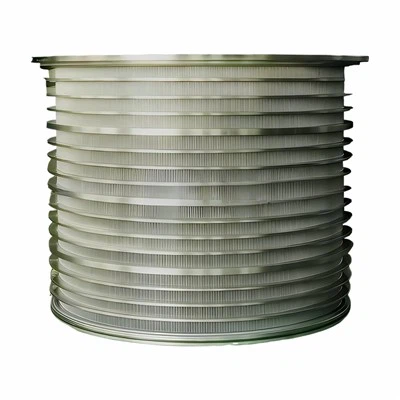
Adjusting the pulp consistency before entering a Toothed Deflaker is a crucial step in the pulp and paper manufacturing process. As a trusted Toothed Deflaker supplier, we understand the significance of this process and its impact on the overall quality and efficiency of paper production. In this blog post, we will delve into the methods and considerations for adjusting pulp consistency to ensure optimal performance of your Toothed Deflaker.
Understanding Pulp Consistency
Pulp consistency refers to the ratio of the weight of dry fibers to the total weight of the pulp suspension, typically expressed as a percentage. It plays a vital role in determining the quality of the final paper product, as well as the efficiency of the refining process. Different types of paper require different pulp consistencies, and maintaining the right consistency is essential for achieving the desired paper properties, such as strength, smoothness, and brightness.
Importance of Adjusting Pulp Consistency
Before the pulp enters the Toothed Deflaker, adjusting its consistency is necessary for several reasons. Firstly, the Toothed Deflaker operates most effectively within a specific consistency range. If the consistency is too high, the pulp may be too thick for the deflaker to break up the fiber bundles efficiently, leading to poor deflaking performance and increased energy consumption. On the other hand, if the consistency is too low, the pulp may not provide enough friction for the deflaker to work effectively, resulting in incomplete deflaking and a lower quality product.
Secondly, adjusting the pulp consistency helps to control the refining process. By maintaining a consistent pulp consistency, the Toothed Deflaker can apply a uniform amount of energy to the pulp, ensuring that the fibers are refined evenly and producing a more consistent paper product. This is particularly important for high-quality paper grades that require precise control over the fiber properties.
Methods for Adjusting Pulp Consistency
There are several methods available for adjusting the pulp consistency before it enters the Toothed Deflaker. The choice of method depends on various factors, such as the type of pulp, the desired consistency, and the available equipment. Here are some common methods:
Dilution with Water
One of the simplest and most commonly used methods for adjusting pulp consistency is dilution with water. This involves adding water to the pulp suspension to reduce its consistency. The amount of water added depends on the initial consistency of the pulp and the desired final consistency. Dilution can be achieved using a variety of equipment, such as mixers, pumps, and flow meters.
When diluting the pulp with water, it is important to ensure that the water is evenly distributed throughout the pulp suspension. This can be achieved by using a mixer or a static mixer to ensure thorough mixing. Additionally, the water used for dilution should be of high quality to avoid introducing contaminants into the pulp.


Thickening
In some cases, it may be necessary to increase the pulp consistency before entering the Toothed Deflaker. This can be achieved through thickening processes, such as using a thickener or a press. Thickeners work by removing water from the pulp suspension through gravity or mechanical means, while presses use pressure to squeeze out the water.
Thickening the pulp can be beneficial in certain situations, such as when the pulp is too dilute for the Toothed Deflaker to operate effectively. However, it is important to note that thickening can also increase the energy consumption of the deflaking process, as the deflaker will need to work harder to break up the thicker pulp.
Online Consistency Control
To ensure accurate and consistent pulp consistency, many modern pulp and paper mills use online consistency control systems. These systems use sensors to measure the pulp consistency in real-time and automatically adjust the flow of water or other additives to maintain the desired consistency.
Online consistency control systems offer several advantages over manual methods, such as improved accuracy, reduced operator error, and increased process efficiency. They can also help to optimize the use of resources by ensuring that the pulp consistency is maintained at the optimal level for the Toothed Deflaker.
Considerations for Adjusting Pulp Consistency
When adjusting the pulp consistency before entering the Toothed Deflaker, there are several factors to consider to ensure optimal performance. Here are some key considerations:
Pulp Type
Different types of pulp have different characteristics and require different consistency ranges for optimal deflaking. For example, hardwood pulp typically requires a lower consistency than softwood pulp, as it is more easily deflaked. Additionally, the type of pulp can also affect the choice of adjustment method, as some pulps may be more suitable for dilution, while others may require thickening.
Equipment Compatibility
The equipment used for adjusting the pulp consistency should be compatible with the Toothed Deflaker and other downstream equipment. For example, the pumps and mixers used for dilution should be able to handle the pulp suspension without causing excessive shear or damage to the fibers. Additionally, the thickeners and presses used for thickening should be able to handle the pulp volume and consistency requirements of the deflaking process.
Energy Efficiency
Adjusting the pulp consistency can have a significant impact on the energy consumption of the deflaking process. Therefore, it is important to choose an adjustment method that is energy-efficient. For example, dilution with water is generally more energy-efficient than thickening, as it does not require additional energy to remove water from the pulp.
Quality Control
Maintaining a consistent pulp consistency is essential for ensuring the quality of the final paper product. Therefore, it is important to monitor the pulp consistency regularly and make adjustments as needed. This can be achieved through online consistency control systems or by taking regular samples and analyzing them in the laboratory.
Other Refining Equipment
In addition to Toothed Deflakers, we also offer a range of other refining equipment to meet the diverse needs of our customers. Our DD Series Double Disc REfiner is a high-performance refining equipment that is suitable for a wide range of pulp types and applications. It features a double-disc design that provides a large refining area and high refining efficiency.
Our KZM Series Conical Refiner is another popular choice for pulp refining. It uses a conical refining chamber to provide a gentle and efficient refining action, making it suitable for refining delicate fibers.
For more specialized applications, we also offer the KTF Refiner. This refiner is designed to provide a high degree of control over the refining process, allowing for precise adjustment of the fiber properties.
Conclusion
Adjusting the pulp consistency before entering a Toothed Deflaker is a critical step in the pulp and paper manufacturing process. By understanding the importance of pulp consistency, choosing the right adjustment method, and considering the various factors involved, you can ensure optimal performance of your Toothed Deflaker and produce high-quality paper products.
As a leading Toothed Deflaker supplier, we are committed to providing our customers with the highest quality equipment and technical support. If you have any questions or need further information about adjusting pulp consistency or our range of refining equipment, please do not hesitate to contact us. We look forward to working with you to meet your pulp and paper manufacturing needs.
References
- "Pulp and Paper Manufacturing Handbook" by G. A. Smook
- "Paper Machine Clothing Handbook" by K. G. A. Anderberg
- "Handbook of Pulp" by Christopher J. Biermann