


KZM Series Conical Refiner
Application
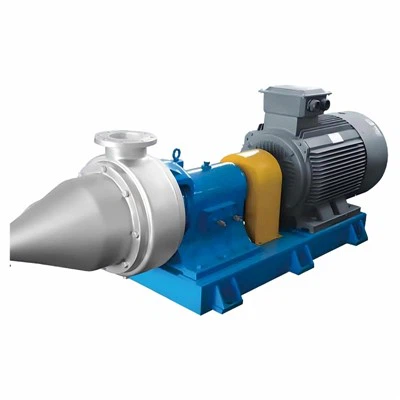
The equipment is mainly used for coarse beating, refining and re-pulping of broke and waste paper. It is available for long fiber pulp such as cotton, wood and hemp. The equiment is furnished with automatic control system and can beat with constant power or constant energy consumption. The beating effect is stable.
Structural Components
1.Conical Grinding Body
Meticulously crafted from high-quality wear-resistant alloy materials. These materials undergo special heat treatment and surface strengthening processes, possessing outstanding hardness and wear resistance.
The surface texture is elaborately designed, featuring regular grooves and protrusions that facilitate effective cutting, rubbing, and fibrillation of the pulp during the beating process.
The unique conical geometry enables the generation of gradually increasing pressure and shear force during rotation, thereby achieving a progressive beating effect from coarse to fine grinding.
2.Main Shaft
Manufactured using high-strength alloy steel and undergoing precise machining and tempering treatment to ensure excellent mechanical strength and fatigue resistance.
The diameter and length of the main shaft are optimally designed based on the specifications and power requirements of the refiner, capable of withstanding huge torques and loads.
The main shaft is installed on the frame through high-precision bearings. These bearings have good load-bearing capacity and rotational accuracy, ensuring smooth operation of the main shaft and reducing friction and wear.
3.Motor
Equipped with a high-power three-phase asynchronous motor, featuring high energy conversion efficiency and a wide speed regulation range.
The motor has a relatively high protection level, capable of adapting to the relatively harsh working environment of the paper mill and effectively preventing the intrusion of dust, moisture, etc.
The motor is connected to the main shaft through a coupling or belt drive. The transmission system is carefully debugged to ensure the smoothness and accuracy of power transmission.
4.Feed Inlet
The feed inlet is typically funnel-shaped with a large opening area, facilitating the rapid and uniform entry of a large amount of pulp into the beating area.
Inside the feed inlet, there may be guide plates or material distribution devices that can initially disperse and guide the pulp, avoiding accumulation or uneven flow at the inlet.
The position and angle of the feed inlet are precisely calculated to ensure that the pulp can smoothly enter the refiner under the action of gravity and pushing force, reducing feed resistance and energy loss.
5.Discharge Outlet
The shape and size of the discharge outlet are reasonably designed to ensure the smooth discharge of the beaten pulp, avoiding clogging or retention.
Near the discharge outlet, there may be a screen or filtering device installed to screen out coarse fibers or impurities that do not meet the requirements, improving the quality of the discharged pulp.
To facilitate the control of the discharge flow and speed, the discharge outlet may be equipped with regulating valves or discharge devices that can be flexibly adjusted according to the requirements of the production process.
6.Automatic Control Operating System
Composed of sensors, controllers, touch screens, and actuators, etc., capable of real-time monitoring and control of the operating parameters of the refiner.
Sensors can accurately measure key parameters such as motor power, current, rotational speed, pulp temperature, and pressure, and feed these data back to the controller.
The controller analyzes and processes the sensor data based on the preset programs and algorithms, and then adjusts the motor speed, grinding body gap, feed speed, etc., through the actuators to achieve the beating mode of constant power or constant energy consumption.
The touch screen provides an intuitive and user-friendly human-machine interface, allowing operators to conveniently set beating process parameters, view the equipment operating status, and diagnose faults, etc.
7.Frame and Housing
The frame is welded from thick steel structures, featuring extremely high stability and seismic performance, effectively supporting the weight of the entire refiner and the vibrations generated during operation.
The housing is made of rust-proof and corrosion-resistant metal plates, not only protecting the internal components from the external environment but also reducing the noise generated during equipment operation.
Working Principle
1.Feeding:The pulp to be treated, such as cotton pulp, wood pulp, hemp pulp, etc., enters the interior of the conical refiner through the feed inlet under the action of gravity or pumping.
2.Coarse Grinding:As the grinding body rotates, the pulp first enters the coarse grinding area and is subjected to a large shear force and pressure, with the fibers being initially cut and fibrillated.
3.Fine Grinding:The pulp after coarse grinding gradually moves towards the tip of the grinding body and enters the fine grinding area. Here, it is subjected to a more intense shear and rubbing action, further refining and fibrillation of the fibers to achieve the required beating degree.
4.Control and Regulation:The automatic control operating system monitors the parameters of the beating process in real-time and automatically adjusts the motor speed, grinding body gap, and feed speed, etc., based on the preset constant power or constant energy consumption mode to ensure the stability and consistency of the beating effect.
5.Discharge:The beaten pulp is discharged through the discharge outlet and enters the subsequent process flow.
Performance Characteristics
1.Efficient Beating:The unique conical structure and optimized grinding body design can achieve efficient beating effects in a short period, improving production efficiency.
2.Stable Beating Quality:The equipped automatic control operating system can precisely control the beating process, ensuring stable quality of each beating and reducing product quality fluctuations.
3.Strong Adaptability:Suitable for beating various long-fiber pulps, and can be flexibly adjusted according to different pulp characteristics and process requirements.
4.Energy Saving and Consumption Reduction:The beating mode of constant power or constant energy consumption can effectively reduce energy consumption, improve energy utilization efficiency, and lower production costs.
5.Simple Operation:The automatic control operating system makes the operation more convenient, reducing manual intervention and lowering the operation difficulty and labor intensity.
6.Convenient Maintenance:The structural design is reasonable, and each component is easy to disassemble and install, facilitating daily maintenance and reducing equipment downtime.
Main Technical Parameters
|
Type |
KZM-Φ450 |
KZM-Φ460 |
KZM-Φ600 |
KZM-Φ750 |
|
Diameter of big end of rotor(mm) |
Φ450 |
Φ460 |
Φ600 |
Φ750 |
|
Production(t/d) |
20~60 |
30~150 |
50~250 |
80~400 |
|
Power(KW) |
110~132 |
160~315 |
355~500 |
450~900 |
|
Consistency(%) |
3~5 |
|||
Hot Tags: kzm series conical refiner, China kzm series conical refiner suppliers, factory, Gravity Cylinder Thickener , p m auxiliary and parts, Paper Machine Ragger, 700X3850 Vacuum Suction Box, paper machine concentration equipment, 2640 350 Pope Reel
Previous
KTF RefinerNext
Toothed DeflakerYou Might Also Like




Send Inquiry