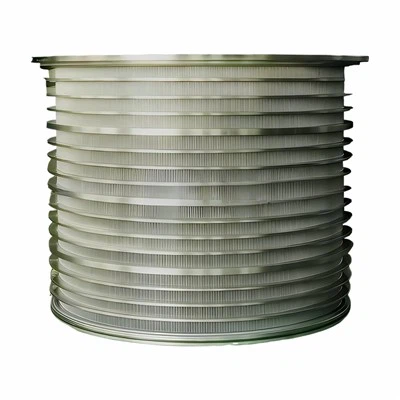
Designing the layout of pressure screens in a production line is a critical task that requires a comprehensive understanding of the production process, the characteristics of the pressure screens, and the specific requirements of the end - product. As a pressure screens supplier, I have been involved in numerous projects where the proper layout of these screens can significantly impact the efficiency, quality, and cost - effectiveness of the production line. In this blog, I will share some key considerations and steps for designing an optimal layout of pressure screens in a production line.
Understanding the Production Process
The first step in designing the layout of pressure screens is to have a clear understanding of the overall production process. Different industries, such as pulp and paper, food and beverage, and chemical processing, have unique production requirements. For example, in the pulp and paper industry, pressure screens are used to separate fibers from impurities and to control the consistency of the pulp. In the food and beverage industry, they are used to remove solid particles from liquids, ensuring product clarity and quality.
By analyzing the production process, we can identify the points where pressure screening is necessary. This includes determining the flow rate, the type and size of the particles to be removed, and the desired quality of the end - product. For instance, if the production process involves a high - volume flow with large - sized particles, a Coarse Screen Up - flow Pressure Screen might be the first choice in the layout. This type of screen is designed to handle large volumes and can effectively remove large impurities.
Types of Pressure Screens and Their Applications
There are several types of pressure screens available, each with its own unique features and applications.
Fine Screen Out - flow Pressure Screen
The Fine Screen Out - flow Pressure Screen is designed for fine screening applications. It can remove small particles and fibers from the suspension, ensuring a high - quality end - product. This type of screen is often used in the final stages of the production process, where a high level of purity is required. For example, in the production of high - grade paper, a fine screen out - flow pressure screen can be used to remove any remaining small impurities, resulting in a smooth and clean paper surface.
Inflow Pre - net Screen
The Inflow Pre - net Screen is typically used as a pre - screening device. It can remove larger particles and debris before the suspension enters the main screening system. This helps to protect the downstream screens from excessive wear and clogging, thereby extending their service life. In a pulp and paper production line, an inflow pre - net screen can be installed at the beginning of the screening process to remove bark, knots, and other large impurities from the pulp.
Coarse Screen Up - flow Pressure Screen
As mentioned earlier, the coarse screen up - flow pressure screen is suitable for handling large - volume flows with large - sized particles. It uses an up - flow design, which allows the particles to settle at the bottom of the screen while the clean suspension flows upwards. This design is particularly effective in removing heavy and large impurities, such as stones and metal pieces, from the production stream.

Layout Design Considerations
Flow Direction and Connectivity
The flow direction of the suspension through the pressure screens is a crucial factor in the layout design. The screens should be arranged in a way that ensures a smooth and continuous flow. This may involve considering the elevation of the screens, the pipe diameters, and the use of pumps to maintain the required flow rate. For example, if multiple screens are used in series, the output of one screen should be easily connected to the input of the next screen, minimizing the pressure drop and ensuring efficient operation.

Space Requirements
Another important consideration is the space available for the installation of the pressure screens. The layout should make the most of the available space while allowing for easy access for maintenance and repair. Adequate clearance should be provided around each screen for operators to perform routine inspections, cleanings, and part replacements. Additionally, the layout should take into account the future expansion of the production line, leaving enough space for additional screens if needed.

Safety and Maintenance
Safety is a top priority in any production line. The layout of the pressure screens should comply with all relevant safety regulations. This includes providing proper guarding around moving parts, ensuring adequate ventilation to prevent the build - up of hazardous gases, and installing emergency stop buttons. Moreover, the layout should facilitate easy maintenance. Screens should be located in areas where they can be easily accessed by maintenance personnel, and the design should allow for quick and simple replacement of worn - out parts.
Step - by - Step Layout Design
Initial Assessment
Begin by conducting a detailed assessment of the production process, including the flow rate, particle size distribution, and the quality requirements of the end - product. Based on this assessment, select the appropriate types of pressure screens for the application.
Conceptual Design
Create a conceptual layout of the pressure screens in the production line. Consider the flow direction, space requirements, and safety and maintenance aspects. Sketch out the general arrangement of the screens, pipes, and other related equipment.
Detailed Design
Once the conceptual design is approved, proceed with the detailed design. This includes specifying the exact dimensions of the screens, the pipe sizes, and the locations of all components. Use computer - aided design (CAD) software to create accurate and detailed drawings of the layout.
Simulation and Optimization
Before finalizing the layout, use simulation software to analyze the performance of the pressure screens in the production line. This can help to identify any potential issues, such as flow restrictions or excessive pressure drops. Based on the simulation results, optimize the layout to improve the efficiency and performance of the system.

Installation and Commissioning
After the layout design is completed, proceed with the installation of the pressure screens according to the design specifications. Once the installation is finished, conduct a thorough commissioning process to ensure that the screens are operating properly and meeting the production requirements.
Conclusion
Designing the layout of pressure screens in a production line is a complex but essential task. By understanding the production process, selecting the appropriate types of screens, and considering the flow direction, space requirements, safety, and maintenance, we can create an optimal layout that maximizes the efficiency and quality of the production line.
As a pressure screens supplier, we have the expertise and experience to help you design the perfect layout for your production line. Whether you are a small - scale manufacturer or a large - scale industrial enterprise, we can provide you with customized solutions that meet your specific needs. If you are interested in learning more about our pressure screens or need assistance with the layout design of your production line, please feel free to contact us for a procurement discussion. We look forward to working with you to improve the performance of your production line.
References
- "Pulp and Paper Technology Handbook"
- "Food and Beverage Processing Equipment Manual"
- "Chemical Process Engineering Principles"