Hey there! As a supplier of Disc Thickeners, I often get asked about the role of the filtrate in these machines. So, I thought I'd write a blog post to explain it all in simple terms.
First off, let's talk about what a Disc Thickener is. A Disc Thickener is a key piece of equipment in many industries, especially in the paper - making industry. It's used to increase the consistency of pulp by separating the liquid (filtrate) from the solid fibers.

The filtrate plays a crucial role in the whole process of a Disc Thickener. When the pulp enters the thickener, it's a mixture of fibers and a large amount of water. The main job of the Disc Thickener is to remove as much of this water as possible to increase the pulp's consistency. The water that gets separated from the pulp is what we call the filtrate.
One of the primary functions of the filtrate is to act as a medium for transporting the unwanted substances away from the pulp. In the paper - making process, the pulp may contain various impurities such as small particles, chemicals, and dissolved solids. As the filtrate passes through the discs of the thickener, it carries these impurities with it. This helps in purifying the pulp and improving the quality of the final paper product.
For example, if there are tiny bits of dirt or excess chemicals in the pulp, the filtrate will wash them out. This is important because if these impurities are left in the pulp, they can affect the strength, color, and overall quality of the paper. So, in a way, the filtrate acts like a cleaning agent for the pulp.
Another important role of the filtrate is in the process control of the Disc Thickener. By monitoring the properties of the filtrate, such as its flow rate, temperature, and chemical composition, operators can make adjustments to the thickener's operation. If the filtrate has a high concentration of solids, it might indicate that the thickener is not working efficiently, and the settings may need to be tweaked.
Let's compare the Disc Thickener with other types of thickeners. We have the Gravity Cylinder Thickener Ⅰ and the Inclined Screw Thickenner. In a Gravity Cylinder Thickener Ⅰ, the separation of the liquid and solid is mainly based on gravity. The filtrate here also plays a role in removing impurities, but the process is relatively slower compared to a Disc Thickener. The Disc Thickener uses a rotating disc system which speeds up the separation process and allows for better control over the filtrate flow.

In an Inclined Screw Thickenner, the screw mechanism helps in pushing the pulp forward while separating the filtrate. However, the Disc Thickener can achieve a higher degree of thickening in a more compact space. The role of the filtrate in both these thickeners is similar in terms of impurity removal, but the Disc Thickener offers more precise control over the filtrate and the thickening process.
The filtrate can also be recycled in many cases. Once it's separated from the pulp, it can be treated and reused in other parts of the production process. For example, it can be used for dilution in the pulping process or for washing other equipment. This not only saves water but also reduces the overall cost of production.
But there are also some challenges associated with the filtrate. Sometimes, the filtrate may contain a high amount of chemicals and pollutants. If not properly treated, it can cause environmental problems. So, it's essential to have a good filtrate treatment system in place. This can involve processes like filtration, sedimentation, and chemical treatment to remove the harmful substances before the filtrate is either discharged or recycled.
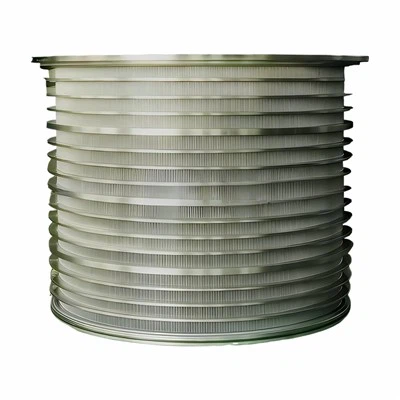
Now, let's talk about how the design of the Disc Thickener affects the role of the filtrate. The discs in the thickener are designed with specific pore sizes and surface characteristics. These are carefully engineered to allow the filtrate to pass through while retaining the pulp fibers. The rotation speed of the discs also affects the flow rate of the filtrate. A faster rotation can increase the filtrate flow, but it needs to be balanced to ensure that the thickening process is efficient and the pulp quality is maintained.

In addition, the arrangement of the discs in the thickener can impact the filtrate distribution. A well - designed Disc Thickener will have a uniform distribution of the filtrate across all the discs. This helps in achieving consistent thickening of the pulp throughout the machine.

If you're in an industry that requires pulp thickening, choosing the right thickener is crucial. The Disc Thickener, with its efficient use of the filtrate, can offer many advantages. It can improve the quality of your pulp, increase production efficiency, and reduce environmental impact through proper filtrate management.
If you're interested in learning more about our Disc Thickeners or have any questions about how the filtrate works in them, don't hesitate to reach out. We're always here to help you make the best choice for your business. Whether you're new to the industry or looking to upgrade your existing equipment, we can provide you with all the information you need.
In conclusion, the filtrate in a Disc Thickener is not just waste water. It's a vital part of the thickening process that helps in purifying the pulp, controlling the operation of the machine, and even reducing production costs through recycling. So, if you're considering investing in a thickening solution, the Disc Thickener is definitely worth a look.
References:
- Industry standards and best practices in pulp thickening equipment.
- Internal research and development reports on Disc Thickener technology.