


Inclined Screw Thickenner
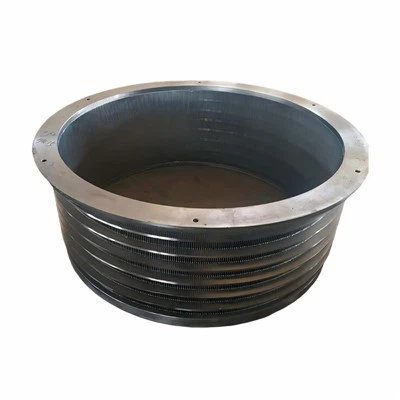
For different pulp kinds and different consistency range, the hole dia. of filtering drum is different, which is beneficial to reducing loss of fiber.
Application
Used for thickening and washing all kinds of pulp.
Features
- Special-type screw and brush; strong self-cleaning ability of filtering drum; high discharge consistency.
- For different pulp kinds and different consistency range, the hole dia. of filtering drum is different, which is beneficial to reducing loss of fiber.
- Height of pulp level in pulp tank can conveniently control discharge consistency.
Structural Components
1.Inclined Screw Shaft
Typically crafted from high-quality alloy steel of superior strength. This material boasts excellent mechanical properties, including high tensile strength, outstanding wear resistance, and remarkable corrosion resistance, enabling it to withstand the abrasive nature and chemical erosion of the pulp over an extended period of operation.
The design of the screw blades undergoes meticulous fluid dynamics and mechanical analyses. Their shape, pitch, and angle are all optimized to achieve efficient pulp transportation and thickening functions. The blade surface might undergo special treatments, such as hardening or the application of wear-resistant coatings, to further enhance its durability and service life.
The two ends of the screw shaft are supported by high-precision bearings, ensuring stability and concentricity during rotation, minimizing the generation of vibration and noise.
2.Housing
Generally fabricated from high-quality stainless steel. This material not only exhibits good mechanical strength, capable of withstanding the internal pressure and abrasion from the pulp, but also demonstrates excellent corrosion resistance, able to resist the chemical corrosion from substances within the pulp.
The housing typically takes the form of a cylindrical or conical shape, and its dimensions are customized based on production scale and process requirements. The inner wall of the housing might undergo polishing treatment to reduce pulp adhesion and resistance.
For ease of observing the internal operation and maintenance, the housing may be equipped with inspection windows and access doors.
3.Feed and Discharge Ports
The feed port is designed rationally and meticulously laid out. Commonly, it adopts a gradually expanding or diversion structure to ensure that the low-concentration pulp enters the inclined screw thickener uniformly and smoothly. The position and angle of the feed port are precisely calculated to avoid shock and splashing of the pulp during the feeding process, thereby guaranteeing the stable operation of the equipment.
The discharge ports are divided into the outlet for concentrated pulp and the outlet for separated water. The pulp outlet is usually located at the upper part of the equipment and is designed with a smooth flow path to ensure the smooth discharge of the concentrated pulp, reducing resistance and pressure loss. The water outlet is located at the bottom or side of the equipment and is connected to the wastewater treatment system or recycling device through pipelines.
To control the flow rate and concentration of the discharge, the discharge ports might be equipped with regulating valves or flow sensors and other devices.
4.Drive System
Comprises a high-performance motor, a precise speed reducer, and reliable transmission components such as couplings and belt pulleys. The motor supplies robust power, and the speed reducer converts the high-speed rotation into a low-speed rotation suitable for the screw shaft.
The drive system usually features speed regulation functionality, achievable through a frequency converter or other speed control devices. This speed adjustment capability allows the equipment to adapt to pulps of different concentrations, flow rates, and properties, as well as varying production process requirements, thereby ensuring the optimal thickening effect and production efficiency.
To monitor the operating status of the drive system, devices such as current sensors, speed sensors, and corresponding protection devices, such as overload protection and overheat protection, might be equipped.
Working Principle
1.Feed
The low-concentration pulp enters the interior of the inclined screw thickener through the feed pipeline and the elaborately designed feed port at a stable flow rate and pressure. During the feeding process, a preliminary stirring or dispersion device might be employed to distribute the pulp more uniformly, creating favorable conditions for the subsequent thickening process.
2.Screw Conveyance and Compression
The screw shaft rotates at a slow and stable speed under the drive of the drive system. The pulp is pushed upward along the inclined direction of the screw shaft by the screw blades. During this process, the pulp is subjected to the compression action of the screw blades, and the moisture therein is gradually squeezed out.
Due to the inclined design of the screw shaft, the pulp experiences a gradually increasing pressure during the upward movement, which further promotes the separation and discharge of moisture. Simultaneously, the spacing between the screw blades gradually decreases, enhancing the compression effect on the pulp.
3.Concentration and Separation
As the pulp ascends along the screw shaft, it is continuously concentrated, and the moisture is discharged through the pores, filters, or dedicated drainage channels on the housing. These drainage channels are typically designed rationally to ensure the rapid discharge of moisture while preventing the loss of pulp fibers.
Eventually, the pulp that meets the concentration requirements is discharged from the discharge port located at the upper part of the equipment and enters the subsequent processing procedures or storage devices. The separated water is discharged through the water outlet at the bottom or side and is collected and treated separately or recycled.
Performance Characteristics
1.Efficient Concentration
Capable of rapidly and effectively increasing the concentration of the pulp within a relatively short period, significantly reducing the moisture content. Its high concentration efficiency can meet the strict requirements for pulp concentration in large-scale papermaking production.
Through the optimized screw structure and operating parameters, deep concentration of the pulp can be achieved, enhancing the quality and value of the pulp.
2.Continuous Operation
Can realize uninterrupted continuous production without the need for frequent shutdowns and startups, significantly enhancing production efficiency. Its stable and reliable operating performance enables it to adapt to long-term high-load operations, ensuring the continuity and stability of production.
The feature of continuous operation reduces production interruptions and adjustments, lowers production costs and labor input, and improves the efficiency and economic benefits of the entire papermaking production line.
3.Small Footprint
The structure is compact and well-designed. Compared to other traditional thickening equipment, it occupies a smaller factory space. This is a significant advantage for papermaking plants with limited space, allowing for better utilization of the limited site resources.
Its compact structure also facilitates installation and layout, enabling flexible adaptation to different production site conditions and reducing the difficulty and cost of equipment installation and modification.
4.Simple Operation
The control system typically adopts an intelligent design with a user-friendly interface, making it easy to operate and monitor. Operators can effortlessly set and adjust operating parameters, such as rotational speed, feed rate, and concentration degree, through the control panel.
The equipment operates stably and reliably with a high degree of automation, reducing the possibility of human intervention and operational errors. Simultaneously, the maintenance and upkeep of the equipment are relatively straightforward, lowering the technical requirements for operators.
5.Low Energy Consumption
Compared to other thickening equipment, such as centrifugal thickeners or filter presses, the inclined screw thickener has relatively lower energy consumption during operation. Its energy-saving feature mainly stems from its optimized mechanical structure and operating principle, which enables efficient energy utilization, reducing production costs.
The low energy consumption characteristic is in line with modern industrial requirements for energy conservation and emission reduction, helping papermaking enterprises reduce energy consumption, minimize the environmental impact, and achieve sustainable development.
Application Fields
1.Papermaking Pulping
In the chemical pulping process, it is used to concentrate the pulp after cooking and washing, increasing its concentration and preparing it for subsequent processes such as bleaching and screening.
In mechanical pulping, it is employed to concentrate the pulp after grinding treatment, removing excess moisture and enhancing the quality and performance of the pulp.
In waste paper pulping, it assists in concentrating the recovered waste paper pulp, removing impurities and moisture to meet the recyclable standards.
2.Wastewater Treatment
A large amount of wastewater is generated during the papermaking process. The inclined screw thickener can be utilized to treat this wastewater and achieve solid-liquid separation. The solid substances such as fibers and fine particles in the wastewater are concentrated, facilitating subsequent treatment and recycling, while reducing the pollutant content in the wastewater and minimizing the environmental impact.
By concentrating the wastewater, the volume of wastewater to be treated can be reduced, treatment costs can be lowered, and the recycling rate of water resources can be increased.
3.Fiber Recovery
Recover fibers from papermaking wastewater or other waste streams containing fibers to improve resource utilization. The inclined screw thickener can effectively separate the fibers from the liquid, allowing them to re-enter the production process and reducing the waste of raw materials.
Fiber recovery not only helps reduce production costs but also aligns with the concepts of environmental protection and sustainable development, promoting the circular economy in the papermaking industry.
Maintenance and Care
1.Regular Inspections
Conduct regular comprehensive inspections of the inclined screw thickener, including the screw shaft, housing, bearings, transmission components, etc. Check for wear, deformation, or cracks on the screw shaft and for corrosion or leakage on the housing.
Examine the lubrication status of the bearings to ensure their normal operation and prevent wear and failure due to poor lubrication. Simultaneously, check the connection of the transmission components for firmness and the tension of belts or chains for suitability.
2.Cleaning and Lubrication
Regularly clean the interior and exterior of the equipment to remove adhered pulp, dirt, and debris to maintain its good operating condition. Pay particular attention to cleaning the screw blades and the inner wall of the housing to prevent clogging and accumulation.
For key components such as bearings and speed reducers, perform lubrication and maintenance in accordance with the prescribed time and requirements, using appropriate lubricating oil or grease to ensure adequate lubrication and reduce wear.
3.Component Replacement
Promptly replace components that are severely worn or damaged, such as screw blades, bearings, and seals. When replacing components, choose reliable original factory parts to ensure the performance and stability of the equipment.
Regularly inspect the electrical system connections and components, such as motors, sensors, and controllers, to ensure their normal operation. If there are faults, repair or replace them promptly.
4.Operation Monitoring
During the equipment's operation, closely monitor the operating parameters, such as current, voltage, rotational speed, pressure, and concentration. If any abnormalities are detected, stop the machine immediately for inspection.
Establish an equipment operation file to record the maintenance, servicing, repair, and operation conditions of the equipment, providing a basis for equipment management and fault diagnosis.
5.Training and Safety
Provide regular training to operators to familiarize them with the operation, maintenance, and safety precautions of the equipment. Improve the skill level and sense of responsibility of the operators to ensure the correct use and maintenance of the equipment.
Develop and strictly adhere to the safety operation procedures of the equipment, strengthen safety protection measures, and prevent safety accidents.
Main Technical Parameters
|
Type |
ZNX1 |
ZNX2 |
ZNX3 |
ZNX8 |
ZNX9 |
ZNX12 |
|
|
Nominal filtrating area:㎡ |
1×1 |
1×2 |
1×3 |
1.5×2 |
1.5×3 |
2×3 |
|
|
Consistency of inflow pulp:% |
3×4 |
||||||
|
Consistency of outflow pulp:% |
10×14 |
||||||
|
Capacity of Production:t/d |
OCC |
18~23 |
35~45 |
50~70 |
50~70 |
80~100 |
100~130 |
|
ONP |
10~15 |
20~30 |
30~45 |
30~45 |
50~60 |
60~80 |
|
|
Power of motor:kw |
4 |
4×2 |
4×3 |
7.5×2 |
7.5×3 |
11×3 |
|
|
(L×W×H):mm |
2000×600×2725 |
2000×865×2725 |
2000×1280×2725 |
2300×1100×3400 |
2300×1550×3400 |
2350×1800×3750 |
|
Hot Tags: inclined screw thickenner, China inclined screw thickenner suppliers, factory, Heavy Rejects Cleaner, High Concentration Pressure Screen, Hydrapulper, PaperRetrofitting PaperMachine Energy Saving and Efficiency Improvement Renovation Project, 1100X7921 VAC ROLL, w w treating equipments
Previous
No InformationNext
Disc ThickenerYou Might Also Like


Send Inquiry