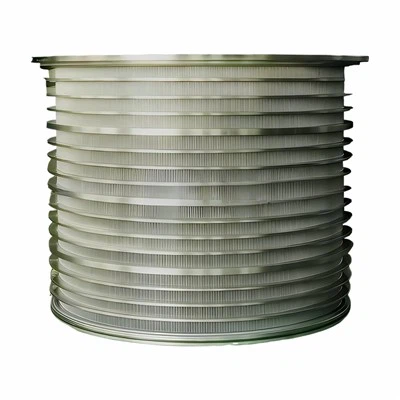
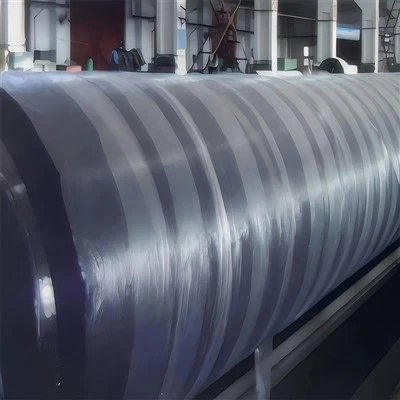
Hey there! As a supplier of Disc Thickeners, I've seen firsthand how crucial it is to pick the right disc material for different applications. Let's dig into this topic and figure out how you can make the best choice for your specific needs.
Firstly, let's talk about what a disc thickener does. It's a key piece of equipment used in various industries, especially in the pulp and paper industry, to increase the consistency of a slurry. But the performance of a disc thickener largely depends on the disc material. So, how do we select it? Well, it all boils down to three main factors: the type of slurry, the operating conditions, and the required end - product properties.
The type of slurry is a major determining factor. Different slurries have different characteristics. For example, if you're dealing with a highly abrasive slurry, like one containing a lot of sand or hard particles, you need a disc material that can withstand the wear and tear. Ceramic discs are a great option here. They are super hard and have excellent wear - resistance. They can last a long time even when they're in contact with those rough particles in the slurry. On the other hand, if your slurry has a lot of chemicals in it, corrosion can be a big deal. In this case, you might want to consider stainless - steel discs. Stainless steel is resistant to many chemicals, so it can handle corrosive slurries without getting damaged easily.
The operating conditions also matter a great deal. The temperature of the slurry and the pressure under which the thickening process takes place can influence your choice of disc material. At high temperatures, some materials might start to deform or lose their properties. For high - temperature applications, materials like carbon fiber - reinforced composites can be a good pick. These composites can maintain their strength and performance even at elevated temperatures. And when it comes to high - pressure situations, you'll need a disc material with high mechanical strength. Cast iron discs are often used in high - pressure applications because they can handle the stress without cracking or breaking.
The required end - product properties are another consideration. If you need a very high - quality end product with low levels of impurities, you'll want a disc material that can provide good separation efficiency. Polyurethane discs are known for their excellent filtration properties. They can trap small particles in the slurry and produce a cleaner end product. This is especially important in industries where product purity is a top priority, such as the food and beverage industry.
Okay, now that we've covered the basic factors for material selection, let's take a look at some specific applications and the recommended disc materials for each.
In the pulp and paper industry, which is one of the biggest users of disc thickeners, the choice of material depends on the type of pulp being processed. For mechanical pulp, which is relatively coarse and abrasive, synthetic fiber discs are often used. They can handle the rough pulp fibers and provide a decent level of thickening efficiency. Chemical pulp, on the other hand, is more delicate and may require different materials. Polypropylene discs are a popular choice for chemical pulp because they are resistant to the chemicals used in the pulping process and can provide good separation.
In the mining industry, the slurries are usually very abrasive. As I mentioned before, ceramic discs are a go - to option. They can stand up to the harsh conditions and keep the thickening process running smoothly. Another option in some mining applications is rubber - lined discs. The rubber lining provides additional protection against abrasion and also helps in reducing noise during the operation.
Now, besides disc thickeners, there are other related thickening equipments that you might be interested in. I'd like to share some other options with you. Check out the Inclined Screw Thickenner. It's a great alternative for some specific thickening needs. Also, the Gravity Cylinder Thickener Ⅰ and Gravity Cylinder Thickener Ⅱ are worth exploring. These machines work differently but can also be very effective in thickening slurries.
When it comes down to purchasing the right disc thickener with the appropriate disc material, you need to do your research. You can talk to industry experts, read up on case studies, and even request samples of different disc materials to test. If you're still not sure which disc material is right for your application, don't hesitate to reach out. Our team of experts is always here to help you figure it out. We have years of experience in this field and can provide you with the most suitable solutions based on your unique requirements. Whether you're running a large - scale industrial plant or a small - scale operation, we've got you covered.
In conclusion, selecting the appropriate disc material for different applications is a process that requires careful consideration of multiple factors. By taking into account the type of slurry, the operating conditions, and the required end - product properties, you can make an informed decision and ensure the optimal performance of your disc thickener. So, if you're in the market for a disc thickener or need to upgrade your existing one, come and have a chat with us. We're looking forward to helping you make the right choice for your business.
References:


- Pulp and Paper Industry Handbook
- Mining Engineering Textbooks on Slurry Processing
- Journal of Industrial and Engineering Chemistry Research on Disc Materials for Filtration and Thickening