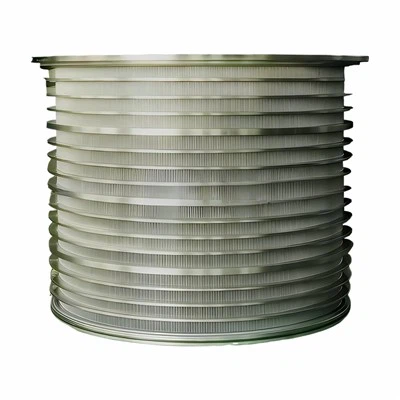
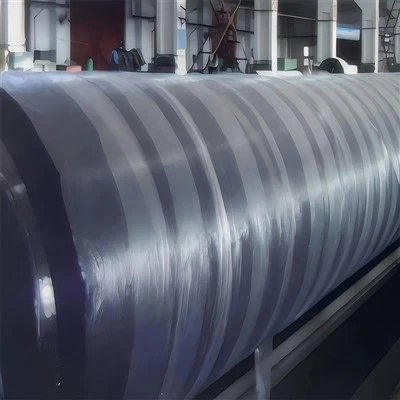
Hey there! As a supplier of sizing equipment, I've seen firsthand how these machines play a crucial role in the fertilizer industry. In this blog, I'm gonna break down the different applications of sizing equipment in the fertilizer world and why it's so important.
Quality Control in Fertilizer Production
First off, sizing equipment is essential for quality control. When it comes to fertilizers, the size of the granules matters a whole lot. Consistent granule size ensures uniform distribution during application, which in turn leads to more effective fertilization.
Let's say you're using a 5800/800 Sizing Machine. This bad boy can sort out the granules based on their size. It separates the over - sized and under - sized particles from the ones that meet the desired specifications. The over - sized granules might not dissolve properly in the soil, while the under - sized ones could blow away easily or be washed off during irrigation. By removing these non - standard particles, the sizing equipment helps produce a high - quality fertilizer product.
Improving Fertilizer Flowability
Another key application is improving the flowability of fertilizers. Fertilizers need to flow smoothly through the spreading equipment, whether it's a tractor - mounted spreader or an aerial seeding system. If the granules are all different sizes, they can clump together, causing blockages in the equipment.
Our 5600/550 Sizing Machine is great for this purpose. It helps create a more uniform granule size, which reduces the chances of clumping. When the granules are of a consistent size, they can move freely through the hoppers, pipes, and nozzles of the spreading equipment. This not only makes the application process more efficient but also ensures that the fertilizer is distributed evenly across the field.
Enhancing Nutrient Release
The size of fertilizer granules also affects the rate of nutrient release. Smaller granules generally release nutrients more quickly than larger ones. By using sizing equipment, fertilizer manufacturers can control the granule size to achieve the desired nutrient release pattern.


For example, if a farmer needs a quick - release fertilizer to give a boost to young plants, the manufacturer can use sizing equipment to produce smaller granules. On the other hand, for a slow - release fertilizer that provides nutrients over a longer period, larger granules can be created. This customization allows farmers to better meet the specific needs of their crops at different growth stages.
Compatibility with Different Application Methods
Sizing equipment helps make fertilizers compatible with various application methods. Different crops and fields may require different ways of applying fertilizers, such as broadcast spreading, banding, or fertigation.
Broadcast spreading, which is the most common method, works best with uniformly sized granules. The sizing equipment ensures that the granules are the right size to be evenly dispersed across the field when spread from a spinner or a pneumatic spreader. Banding, where the fertilizer is placed in a narrow band near the plant roots, also benefits from consistent granule size to ensure accurate placement. And in fertigation, where the fertilizer is dissolved in irrigation water, properly sized granules dissolve more easily and uniformly.
Cost - Efficiency in Production
Using sizing equipment can also lead to cost - efficiency in fertilizer production. By removing the non - standard granules early in the production process, manufacturers can reduce waste. The over - sized granules can be recycled and re - processed, while the under - sized ones can be used in other products or re - granulated.
Moreover, the improved quality and flowability of the fertilizer product mean less downtime for the spreading equipment due to blockages. This translates into more efficient use of labor and equipment, ultimately reducing the overall production cost.
Customization for Different Crops
Different crops have different nutrient requirements, and sizing equipment allows for customization of fertilizer products. For instance, leafy vegetables like lettuce may need a fertilizer with a quick - release of nitrogen to support rapid growth. Sizing equipment can be used to produce small - sized granules of a nitrogen - rich fertilizer.
On the other hand, fruit - bearing crops like tomatoes may benefit from a slow - release fertilizer that provides a steady supply of nutrients over a longer period. The sizing equipment can help create larger granules for such fertilizers. This ability to customize the fertilizer based on the crop's needs gives farmers more options to optimize their yields.
Meeting Industry Standards
The fertilizer industry has certain standards and regulations regarding the size and quality of fertilizer products. Sizing equipment helps manufacturers meet these standards. By producing fertilizers with consistent granule size, manufacturers can ensure that their products are compliant with national and international regulations.
This compliance is not only important for legal reasons but also for building trust with customers. Farmers are more likely to buy fertilizers that meet the established standards because they can be confident in the quality and performance of the product.
Conclusion
In conclusion, sizing equipment is a game - changer in the fertilizer industry. It plays a vital role in quality control, improving flowability, enhancing nutrient release, ensuring compatibility with different application methods, and achieving cost - efficiency. Whether you're a large - scale fertilizer manufacturer or a small - scale producer, investing in the right sizing equipment can make a big difference in the quality and competitiveness of your products.
If you're interested in learning more about our sizing equipment or discussing how it can benefit your fertilizer production, don't hesitate to reach out. We're here to help you find the best solutions for your specific needs. Let's work together to take your fertilizer production to the next level!
References
- Fertilizer Technology Handbook, 2nd Edition
- Journal of Agricultural and Food Chemistry: Studies on Fertilizer Granule Size and Nutrient Release
- Proceedings of the International Fertilizer Society Conferences on Fertilizer Production and Application