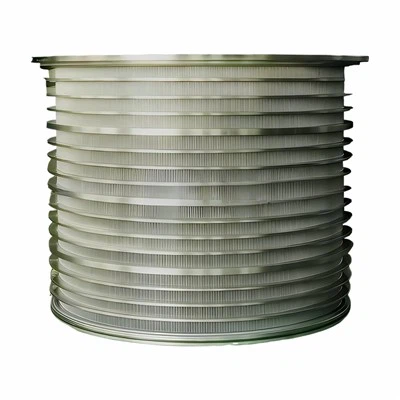
In the realm of industrial and natural processes, the concept of dispersing systems plays a crucial role. A dispersing system refers to the process of distributing one substance throughout another medium. While industrial dispersing systems are engineered for specific applications in various industries, natural dispersing systems have been at work for millions of years, shaping our planet and sustaining life. As a dispersing system supplier, understanding these natural examples can provide valuable insights into the principles and mechanisms that underpin effective dispersion, which in turn can inform the design and improvement of our industrial products.
Pollination in Plants
One of the most well - known examples of a natural dispersing system is pollination. Pollination is the transfer of pollen from the male anther of a flower to the female stigma. This process is essential for the sexual reproduction of flowering plants. There are two main types of pollination: self - pollination and cross - pollination. In self - pollination, pollen is transferred within the same flower or between flowers of the same plant. Cross - pollination, on the other hand, involves the transfer of pollen between flowers of different plants of the same species.
Nature has evolved several mechanisms for cross - pollination. Insects, such as bees, butterflies, and moths, are major pollinators. As they move from flower to flower in search of nectar, pollen grains stick to their bodies and are carried to other flowers. Birds, especially hummingbirds, also play a role in pollination. They are attracted to brightly colored, tubular flowers and transfer pollen as they feed. The wind is another important agent of pollination. Some plants, like grasses and many trees, produce large amounts of lightweight pollen that can be carried over long distances by the wind.
This natural dispersing system ensures genetic diversity among plant populations. By transferring pollen between different plants, it allows for the combination of different genetic traits, which is beneficial for the plant's ability to adapt to changing environmental conditions. As a dispersing system supplier, we can draw inspiration from this process. For example, in the design of our Disc Heat - Disperser, we can focus on the efficient transfer and distribution of substances, similar to how nature ensures the wide - spread distribution of pollen.
Ocean Currents and Nutrient Dispersal
Ocean currents are a global natural dispersing system that plays a vital role in the distribution of heat, nutrients, and marine organisms throughout the world's oceans. There are two main types of ocean currents: surface currents and deep - water currents. Surface currents are driven by wind, the Earth's rotation, and the shape of the continents. Deep - water currents, also known as thermohaline circulation, are driven by differences in water density, which are caused by variations in temperature and salinity.
These currents transport nutrients, such as nitrogen, phosphorus, and iron, from areas of high concentration to areas of low concentration. For example, upwelling currents bring nutrient - rich water from the deep ocean to the surface, where it supports the growth of phytoplankton. Phytoplankton are the base of the marine food web, and the dispersion of nutrients by ocean currents is essential for the productivity of the entire marine ecosystem.
Ocean currents also disperse marine organisms. Many marine larvae, such as those of fish, crabs, and mollusks, are carried by currents over long distances. This allows for the colonization of new habitats and the maintenance of genetic diversity among marine populations. As a supplier of dispersing systems, we can learn from the large - scale and long - term nature of ocean current dispersal. Our Paper Machine Kneader can be designed to achieve effective and efficient dispersion on an industrial scale, ensuring that substances are evenly distributed over the entire volume.
Wind - Dispersed Seeds
Another natural dispersing system is the wind - dispersal of seeds. Many plants have evolved adaptations to ensure that their seeds are carried by the wind to new locations. For example, dandelions produce light, fluffy seeds with a parachute - like structure called a pappus. When the seeds are mature, the pappus catches the wind, allowing the seeds to be carried away from the parent plant. Some trees, such as maple trees, produce winged seeds called samaras. The wings act as airfoils, enabling the seeds to glide through the air and travel long distances.
Wind - dispersed seeds have several advantages for plants. They can colonize new areas, which helps to expand the plant's range and reduce competition for resources such as light, water, and nutrients. This natural dispersal mechanism also promotes genetic mixing among different plant populations. By studying the design of these wind - dispersed seeds, we can gain insights into how to create more effective dispersal mechanisms in our industrial products. We can focus on reducing the resistance of substances during dispersion and increasing their ability to be carried by a medium, just as seeds are carried by the wind.
Animal - Mediated Seed Dispersal
Animals also play a significant role in seed dispersal. Some plants produce fruits that are eaten by animals. The seeds pass through the animal's digestive system unharmed and are deposited in a new location along with the animal's feces. This type of seed dispersal is known as endozoochory. For example, berries are eaten by birds, and the seeds are dispersed over a wide area as the birds fly.


Other plants have seeds with hooks or barbs that attach to the fur or feathers of animals. As the animals move around, the seeds are carried to new places. This is called epizoochory. For instance, burdock plants produce burrs that stick to the fur of passing mammals.
Animal - mediated seed dispersal benefits plants in several ways. It allows for long - distance dispersal, which can help plants colonize new habitats. It also provides a form of "fertilization" as the seeds are deposited along with nutrient - rich feces. In our work as a dispersing system supplier, we can consider the interaction between different components in a dispersing system, similar to the interaction between plants and animals in seed dispersal. We can design our products to ensure that the substances being dispersed interact effectively with the dispersing medium.
Volcanic Eruptions and Ash Dispersal
Volcanic eruptions are a powerful natural dispersing system. When a volcano erupts, it releases large amounts of ash, gases, and pyroclastic material into the atmosphere. The force of the eruption can propel these materials high into the stratosphere, where they can be carried by global wind patterns over vast distances.
Volcanic ash is composed of tiny rock fragments and glass shards. The dispersion of volcanic ash can have both short - term and long - term effects. In the short term, it can cause respiratory problems for humans and animals, and it can disrupt air traffic. In the long term, volcanic ash can fertilize the soil as it contains nutrients such as potassium, phosphorus, and calcium.
The dispersion of volcanic ash is governed by factors such as the intensity of the eruption, the height at which the ash is injected into the atmosphere, and the prevailing wind patterns. As a dispersing system supplier, we can study these factors to understand how to optimize the dispersion of substances in our industrial processes. We can control the "force" of dispersion and the interaction with the surrounding medium to achieve the desired distribution.
Conclusion
Natural dispersing systems are a testament to the power and efficiency of nature's design. By observing and understanding these systems, we can gain valuable insights into the principles of dispersion. As a dispersing system supplier, we can apply these insights to the design and improvement of our products, such as the Disc Heat - Disperser and Paper Machine Kneader.
If you are interested in our high - quality dispersing systems and wish to explore how they can meet your specific industrial needs, we invite you to contact us for further discussion and potential procurement. Our team of experts is ready to provide you with detailed information and tailor - made solutions.
References
- Raven, P. H., Evert, R. F., & Eichhorn, S. E. (2005). Biology of Plants. W. H. Freeman and Company.
- Mann, K. H., & Lazier, J. R. N. (2006). Dynamics of Marine Ecosystems: Biological - Physical Interactions in the Oceans. Wiley - Blackwell.
- Simkin, T., & Siebert, L. (1994). Volcanoes of the World: A Regional Directory, Gazetteer, and Chronology of Volcanism During the Last 10,000 Years. Geoscience Press.