Ultrasonic sieves are an advanced type of screening equipment that have revolutionized many industries with their high - precision screening capabilities. As a sieves supplier, I am excited to share with you the diverse applications of ultrasonic sieves.


1. Pharmaceutical Industry
In the pharmaceutical industry, the quality and purity of drugs are of utmost importance. Ultrasonic sieves play a crucial role in ensuring that pharmaceutical powders meet the strict quality standards.
-
Active Pharmaceutical Ingredients (APIs) Screening
APIs are the key components of drugs, and their particle size distribution can significantly affect the drug's efficacy and bioavailability. Ultrasonic sieves can accurately separate APIs into different particle size fractions. The ultrasonic vibrations applied to the sieve mesh prevent the particles from clogging the mesh, ensuring a continuous and efficient screening process. For example, in the production of tablets, a uniform particle size of APIs is required to ensure consistent dosing. Ultrasonic sieves can achieve a high - precision separation, which is essential for the quality control of pharmaceutical products. -
Excipient Screening
Excipients are substances added to drugs to improve their formulation and stability. They also need to be screened to ensure the right particle size. Ultrasonic sieves can handle a wide range of excipient materials, such as lactose, starch, and cellulose. The gentle yet effective screening process of ultrasonic sieves helps maintain the integrity of the excipient particles, which is crucial for the proper functioning of the final drug product.
2. Food and Beverage Industry
The food and beverage industry demands high - quality products with consistent particle sizes. Ultrasonic sieves are widely used in this industry for various applications.
-
Flour and Starch Screening
In the production of flour and starch, ultrasonic sieves are used to remove impurities and ensure a uniform particle size. The ultrasonic vibrations help break up agglomerates of flour or starch particles, allowing for a more accurate screening. This results in a higher - quality product with better baking or thickening properties. For instance, in the production of high - end pastries, fine - grade flour with a specific particle size distribution is required. Ultrasonic sieves can achieve the precise screening needed to meet these requirements. -
Coffee and Tea Screening
Coffee beans and tea leaves need to be screened to remove debris and ensure a consistent particle size for brewing. Ultrasonic sieves can efficiently separate different grades of coffee beans or tea leaves based on their size. The gentle screening process also helps preserve the flavor and aroma of the coffee and tea, as it minimizes the damage to the particles. This is especially important for specialty coffee and tea products, where the quality of the raw materials directly affects the final taste of the beverage.
3. Chemical Industry
The chemical industry deals with a wide variety of powders and granular materials, and ultrasonic sieves are an ideal solution for many of its screening needs.
-
Pigment and Dye Screening
Pigments and dyes are used in a variety of applications, from paints and coatings to plastics and textiles. The particle size of pigments and dyes can significantly affect their color strength, dispersion, and stability. Ultrasonic sieves can accurately screen pigments and dyes to ensure a uniform particle size distribution. The ultrasonic vibrations prevent the agglomeration of pigment particles, which is crucial for achieving a consistent color in the final product. For example, in the production of automotive paints, a precise particle size of pigments is required to ensure a high - quality finish. -
Plastic Resin Screening
Plastic resins are used in the manufacturing of various plastic products. Ultrasonic sieves can be used to screen plastic resin pellets to remove any oversized or undersized particles. This helps ensure the quality and consistency of the plastic products. The ultrasonic vibrations also help prevent the resin pellets from sticking to the sieve mesh, which improves the screening efficiency. For instance, in the production of high - precision plastic components, such as medical devices, a uniform particle size of plastic resin is essential for proper molding and performance.
4. Mining and Minerals Industry
The mining and minerals industry often deals with large - scale screening operations. Ultrasonic sieves offer several advantages in this industry.
-
Ore Screening
In the mining of ores, ultrasonic sieves can be used to separate different grades of ores based on their particle size. The ultrasonic vibrations help break up the ore particles and prevent them from clogging the sieve mesh, even when dealing with sticky or abrasive materials. This results in a more efficient screening process and higher - quality ore products. For example, in the gold mining industry, ultrasonic sieves can be used to screen gold - bearing ores to separate the valuable gold particles from the gangue materials. -
Mineral Powder Screening
Mineral powders, such as talc, kaolin, and mica, are widely used in various industries. Ultrasonic sieves can accurately screen these mineral powders to ensure a specific particle size distribution. The gentle screening process of ultrasonic sieves helps maintain the natural properties of the mineral powders, which is important for their end - use applications. For instance, in the cosmetics industry, fine - grade talc with a uniform particle size is required for a smooth and silky texture in products.
5. Paper Industry
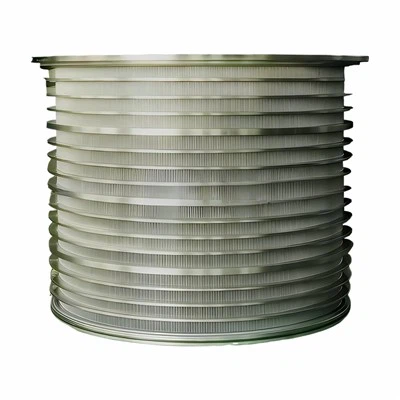
In the paper industry, ultrasonic sieves are used in several key processes. You can learn more about related equipment like the Paper Machine Vibrating Screen and Fibernet Screen.
-
Fiber Screening
The quality of paper is highly dependent on the quality of the fibers used. Ultrasonic sieves can be used to screen pulp fibers to remove impurities and ensure a uniform fiber length. The ultrasonic vibrations help separate the fibers more effectively, which improves the strength and smoothness of the paper. This is crucial for the production of high - quality paper products, such as printing paper and packaging materials. -
Coating Pigment Screening
Paper coatings often contain pigments, and the particle size of these pigments can affect the appearance and performance of the coated paper. Ultrasonic sieves can screen the coating pigments to ensure a consistent particle size, which results in a more uniform and high - quality coating. This is important for achieving a good printability and surface finish on the paper.
Conclusion
The applications of ultrasonic sieves are vast and diverse, spanning across multiple industries. Their ability to provide high - precision screening, prevent mesh clogging, and handle a wide range of materials makes them an indispensable tool for many manufacturing processes. As a sieves supplier, we are committed to providing high - quality ultrasonic sieves that meet the specific needs of our customers in different industries.
If you are interested in our ultrasonic sieves or other screening equipment, we invite you to contact us for a detailed discussion about your requirements. Our team of experts is ready to assist you in finding the most suitable sieving solution for your business. Whether you are in the pharmaceutical, food, chemical, mining, or paper industry, we have the expertise and products to meet your screening needs.
References
- Perry, R. H., & Green, D. W. (Eds.). (1997). Perry's Chemical Engineers' Handbook. McGraw - Hill.
- Svarovsky, L. (1990). Solid - Liquid Separation. Butterworth - Heinemann.
- Mohsenin, N. N. (1980). Physical Properties of Plant and Animal Materials. Gordon and Breach Science Publishers.