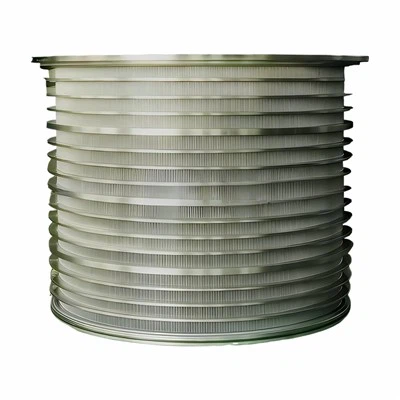
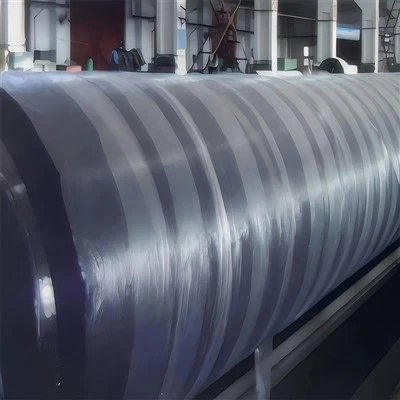
As a supplier of Expander Rolls, I've had the privilege of witnessing firsthand the unique characteristics and advantages of these specialized rolls in various industrial applications. In this blog, I'll delve into the differences between Expander Rolls and other types of rolls, exploring their distinct features, functions, and benefits.


1. Structure and Design
Expander Rolls
Expander Rolls are designed with a central shaft and a series of expanding segments or elements that can adjust the roll's diameter. This expansion mechanism allows for precise control over the tension and spreading of materials, making them ideal for applications where even distribution and alignment are crucial. The design typically incorporates a flexible or segmented outer surface that can accommodate changes in the roll's diameter while maintaining a smooth and consistent contact with the material.
Suction Rolls
Ф 750/5150 Suction Roll are constructed with a perforated surface and a vacuum system. The perforations allow the roll to draw in air, creating suction that helps to remove water or other fluids from the material passing over it. This design is commonly used in paper manufacturing and other industries where dewatering is a critical process. The internal structure of a suction roll is often complex, with chambers and channels designed to optimize the flow of air and ensure efficient suction.
Sizing Rolls
ΦSizing Roll Operate Speed 1200m are typically solid rolls with a smooth surface. They are used to apply a sizing agent to the material, which helps to improve its strength, smoothness, and printability. The design of sizing rolls focuses on providing a uniform and consistent application of the sizing agent, often through a metering system that controls the amount of fluid dispensed onto the roll surface.
Yankee Dryers
Ф 3660X3350 Yankee Dryer are large, cylindrical rolls that are heated internally. They are used in the production of tissue paper to dry the paper web by direct contact with the heated surface. The design of a Yankee dryer emphasizes efficient heat transfer and a smooth surface to ensure the quality of the dried paper. They often have a large diameter and a high rotational speed to maximize the drying capacity.
2. Function and Application
Expander Rolls
The primary function of Expander Rolls is to spread and tension materials such as fabrics, films, and webs. By adjusting the diameter of the roll, they can correct wrinkles, misalignments, and uneven tension in the material. This makes them suitable for a wide range of industries, including textile manufacturing, printing, packaging, and converting. In textile production, for example, Expander Rolls can be used to ensure that the fabric is evenly stretched and aligned during dyeing, printing, and finishing processes.
Suction Rolls
Suction Rolls are mainly used for dewatering applications. In the paper industry, they play a crucial role in the papermaking process by removing water from the wet paper web. As the paper passes over the suction roll, the vacuum draws out the water, reducing the moisture content and preparing the paper for further processing. Suction rolls are also used in other industries where the removal of liquids from a material is required, such as in the production of non - woven fabrics.
Sizing Rolls
Sizing Rolls are employed to apply a sizing agent to materials. In the paper industry, sizing is used to control the paper's absorbency, strength, and surface properties. The sizing agent can be a starch, resin, or other chemical compound that is applied to the paper surface to improve its performance. Sizing rolls ensure that the sizing agent is evenly distributed across the material, resulting in consistent quality and performance.
Yankee Dryers
Yankee Dryers are specifically designed for the drying of tissue paper. The high - temperature surface of the Yankee dryer quickly evaporates the water from the wet paper web, producing a soft and absorbent tissue product. The smooth surface of the dryer also helps to give the paper a desirable finish. Yankee dryers are a key component in the tissue manufacturing process, and their performance directly affects the quality and productivity of the production line.
3. Performance Characteristics
Expander Rolls
Expander Rolls offer excellent control over material tension and spreading. They can be adjusted to accommodate different material widths and thicknesses, providing a high degree of flexibility. The expansion mechanism allows for precise and rapid adjustments, enabling quick changes in the production process. Additionally, Expander Rolls are known for their ability to handle delicate materials without causing damage, as the flexible surface minimizes the risk of abrasion.
Suction Rolls
The performance of Suction Rolls is measured by their dewatering efficiency. The design of the perforations and the vacuum system determines how effectively the roll can remove water from the material. A well - designed suction roll can achieve high dewatering rates, reducing the energy required for subsequent drying processes. However, suction rolls require regular maintenance to ensure that the perforations are not blocked and the vacuum system is functioning properly.
Sizing Rolls
The key performance characteristic of Sizing Rolls is their ability to apply a uniform and consistent layer of sizing agent. The metering system and the surface finish of the roll are critical factors in achieving this. A high - quality sizing roll can ensure that the sizing agent is evenly distributed, resulting in consistent paper properties and improved printability.
Yankee Dryers
Yankee Dryers are evaluated based on their drying capacity and the quality of the dried paper. The heat transfer efficiency of the dryer determines how quickly it can remove moisture from the paper web. A well - designed Yankee dryer can achieve high drying rates while maintaining the integrity and softness of the tissue paper. The surface finish of the dryer also affects the appearance and feel of the final product.
4. Advantages and Limitations
Expander Rolls
Advantages:
- Precise control over material tension and spreading.
- Suitable for a wide range of materials, including delicate ones.
- Can be easily adjusted to meet different production requirements.
Limitations:
- The expansion mechanism may require regular maintenance to ensure proper operation.
- Higher initial cost compared to some other types of rolls.
Suction Rolls
Advantages:
- Highly effective in dewatering applications.
- Can significantly reduce the water content of the material in a single pass.
Limitations:
- Prone to clogging of the perforations, which requires frequent cleaning.
- The vacuum system consumes energy and may require additional maintenance.
Sizing Rolls
Advantages:
- Ensure uniform application of sizing agent, improving material quality.
- Can enhance the strength and printability of the material.
Limitations:
- Need to be carefully calibrated to control the amount of sizing agent applied.
- The sizing agent may require special handling and storage.
Yankee Dryers
Advantages:
- High - speed drying, increasing production efficiency.
- Produce a high - quality tissue paper with a smooth finish.
Limitations:
- High capital investment and operating costs.
- The large size of the dryer may require significant floor space.
In conclusion, each type of roll has its own unique features, functions, and applications. Expander Rolls stand out for their ability to provide precise control over material tension and spreading, making them an essential tool in many industries. Whether you are in the textile, paper, or packaging industry, understanding the differences between these rolls can help you choose the right solution for your specific needs.
If you are interested in learning more about our Expander Rolls or are considering purchasing them for your business, I encourage you to reach out to us for a detailed discussion. Our team of experts is ready to assist you in finding the most suitable Expander Roll solution for your production requirements.
References
- [1] A. Smith, "Industrial Roll Technology," Wiley, 2018.
- [2] B. Johnson, "Paper Manufacturing Processes," Elsevier, 2020.
- [3] C. Lee, "Textile Production and Processing," CRC Press, 2019.