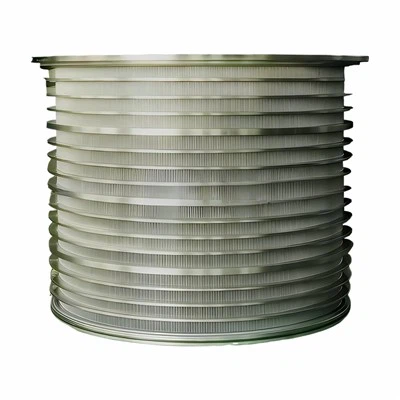
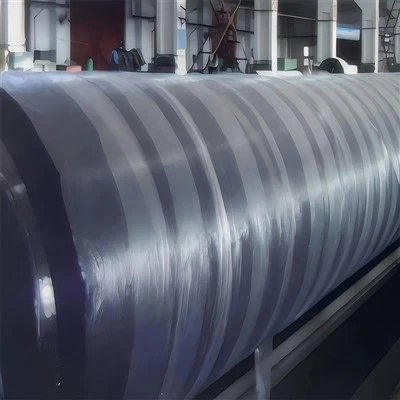
Seismic resistance is a crucial consideration for ancillary equipment in earthquake - prone areas. As a provider of various types of ancillary equipment, I have witnessed firsthand the importance of ensuring that our products meet the high - standard seismic resistance requirements.
Understanding Earthquake - Prone Areas and Their Impact on Ancillary Equipment
Earthquake - prone areas are regions where the earth's crust is highly active, and seismic events frequently occur. These areas are often located along tectonic plate boundaries. For ancillary equipment such as those used in industrial settings, the impact of an earthquake can be catastrophic. During an earthquake, ground shaking can cause equipment to move, vibrate violently, and even topple over. This not only leads to direct damage to the equipment itself but can also cause disruptions to the entire production process.
For example, in a paper - making factory, Paper Machine Chain Conveyor is one of the essential ancillary equipment. If the chain conveyor does not meet the seismic resistance requirements, an earthquake can easily damage its structure. The chain may break, the conveyor belt may derail, and the entire conveying system will stop working. This will result in a halt in the paper - making process, leading to significant economic losses.


Seismic Resistance Requirements for Ancillary Equipment
Structural Integrity
One of the primary seismic resistance requirements is to ensure the structural integrity of ancillary equipment. This means that the equipment should be designed and constructed in such a way that it can withstand the forces generated during an earthquake. For instance, in the design of a Paper Machine Grapple, engineers need to consider the material strength, the shape of the components, and the connection between different parts. High - strength materials are often used to increase the equipment's ability to resist deformation. The design of the connection points should be robust, preventing parts from separating during an earthquake.
Dynamic Response
Ancillary equipment also needs to have appropriate dynamic response characteristics. During an earthquake, the ground motion is complex and variable. The equipment should be able to adapt to these dynamic changes without suffering severe damage. For example, in a Paper Machine Ragger, the vibrating parts should have a stable vibration frequency and amplitude. The design should minimize the resonance effect, which can amplify the vibration and cause damage to the equipment.
Installation and Anchorage
Proper installation and anchorage are also critical seismic resistance measures. The ancillary equipment should be firmly installed on a stable foundation. In earthquake - prone areas, special anchoring devices may be required. For example, the use of earthquake - resistant anchor bolts can ensure that the equipment remains in place during an earthquake. Regular inspection of the installation and anchorage conditions is also necessary to ensure that they are always in good working condition.
Our Company's Approach to Meeting Seismic Resistance Requirements
As an ancillary equipment supplier, our company is committed to ensuring that our products meet the highest seismic resistance requirements. We have a team of experienced engineers who are well - versed in seismic engineering principles.
Design and Development
In the design and development stage, we use advanced computer - assisted design (CAD) and finite element analysis (FEA) software. These tools allow us to simulate the behavior of the equipment under different seismic conditions. We can analyze the stress distribution, deformation, and dynamic response of the equipment, and then optimize the design accordingly. For example, when designing a new type of paper - machine ancillary equipment, our engineers use FEA to determine the most suitable cross - sectional shape and material thickness to enhance the seismic resistance.
Quality Control
Strict quality control is implemented throughout the manufacturing process. We source high - quality raw materials from reliable suppliers and conduct multiple quality inspections at each production stage. For instance, the welding quality of the equipment is carefully inspected to ensure that it can withstand the seismic forces. Non - destructive testing methods are also used to detect any potential internal defects in the equipment.
Testing and Certification
Before our products are released to the market, they undergo comprehensive seismic testing. We use vibration tables to simulate different earthquake scenarios and test the performance of the equipment. Only after passing these tests can our products obtain relevant certifications, which are recognized in the industry.
Importance of Choosing the Right Supplier
When it comes to purchasing ancillary equipment in earthquake - prone areas, choosing the right supplier is of utmost importance. A reliable supplier not only provides high - quality products that meet the seismic resistance requirements but also offers comprehensive after - sales services.
Our company has a track record of providing excellent products and services. We have worked with many clients in earthquake - prone areas and have received positive feedback. Our products have proven to be reliable in seismic events, ensuring the continuity of our clients' operations.
If you are interested in purchasing ancillary equipment that meets strict seismic resistance requirements, we invite you to contact us for further discussions. We are more than willing to provide detailed product information, technical support, and customized solutions based on your specific needs.
References
- "Seismic Design for Non - Structural Components" by ATC - 19
- "Earthquake Engineering Handbook" edited by Charles A. Cornell and T. T. Soong