

Separators are crucial equipment in various industries, playing a vital role in separating different components from a mixture. As a separator category supplier, I have witnessed firsthand the diverse applications of these devices across multiple sectors. In this blog, I will explore the industries that commonly use separator categories and highlight some of the key types of separators utilized.
Food and Beverage Industry
The food and beverage industry heavily relies on separators for a variety of processes. One of the primary applications is in the production of dairy products. Milk separators are used to separate cream from milk, a fundamental step in the manufacturing of butter, cheese, and other dairy items. These separators work on the principle of centrifugal force, spinning the milk at high speeds to separate the lighter cream from the heavier skim milk.
Another important use in the food industry is in the production of vegetable oils. Oilseed separators are employed to extract oil from seeds such as soybeans, canola, and sunflower. These separators can remove impurities, solids, and water from the crude oil, resulting in a purer and higher - quality product. Additionally, in the beverage industry, separators are used for clarification. For example, in beer brewing, separators can remove yeast, hops, and other solids from the beer, giving it a clear and appealing appearance.

Chemical Industry
In the chemical industry, separators are essential for purification and separation processes. Distillation columns, a type of separator, are widely used to separate different chemical compounds based on their boiling points. This is crucial in the production of fuels, solvents, and various chemical intermediates. For instance, in the petroleum refining process, distillation columns are used to separate crude oil into different fractions such as gasoline, diesel, and jet fuel.
Centrifugal separators are also commonly used in the chemical industry to separate solids from liquids or to separate two immiscible liquids. They are used in the production of polymers, where they can remove unreacted monomers and other impurities from the polymer solution. Additionally, in the pharmaceutical chemical production, separators are used to purify active pharmaceutical ingredients (APIs), ensuring the quality and safety of the final drugs.
Mining and Minerals Industry
The mining and minerals industry extensively uses separators for ore processing. Gravity separators are used to separate valuable minerals from gangue (unwanted rock and minerals) based on their differences in density. For example, in gold mining, gravity separators can be used to separate gold particles from sand and other minerals.
Flotation separators are another important type in this industry. They are used to separate hydrophobic (water - repelling) minerals from hydrophilic (water - attracting) ones. In the copper mining process, flotation separators are used to separate copper sulfide minerals from other minerals in the ore. By adding specific chemicals to the ore slurry, the copper sulfide particles become hydrophobic and attach to air bubbles, which rise to the surface and are then skimmed off.
Wastewater Treatment Industry
In the wastewater treatment industry, separators play a critical role in removing solids and contaminants from water. Sedimentation tanks are a basic form of separator used to allow heavy solids to settle to the bottom of the tank. This is the first step in many wastewater treatment plants to remove large particles such as sand, silt, and organic matter.
Dissolved air flotation (DAF) separators are also commonly used. These separators work by introducing tiny air bubbles into the wastewater. The bubbles attach to the suspended solids, causing them to float to the surface where they can be removed. DAF separators are effective in removing oils, greases, and fine suspended solids from wastewater. For more advanced treatment, membrane separators are used. Reverse osmosis membranes, for example, can remove dissolved salts, heavy metals, and other contaminants from water, producing high - quality treated water.
Key Types of Separators
- Float Purger: A Float Purger is a specialized separator that is used to remove floating materials from a liquid stream. It is commonly used in industries where the removal of oil, grease, or other floating contaminants is necessary. In the food processing industry, for example, a float purger can be used to remove excess fat from wastewater before it is discharged.
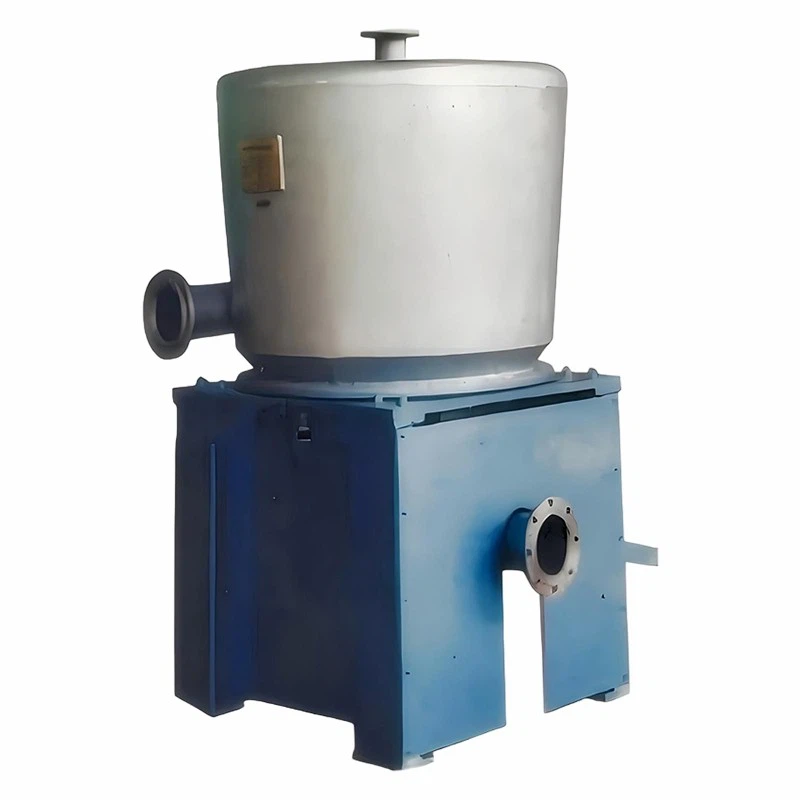
- Reject Separator: The Reject Separator is designed to separate unwanted materials from a product stream. In the recycling industry, a reject separator can be used to separate non - recyclable materials from recyclable ones. In the paper manufacturing process, it can be used to remove impurities such as dirt, staples, and plastic from the pulp.
Conclusion
As we have seen, separators are indispensable in a wide range of industries. From the food and beverage industry, where they ensure the quality and purity of products, to the wastewater treatment industry, where they help protect the environment, separators are at the heart of many industrial processes.
If your industry requires high - quality separator solutions, I invite you to reach out for a procurement discussion. As a separator category supplier, I am committed to providing the best products and services to meet your specific needs. Whether you need a float purger for your food processing plant or a reject separator for your recycling facility, I can offer tailored solutions. Let's work together to find the perfect separator for your operations.
References
- Perry, R. H., & Green, D. W. (1997). Perry's Chemical Engineers' Handbook. McGraw - Hill.
- Svarovsky, L. (1990). Solid - Liquid Separation. Butterworth - Heinemann.
- Metcalf & Eddy, Inc. (2003). Wastewater Engineering: Treatment and Reuse. McGraw - Hill.
