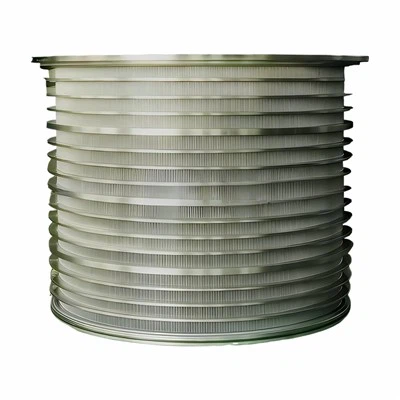
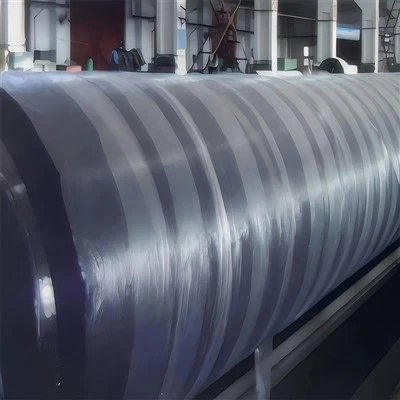
Hey there! As a supplier of dispersing systems, I've been diving deep into the world of how mechanical stress impacts these systems. Let's break it down and see what's really going on.
First off, what exactly is a dispersing system? Well, it's a setup that helps to spread out particles evenly in a medium. Whether it's in the paper industry, chemical manufacturing, or food processing, a good dispersing system is crucial for getting consistent and high - quality products.
Now, mechanical stress comes into play in a bunch of ways. One of the most common types of mechanical stress in a dispersing system is shear stress. Shear stress occurs when different layers of the material in the dispersing system move at different speeds. Think of it like when you're stirring a thick sauce. The part of the sauce near the spoon moves faster than the part farther away, creating a shearing force.
In a dispersing system, this shear stress can have both positive and negative effects. On the positive side, it can break down large agglomerates of particles into smaller ones. For example, in the paper industry, when you're making pulp, there are often clumps of fibers. The shear stress in a Disc Heat - Disperser can break these clumps apart, allowing for a more uniform distribution of fibers in the paper. This leads to stronger and more consistent paper products.
But it's not all sunshine and rainbows. Excessive shear stress can also cause problems. If the shear stress is too high, it can damage the particles themselves. In some cases, it can break the particles into fragments that are too small, which might not be ideal for the final product. For instance, in a food dispersing system, if you're trying to disperse flavor particles, over - shearing can release too much of the flavor too quickly, leading to an unbalanced taste.
Another form of mechanical stress is compressive stress. Compressive stress happens when the material in the dispersing system is squeezed or pressed. In a Paper Machine Kneader, the pulp is compressed between the rotating parts. This compression can help to further break down the fibers and improve their dispersion. It also helps to remove any air bubbles that might be trapped in the pulp, which is important for the quality of the final paper.
However, just like with shear stress, too much compressive stress can be a bad thing. If the compression is too intense, it can cause the particles to pack too tightly together. This can lead to a decrease in the dispersion quality and might even make it harder for the particles to be evenly distributed in the medium.
The duration of mechanical stress also matters. A short burst of high - intensity stress might have a different effect compared to a long - term, low - intensity stress. Short, high - intensity stress can quickly break down large agglomerates, but it might not allow for a very uniform dispersion. On the other hand, long - term, low - intensity stress can gradually break down particles and lead to a more even distribution, but it might take a lot of time and energy.
The type of material being dispersed also plays a huge role. Different materials have different mechanical properties, so they respond differently to mechanical stress. For example, brittle materials are more likely to break under high stress, while ductile materials can deform without breaking. In a dispersing system, understanding the material's properties is essential for optimizing the mechanical stress to achieve the best dispersion.
Temperature can also interact with mechanical stress in a dispersing system. Higher temperatures can sometimes make the material more malleable, which means it can withstand more mechanical stress without breaking. On the other hand, lower temperatures can make the material more brittle. In a chemical dispersing system, adjusting the temperature can be a way to control how the material responds to mechanical stress and achieve better dispersion.
Now, let's talk about how all of this impacts our business as a dispersing system supplier. We need to design our systems to be able to control the mechanical stress effectively. This means having adjustable settings for shear and compressive stress, as well as being able to control the duration of the stress. Our customers rely on us to provide them with systems that can handle different materials and achieve the best possible dispersion.
We also need to educate our customers about the importance of mechanical stress in their processes. By understanding how mechanical stress affects their dispersing systems, they can make better decisions about how to operate the equipment. For example, they can adjust the settings based on the type of material they're using and the desired final product.


If you're in the market for a dispersing system, or if you're looking to optimize your existing one, we're here to help. Our team of experts has years of experience in dealing with the effects of mechanical stress on dispersing systems. We can work with you to find the best solution for your specific needs. Whether you're in the paper, chemical, or food industry, we've got the knowledge and the products to make your dispersing process more efficient and effective. So, don't hesitate to reach out and start a conversation about how we can improve your dispersing system.
References
- Smith, J. (2018). "The Impact of Mechanical Stress on Particle Dispersion". Journal of Material Science.
- Johnson, A. (2019). "Temperature and Mechanical Stress Interactions in Dispersing Systems". Chemical Engineering Review.
- Brown, C. (2020). "Optimizing Dispersing Systems for Different Materials". Industrial Process Magazine.