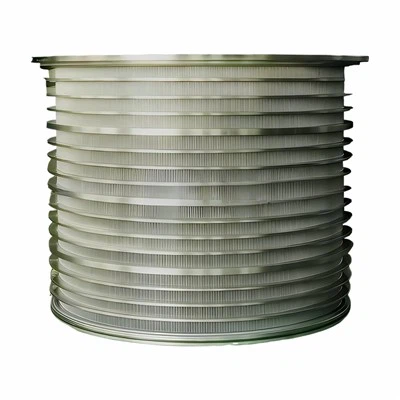
The pulp and paper industry is a dynamic field where various factors significantly impact the efficiency and quality of the production process. One such crucial equipment in this process is the toothed deflaker, a machine used to break up pulp flakes and ensure a more uniform pulp consistency. One often-overlooked yet critical variable that can influence the performance of a toothed deflaker is pulp density. In this blog, we will explore the impact of pulp density on a toothed deflaker as a seasoned toothed deflaker supplier.
Understanding the Toothed Deflaker
Before delving into the impact of pulp density, it is essential to understand the basic functions of a toothed deflaker. A toothed deflaker is designed to disintegrate and refine pulp at a relatively low cost. It uses rotating toothed discs to break up the pulp clumps or flakes that are formed during the pulping process. This process is vital for achieving a homogeneous pulp mixture, which is essential for producing high - quality paper and paper products.
Impact of Pulp Density on Feed Rate
Pulp density directly affects the feed rate of the toothed deflaker. Higher pulp density means there is more pulp fiber in a given volume. When the pulp density is too high, the feed rate to the deflaker may need to be reduced. This is because a higher density pulp can be more viscous and difficult to flow through the deflaker. If the feed rate is not adjusted, it can lead to overloading of the deflaker, causing mechanical stress on the rotating discs and other components.
Conversely, when the pulp density is too low, the deflaker may not be operating at its optimal capacity. The low - density pulp may pass through the deflaker too quickly, resulting in insufficient flake disintegration. This can lead to uneven pulp quality, with some flakes remaining intact in the final pulp mixture.
Effect on Deflaking Efficiency
The efficiency of the deflaking process is closely related to pulp density. At an optimal pulp density, the toothed discs of the deflaker can effectively penetrate and break up the pulp flakes. The ideal pulp density allows for a balance between the number of fibers in contact with the toothed discs and the ability of the discs to move through the pulp.
When the pulp density is high, the deflaker may use more energy to achieve the same level of deflaking. The increased viscosity of the high - density pulp requires more power to rotate the discs and break up the flakes. Additionally, high - density pulp can cause more wear and tear on the toothed discs due to the increased friction.
On the other hand, low - density pulp may result in a lower deflaking efficiency. The toothed discs may not be able to engage adequately with the sparse fibers, leading to incomplete flake disintegration. This can result in a pulp with a higher percentage of large flakes, which can negatively impact the quality of the final paper product.
Impact on Pulp Quality
The quality of the pulp produced by the toothed deflaker is also affected by pulp density. A well - deflaked pulp should have a uniform fiber distribution and a low percentage of large flakes. Optimal pulp density ensures that the deflaker can achieve this goal.
High - density pulp may lead to a pulp with a higher level of fines. Fines are small fiber particles that can affect the drainage properties of the pulp during the papermaking process. Excessive fines can cause problems such as slow drainage, poor sheet formation, and reduced paper strength.
Low - density pulp, on the other hand, may result in a pulp with an uneven fiber distribution and a higher proportion of un - deflaked flakes. This can lead to variations in paper thickness, strength, and appearance.
Adjusting the Toothed Deflaker for Different Pulp Densities
As a toothed deflaker supplier, we understand the importance of adjusting the deflaker according to the pulp density. One way to do this is by adjusting the gap between the toothed discs. For high - density pulp, a smaller gap may be required to ensure that the discs can effectively break up the dense pulp. However, this needs to be balanced with the risk of increased wear on the discs.
For low - density pulp, a larger gap may be used to allow the sparse pulp to pass through more easily. Additionally, the rotational speed of the discs can be adjusted. Higher speeds can be used for low - density pulp to increase the probability of disc - fiber interaction, while lower speeds may be more suitable for high - density pulp to reduce energy consumption and wear.
Comparison with Other Refining Equipment
In the pulp and paper industry, there are other types of refining equipment available, such as the KTF Refiner, KZM Series Conical Refiner, and DD Series Double Disc Refiner. These refiners have different working principles and are suitable for different pulp densities and refining requirements.
The toothed deflaker is often preferred for its ability to handle a wide range of pulp densities and its relatively low cost. However, for more precise refining and higher - quality pulp production, other refiners may be more suitable. For example, the KTF Refiner is known for its high - precision refining capabilities, while the KZM Series Conical Refiner is designed for efficient pulp refining at different scales. The DD Series Double Disc Refiner is suitable for producing uniform pulp with a high - degree of fiber refinement.


The Importance of Monitoring Pulp Density
To ensure the optimal performance of the toothed deflaker, it is crucial to monitor the pulp density continuously. This can be done using various density measurement devices. By closely monitoring the pulp density, operators can make timely adjustments to the deflaker settings, such as feed rate, disc gap, and rotational speed.
Regular monitoring also allows for early detection of any changes in pulp density, which may be caused by variations in the raw materials or the pulping process. This proactive approach can prevent issues such as overloading, reduced deflaking efficiency, and poor pulp quality.
Contact Us for Your Toothed Deflaker Needs
If you are in the pulp and paper industry and are looking for a reliable toothed deflaker supplier, we are here to assist you. Our toothed deflakers are designed to be energy - efficient, durable, and capable of handling a wide range of pulp densities. We understand the importance of pulp density in the deflaking process and can provide you with the necessary expertise and support to optimize your production.
Contact us today to discuss your specific requirements and find the best toothed deflaker solution for your business. We look forward to partnering with you to enhance your pulp and paper production efficiency and quality.
References
- Smith, J. (2018). Pulp and Paper Manufacturing Technology. Publisher XYZ.
- Johnson, A. (2019). Advances in Pulp Refining Equipment. Journal of Pulp and Paper Science, 25(3), 123 - 135.
- Brown, K. (2020). The Impact of Pulp Properties on Refining Process. Paper Industry Research Report, vol. 10.