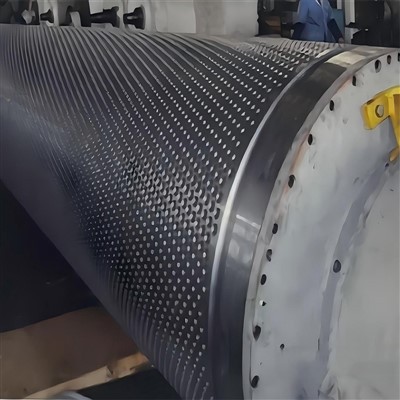
As a supplier of calendering equipment, I often get asked about the materials used to make the rollers in these machines. Calendering is a crucial process in various industries, including paper, plastics, rubber, and textiles, where it's used to smooth, thin, or emboss materials. The choice of roller material can significantly impact the performance, durability, and quality of the calendering process. So, let's dive into the common materials used for calendering equipment rollers.
Steel Rollers
One of the most widely used materials for calendering rollers is steel. Steel rollers are known for their high strength, durability, and resistance to wear and tear. They can withstand high pressures and temperatures, making them suitable for heavy-duty calendering applications.
There are different types of steel used for rollers, including carbon steel and alloy steel. Carbon steel rollers are relatively inexpensive and offer good mechanical properties. They are commonly used in general-purpose calendering applications where high precision is not required.
Alloy steel rollers, on the other hand, are made by adding alloying elements such as chromium, nickel, and molybdenum to carbon steel. These alloying elements enhance the strength, hardness, and corrosion resistance of the rollers. Alloy steel rollers are often used in more demanding calendering applications, such as those involving high-temperature or high-pressure processes.
Steel rollers can be further heat-treated to improve their hardness and wear resistance. Heat treatment processes such as quenching and tempering can significantly enhance the mechanical properties of the rollers, making them more suitable for long-term use in calendering equipment.
Cast Iron Rollers
Cast iron is another popular material for calendering rollers. Cast iron rollers are known for their excellent damping properties, which help to reduce vibrations during the calendering process. This can result in a smoother and more consistent finish on the materials being calendered.
There are different types of cast iron used for rollers, including gray cast iron and ductile cast iron. Gray cast iron is the most common type of cast iron used for calendering rollers. It has good machinability and is relatively inexpensive. However, it is not as strong or wear-resistant as alloy steel.
Ductile cast iron, on the other hand, is a type of cast iron that has been treated to improve its ductility and toughness. Ductile cast iron rollers are stronger and more wear-resistant than gray cast iron rollers, making them suitable for more demanding calendering applications.
Cast iron rollers can also be coated with various materials to improve their surface properties. For example, a chrome coating can be applied to the surface of the roller to enhance its hardness and corrosion resistance.
Rubber Rollers
Rubber rollers are commonly used in calendering equipment for applications where a soft or flexible touch is required. Rubber rollers can provide a gentle pressure on the materials being calendered, which can help to prevent damage or deformation.
There are different types of rubber used for rollers, including natural rubber, synthetic rubber, and silicone rubber. Natural rubber rollers are known for their excellent elasticity and resilience. They are commonly used in applications where a high degree of flexibility is required, such as in the paper and textile industries.


Synthetic rubber rollers, on the other hand, are made from synthetic polymers such as neoprene, nitrile, and EPDM. Synthetic rubber rollers offer a wide range of properties, including resistance to heat, chemicals, and abrasion. They are commonly used in applications where a high degree of durability is required, such as in the plastics and rubber industries.
Silicone rubber rollers are known for their high temperature resistance and non-stick properties. They are commonly used in applications where a non-stick surface is required, such as in the food and pharmaceutical industries.
Ceramic Rollers
Ceramic rollers are a relatively new type of roller material that is gaining popularity in the calendering industry. Ceramic rollers are known for their high hardness, wear resistance, and chemical resistance. They can withstand high temperatures and pressures, making them suitable for demanding calendering applications.
There are different types of ceramics used for rollers, including alumina, zirconia, and silicon carbide. Alumina ceramic rollers are the most common type of ceramic rollers used in calendering equipment. They offer good mechanical properties and are relatively inexpensive.
Zirconia ceramic rollers, on the other hand, are known for their high toughness and fracture resistance. They are commonly used in applications where a high degree of precision is required, such as in the semiconductor and electronics industries.
Silicon carbide ceramic rollers are known for their high thermal conductivity and wear resistance. They are commonly used in applications where a high degree of heat transfer is required, such as in the glass and metal industries.
Conclusion
In conclusion, the choice of roller material for calendering equipment depends on a variety of factors, including the type of material being calendered, the calendering process requirements, and the budget. Steel rollers are the most commonly used type of roller material due to their high strength, durability, and resistance to wear and tear. Cast iron rollers are known for their excellent damping properties, while rubber rollers are suitable for applications where a soft or flexible touch is required. Ceramic rollers are a relatively new type of roller material that offers high hardness, wear resistance, and chemical resistance.
If you're in the market for calendering equipment, we offer a range of high-quality calenders, including the 4200/500 Calender Machine and the 3600/400 Calender Machine. Our calenders are designed to provide efficient and reliable performance, and we can help you choose the right roller material for your specific application.
If you have any questions or would like to discuss your calendering equipment needs, please don't hesitate to contact us. We're here to help you find the best solution for your business.
References
- "Materials for Calendering Rollers," Industrial Roller Manufacturing Handbook, 2nd Edition.
- "Calendering Technology and Applications," Journal of Manufacturing Processes, Vol. 25, No. 3.
- "Advances in Roller Materials for Calendering Equipment," Proceedings of the International Conference on Manufacturing Technology.