Can a Toothed Deflaker be used for recycled pulp?
In the pulp and paper industry, the utilization of recycled pulp has become increasingly important due to environmental concerns and the need for sustainable practices. As a Toothed Deflaker supplier, I often encounter questions regarding the suitability of our equipment for processing recycled pulp. In this blog post, I will explore the potential of using a Toothed Deflaker for recycled pulp and discuss its benefits and limitations.
To understand whether a Toothed Deflaker can be used for recycled pulp, it is essential to first understand the nature of recycled pulp. Recycled pulp is derived from waste paper, which can come from a variety of sources such as newspapers, magazines, office paper, and cardboard. The quality of recycled pulp can vary significantly depending on the source and the recycling process. It often contains contaminants such as ink, glue, plastics, and other foreign materials, which need to be removed before the pulp can be used in the papermaking process.
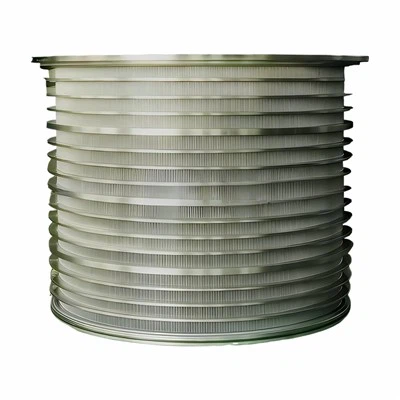
A Toothed Deflaker is a mechanical device used in the pulp and paper industry to break up pulp bundles and remove knots and shives from the pulp. It consists of a rotating disc with teeth that interact with the pulp, causing the fibers to separate and the knots and shives to be removed. The Toothed Deflaker is typically used in the primary refining stage of the papermaking process, where it helps to improve the quality of the pulp by increasing its freeness and reducing its coarseness.
One of the main advantages of using a Toothed Deflaker for recycled pulp is its ability to break up pulp bundles and remove knots and shives. Recycled pulp often contains pulp bundles that are formed during the recycling process, which can cause problems in the papermaking process if not removed. The Toothed Deflaker can effectively break up these pulp bundles, allowing the fibers to be more easily separated and refined. Additionally, the Toothed Deflaker can remove knots and shives from the pulp, which can improve the quality of the final paper product.


Another advantage of using a Toothed Deflaker for recycled pulp is its ability to improve the freeness of the pulp. Freeness is a measure of the ease with which water can drain from the pulp, and it is an important parameter in the papermaking process. Recycled pulp often has a lower freeness than virgin pulp, which can make it more difficult to process. The Toothed Deflaker can help to increase the freeness of the pulp by breaking up the pulp bundles and separating the fibers, allowing the water to drain more easily.
In addition to its ability to break up pulp bundles and improve the freeness of the pulp, the Toothed Deflaker can also help to remove contaminants from the recycled pulp. The teeth on the rotating disc can trap and remove contaminants such as ink, glue, plastics, and other foreign materials, which can improve the quality of the final paper product. However, it is important to note that the Toothed Deflaker is not a substitute for a complete cleaning and deinking system, and it should be used in conjunction with other equipment such as screens, cleaners, and deinkers to ensure the highest quality recycled pulp.
Despite its many advantages, there are also some limitations to using a Toothed Deflaker for recycled pulp. One of the main limitations is its ability to handle high levels of contaminants. If the recycled pulp contains a large amount of contaminants, the Toothed Deflaker may become clogged or damaged, which can reduce its effectiveness and increase maintenance costs. Additionally, the Toothed Deflaker may not be able to remove all of the contaminants from the recycled pulp, and additional cleaning and deinking steps may be required.
Another limitation of using a Toothed Deflaker for recycled pulp is its energy consumption. The Toothed Deflaker is a mechanical device that requires a significant amount of energy to operate, and this can increase the cost of processing recycled pulp. Additionally, the Toothed Deflaker may not be as efficient as other types of refining equipment, such as the DD Series Double Disc REfiner or the KTF Refiner, which can result in higher energy consumption and lower productivity.
In conclusion, a Toothed Deflaker can be used for recycled pulp, but it is important to consider its benefits and limitations before making a decision. The Toothed Deflaker can effectively break up pulp bundles, remove knots and shives, improve the freeness of the pulp, and remove contaminants from the recycled pulp. However, it may not be suitable for all types of recycled pulp, and it may require additional cleaning and deinking steps to ensure the highest quality recycled pulp. Additionally, the Toothed Deflaker may have higher energy consumption and lower productivity compared to other types of refining equipment.
If you are interested in learning more about using a Toothed Deflaker for recycled pulp or other refining equipment, please visit our website Toothed Deflaker or contact us for more information. We are a leading supplier of Toothed Deflakers and other refining equipment, and we are committed to providing our customers with the highest quality products and services.
References
- Pulp and Paper Engineering Handbook, Third Edition, edited by Gary A. Smook
- Papermaking Science and Technology, Volume 1: Pulping, edited by J. P. Casey
- Handbook of Pulp, Second Edition, edited by Christer Gurnagul