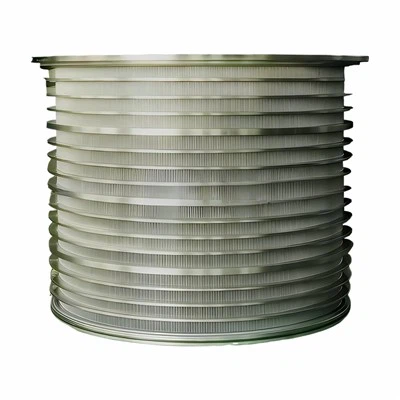
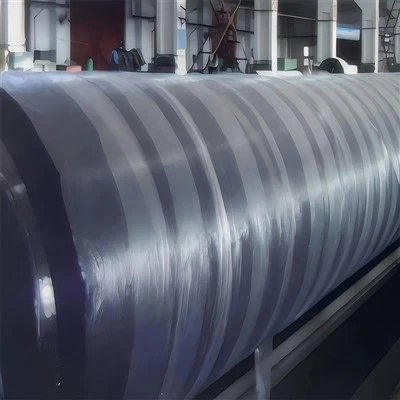
Fiber grading sieves play a crucial role in handling mineral fibers, ensuring that these materials meet the required specifications for various industrial applications. As a supplier of fiber grading sieves, I am well - versed in how these sieves interact with mineral fibers and the significance of this process in different industries.
Understanding Mineral Fibers
Mineral fibers are a diverse group of materials that include asbestos (although its use is highly restricted due to health risks), glass fibers, ceramic fibers, and basalt fibers, among others. They are widely used in industries such as construction, insulation, and automotive manufacturing. These fibers have unique properties like high strength, heat resistance, and low electrical conductivity.
However, for these fibers to be effectively used in different applications, they need to be of the right size and quality. This is where fiber grading sieves come into play.
How Fiber Grading Sieves Work
Fiber grading sieves operate on the principle of separating particles based on their size. The sieves consist of a mesh or a series of meshes with specific pore sizes. When a sample of mineral fibers is introduced to the sieve, the fibers are subjected to a mechanical or vibratory action.
Mechanical Action
In some cases, the sieve is shaken or rotated mechanically. This movement helps the smaller fibers to pass through the pores of the sieve, while the larger ones are retained on the surface of the sieve. For example, in a simple laboratory - scale fiber grading sieve, a motor may be used to rotate the sieve at a constant speed. The rotation causes the fibers to move around on the sieve surface, increasing the chances of the smaller fibers finding their way through the pores.
Vibratory Action
Vibratory sieves are more commonly used in industrial settings. These sieves are equipped with vibrators that generate high - frequency vibrations. The vibrations cause the mineral fibers to bounce and move across the sieve surface. As they move, the smaller fibers fall through the pores, and the sieve effectively separates the fibers into different size fractions.
The process of sieving can be carried out in a single - stage or multi - stage operation. In a single - stage operation, the fibers are passed through a single sieve with a specific pore size. This is suitable for applications where a simple separation of large and small fibers is required.
On the other hand, multi - stage sieving involves passing the fibers through a series of sieves with progressively smaller pore sizes. This allows for a more precise grading of the fibers, separating them into multiple size fractions. For example, in the production of high - quality insulation materials, multi - stage sieving is often used to ensure that the fibers are of a uniform size, which improves the insulation performance.
Interaction with Different Types of Mineral Fibers
Glass Fibers
Glass fibers are widely used in the composites industry, where they provide strength and stiffness. When using fiber grading sieves with glass fibers, the sieves need to be made of a material that can withstand the abrasiveness of the glass. Stainless steel sieves are often preferred as they are durable and can resist the wear caused by the glass fibers.
The grading of glass fibers is important for ensuring the quality of the final composite product. Fibers that are too large may cause problems in the manufacturing process, such as clogging the molds or reducing the uniformity of the composite. By using fiber grading sieves, manufacturers can ensure that the glass fibers used in their products are within the desired size range.
Ceramic Fibers
Ceramic fibers are known for their high - temperature resistance and are commonly used in insulation applications in furnaces and other high - heat environments. These fibers are often brittle, and the sieving process needs to be carefully controlled to avoid breaking the fibers.
Fiber grading sieves for ceramic fibers are designed to have a gentle sieving action. For example, low - frequency vibratory sieves may be used to minimize the damage to the ceramic fibers. Accurate grading of ceramic fibers is essential to ensure that the insulation material has the desired thermal properties.
Basalt Fibers
Basalt fibers are a relatively new type of mineral fiber with excellent mechanical and thermal properties. They are used in a variety of applications, including construction and automotive industries. When grading basalt fibers, the sieve pore size needs to be carefully selected to achieve the desired fiber size distribution.
The interaction between basalt fibers and fiber grading sieves is also affected by the surface properties of the basalt fibers. Some basalt fibers may have a rough surface, which can cause them to stick together during the sieving process. To overcome this, additional measures such as the use of anti - sticking agents or a more intense vibratory action may be required.
Importance of Precise Fiber Grading
Precise fiber grading using fiber grading sieves is of utmost importance in many industries. In the insulation industry, for example, the size of the mineral fibers directly affects the thermal conductivity of the insulation material. Fibers that are too large or too small may not provide the optimal insulation performance. By using fiber grading sieves to ensure a consistent fiber size, manufacturers can produce insulation materials with better thermal efficiency.
In the composites industry, the size and distribution of the fibers can significantly impact the mechanical properties of the composite. Uniformly sized fibers can improve the strength and stiffness of the composite, making it more suitable for high - performance applications.
Related Products in the Screening Process
In addition to fiber grading sieves, there are other screening equipment that can work in conjunction with them. For instance, the Screen Cylinder is a type of screening device that can be used to further refine the separation of mineral fibers. It has a cylindrical shape with a perforated surface, which allows for efficient screening of a large volume of fibers.
The Outflow Pressure Screen is another important piece of equipment. It uses pressure to force the fibers through a screen, improving the efficiency of the screening process. This is particularly useful for handling viscous or sticky fiber materials.
The UV Pressure Screen is a specialized screening device that can be used in applications where the fibers need to be exposed to UV light during the screening process. This can be useful for sterilizing or treating the fibers as they are being graded.


Conclusion
Fiber grading sieves are essential tools for working with mineral fibers. They play a vital role in ensuring that the fibers are of the right size and quality for various industrial applications. Whether it's in the production of insulation materials, composites, or other products, precise fiber grading using these sieves can lead to better - performing and higher - quality end products.
If you are in the market for high - quality fiber grading sieves or need more information about how they can work with your specific type of mineral fibers, I encourage you to contact me for a detailed discussion. We can explore the best solutions for your fiber grading needs and help you achieve the optimal results in your production processes.
References
- "Handbook of Mineral Fibers and Their Applications" - Publisher: XYZ Publications
- "Advanced Composites Technology: Fibers and Sieving Techniques" - Journal of Composite Materials, Vol. XX, Issue XX, Year XXXX