Hey there! As a separator category supplier, I've been in the thick of optimizing these products for top - notch performance for quite a while. And let me tell you, it's a journey full of discoveries and challenges. In this blog, I'm gonna share some key strategies on how to optimize separator categories for better performance.
Understanding the Basics
First things first, we need to have a solid grasp of what separator categories are all about. Separator categories are designed to separate different materials based on various properties like size, density, and shape. They're used in a ton of industries, from food processing to mining, and getting them to work at their best is crucial.
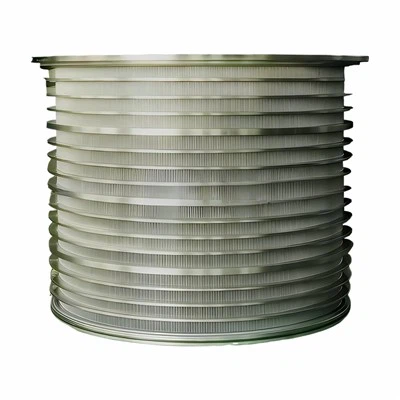
There are different types of separators in our category. For instance, the Reject Separator is great for getting rid of unwanted large particles or contaminants from a product stream. It works by using screens or other separation mechanisms to allow the desired material to pass through while blocking the rejects.
On the other hand, the Float Purger is used to separate floating materials from a liquid or solid - liquid mixture. It's super useful in industries where you need to clean up liquids and remove any floating debris or substances.
Analyzing the Process
To optimize separator categories, we have to start by analyzing the entire separation process. This means looking at the input materials, the operating conditions, and the desired output. What kind of materials are we dealing with? Are they dry or wet? What's the particle size distribution? These questions are essential.
Let's say we're working in a food processing plant. The input might be a mixture of grains and some small stones or other impurities. We need to know the density and size of the grains and the impurities so that we can choose the right separator and set the appropriate operating parameters.
Operating conditions also play a huge role. Things like temperature, pressure, and flow rate can all affect the performance of the separator. For example, if the flow rate is too high, the separator might not have enough time to do a proper job of separating the materials. On the other hand, if the temperature is too extreme, it could change the properties of the materials and make the separation more difficult.
Selecting the Right Separator
Once we've analyzed the process, it's time to select the right separator for the job. This isn't always as straightforward as it sounds. There are so many factors to consider.
We need to think about the separation efficiency. How well does the separator need to separate the materials? If we're dealing with a high - value product where even a small amount of contamination can be a big problem, we'll need a separator with a high separation efficiency.
Another important factor is the capacity. How much material do we need to process in a given time? If we have a large - scale operation, we'll need a separator with a high capacity.
We also have to consider the maintenance requirements. Some separators are more complex and require more frequent maintenance than others. If we want to minimize downtime and keep the production running smoothly, we should choose a separator that's relatively easy to maintain.
Optimizing Operating Parameters
After selecting the right separator, we need to optimize the operating parameters. This is where a lot of the fine - tuning happens.
For a screen - based separator, things like the screen size, the inclination angle, and the vibration frequency are all adjustable. By changing these parameters, we can improve the separation performance. For example, if we increase the inclination angle of the screen, it can help the material move through the screen faster, but we also need to make sure that the separation efficiency doesn't suffer.
In the case of a Float Purger, we can adjust the level control, the speed of the agitator (if there is one), and the inlet and outlet flow rates. By finding the right combination of these parameters, we can ensure that the floating materials are effectively removed from the mixture.
Monitoring and Feedback
Optimization isn't a one - time thing. We need to continuously monitor the performance of the separator and use the feedback to make further improvements.
We can use various sensors and monitoring devices to collect data on things like the separation efficiency, the throughput, and the power consumption. By analyzing this data, we can identify any trends or issues.


For example, if we notice that the power consumption of the separator has been steadily increasing over time, it could be a sign that there's a problem with the motor or that the separator is getting clogged. By catching these issues early, we can take corrective action before they cause a major breakdown.
Training and Education
It's not just about the equipment; it's also about the people operating it. Providing proper training and education to the operators is essential for optimizing separator performance.
Operators need to understand how the separator works, how to set the operating parameters, and how to troubleshoot common problems. A well - trained operator can make a big difference in the day - to - day operation of the separator.
We can offer on - site training sessions, online courses, or even provide user manuals and guides. By empowering the operators with knowledge, they can make better decisions and help improve the overall performance of the separator.
Upgrading and Retrofitting
As technology advances, it's a good idea to consider upgrading or retrofitting the existing separators. There might be new features or technologies available that can significantly improve the performance.
For example, some modern separators come with advanced control systems that can automatically adjust the operating parameters based on the input materials and the desired output. By upgrading to a separator with such a system, we can achieve better separation results with less manual intervention.
Retrofitting can also be a cost - effective way to improve performance. We can add new components or modify the existing ones to enhance the functionality of the separator.
Collaboration with Customers
We, as suppliers, also need to collaborate closely with our customers. They're the ones using the separators in their day - to - day operations, and they have valuable insights.
By working with customers, we can understand their specific needs and challenges. We can then develop customized solutions to optimize the separator performance for their particular applications.
For example, if a customer in the mining industry is having trouble separating different types of ores, we can work with them to test different separators and operating parameters and come up with a solution that works best for their operation.
Conclusion
Optimizing separator categories for better performance is a multi - faceted process. It involves analyzing the process, selecting the right separator, optimizing the operating parameters, monitoring and providing feedback, training the operators, upgrading and retrofitting, and collaborating with customers.
If you're in the market for separator categories or looking to optimize your existing separators, I'd love to have a chat. We've got a wealth of experience and can provide you with the best solutions for your specific needs. Don't hesitate to reach out and start a conversation about how we can work together to improve your separation processes.
References
- Separation Technology Handbook, various authors
- Industrial Separation Processes: Principles and Practice, by Klaus Sattler
- Journal of Separation Science, multiple issues covering recent research in separation technology