As a supplier of Screw Press Thickener, I've witnessed firsthand how the density of materials can significantly impact the performance of these machines. In this blog, I'll delve into the relationship between material density and the efficiency of Screw Press Thickeners, exploring the science behind it and providing practical insights for optimizing their operation.


Understanding Screw Press Thickeners
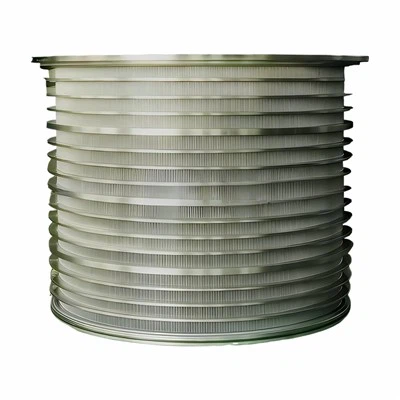
Before we dive into the effects of material density, let's briefly review what a Screw Press Thickener is and how it works. A Screw Press Thickener is a mechanical device used to separate solids from liquids in a slurry or suspension. It consists of a screw conveyor housed within a cylindrical screen or perforated shell. As the screw rotates, it moves the material along the length of the press, applying pressure to squeeze out the liquid through the screen. The thickened solids are then discharged at the end of the press.
These machines are widely used in various industries, including pulp and paper, wastewater treatment, food processing, and mining, to dewater and thicken a variety of materials. The performance of a Screw Press Thickener is typically evaluated based on several key parameters, such as the solids content of the discharge, the throughput rate, and the energy consumption.
The Impact of Material Density on Screw Press Thickener Performance
The density of the material being processed is one of the most critical factors that can affect the performance of a Screw Press Thickener. Here's how:
1. Solids Concentration and Dewatering Efficiency
The density of a material is directly related to its solids concentration. Higher density materials generally contain a greater proportion of solids, which can have both positive and negative effects on the dewatering process. On the one hand, materials with higher solids content are easier to dewater because there is less liquid to remove. This can result in higher solids concentrations in the discharge and improved dewatering efficiency.
On the other hand, very high-density materials can also pose challenges. As the solids concentration increases, the material becomes more difficult to move through the press, and the pressure required to squeeze out the liquid also increases. This can lead to higher energy consumption and potential blockages in the press. Additionally, if the material is too dense, the liquid may not be able to escape through the screen effectively, resulting in poor dewatering performance.
2. Throughput Rate
The density of the material also affects the throughput rate of the Screw Press Thickener. Materials with lower density are generally easier to move through the press, allowing for higher throughput rates. Conversely, higher density materials require more force to move, which can slow down the throughput rate.
In some cases, the throughput rate may need to be adjusted to accommodate the density of the material. For example, if the material is very dense, the screw speed may need to be reduced to prevent overloading the press and ensure proper dewatering. This can result in a lower overall processing capacity, which may need to be considered when selecting a Screw Press Thickener for a particular application.
3. Wear and Tear
The density of the material can also impact the wear and tear on the Screw Press Thickener components. Higher density materials are generally more abrasive and can cause more rapid wear on the screw, screen, and other parts of the press. This can increase maintenance costs and reduce the lifespan of the equipment.
To minimize wear and tear, it's important to select a Screw Press Thickener with components that are designed to withstand the specific characteristics of the material being processed. For example, if the material is highly abrasive, the screw and screen may need to be made of a more durable material, such as hardened steel or ceramic.
4. Energy Consumption
As mentioned earlier, the density of the material affects the pressure required to dewater it. Higher density materials require more energy to move through the press and to squeeze out the liquid, resulting in higher energy consumption. This can have a significant impact on the operating costs of the Screw Press Thickener.
To reduce energy consumption, it's important to optimize the design and operation of the press. This may include adjusting the screw speed, the pressure applied to the material, and the configuration of the screen. Additionally, using a pre-thickening process, such as a High-speed Washer, to reduce the density of the material before it enters the Screw Press Thickener can also help to lower energy consumption.
Optimizing Screw Press Thickener Performance for Different Material Densities
To ensure optimal performance of a Screw Press Thickener, it's important to consider the density of the material being processed and to make appropriate adjustments to the equipment and operating parameters. Here are some tips for optimizing the performance of a Screw Press Thickener for different material densities:
1. Material Characterization
Before selecting a Screw Press Thickener, it's important to characterize the material being processed, including its density, solids content, particle size distribution, and other physical and chemical properties. This information can help to determine the appropriate design and operating parameters for the press.
2. Equipment Selection
Based on the material characterization, select a Screw Press Thickener that is designed to handle the specific density and characteristics of the material. Consider factors such as the screw diameter, length, and pitch, the screen aperture size, and the power rating of the motor.
3. Operating Parameters
Adjust the operating parameters of the Screw Press Thickener, such as the screw speed, the pressure applied to the material, and the feed rate, to optimize the dewatering performance. Monitor the solids content of the discharge and the throughput rate to ensure that the press is operating efficiently.
4. Maintenance and Inspection
Regularly maintain and inspect the Screw Press Thickener to ensure that it is in good working condition. Check the screw, screen, and other components for wear and damage, and replace them as needed. Clean the press regularly to prevent blockages and ensure proper operation.
Conclusion
In conclusion, the density of the material being processed has a significant impact on the performance of a Screw Press Thickener. Higher density materials can pose challenges in terms of dewatering efficiency, throughput rate, wear and tear, and energy consumption. However, by understanding the relationship between material density and press performance and by making appropriate adjustments to the equipment and operating parameters, it's possible to optimize the performance of the press and achieve the desired dewatering results.
If you're in the market for a Screw Press Thickener or need assistance with optimizing the performance of your existing equipment, please don't hesitate to contact us. Our team of experts can provide you with the latest information and guidance on selecting the right equipment for your application and ensuring its efficient operation.
References
- Smith, J. (2018). Handbook of Industrial Wastewater Treatment. Elsevier.
- Jones, R. (2019). Principles of Solid-Liquid Separation. Wiley.
- Brown, A. (2020). Advances in Screw Press Technology. Journal of Separation Science, 43(12), 2345-2356.