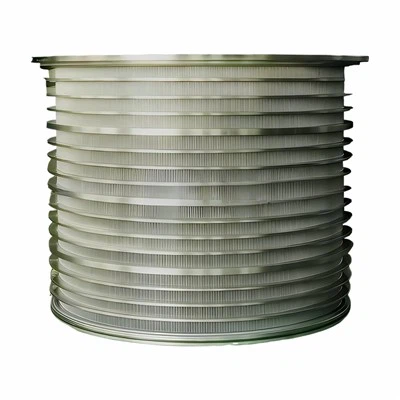
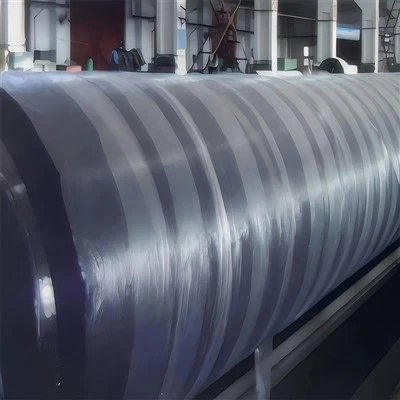
Fiber grading sieves play a crucial role in various industries where the separation and classification of fibers are essential. The performance of these sieves can be significantly influenced by multiple factors, and one of the often - overlooked yet critical factors is the moisture content of the fibers. As a supplier of Fiber Grading Sieves, we have witnessed firsthand how moisture can impact the effectiveness of our products. In this blog, we will explore in detail how the moisture content of fibers affects the performance of fiber grading sieves.
Understanding Fiber Grading Sieves
Before delving into the impact of moisture, it is important to understand the basic function of fiber grading sieves. Fiber grading sieves are designed to separate fibers based on their size and other physical properties. They are commonly used in industries such as papermaking, textile, and food processing. The sieves work by allowing smaller fibers to pass through the openings while retaining larger ones. This process helps in achieving a more uniform fiber size distribution, which is beneficial for the quality of the final product.
How Moisture Affects Fiber Characteristics
Moisture in fibers can alter their physical properties in several ways. Firstly, it can increase the flexibility of fibers. When fibers absorb moisture, they become more pliable. For example, in the papermaking industry, if the pulp fibers have a high moisture content, they are more likely to bend and twist rather than break when passing through the sieve. This can affect the sieve's ability to accurately separate the fibers based on size, as the flexible fibers may be able to pass through smaller openings than they would under dry conditions.
Secondly, moisture can cause fibers to clump together. Water acts as a binding agent between the fibers, forming agglomerates. These clumps can have a significant impact on the performance of fiber grading sieves. The larger clumps may block the sieve openings, reducing the flow rate of the fiber mixture through the sieve. Even if the clumps do not completely block the openings, they can interfere with the normal passage of individual fibers, leading to inaccurate grading.


Impact on Sieve Efficiency
The moisture content of fibers can have a direct impact on the efficiency of fiber grading sieves. With a higher moisture content, the sieving process becomes slower. The clumping of fibers mentioned earlier can cause choking of the sieve openings, which in turn reduces the throughput. For instance, if we consider a production line in a textile factory where fiber grading is a key step, a sieve dealing with damp fibers may have to operate at a much lower speed to prevent blockages. This reduction in throughput not only slows down the overall production process but also increases the energy consumption as the sieve has to work harder to achieve the same level of separation.
Moreover, the accuracy of grading can be severely compromised. As fibers with high moisture content are more likely to change their shape and stick together, the sieve may not be able to distinguish between different fiber sizes accurately. This can lead to a non - uniform fiber product, which is unacceptable in many industries. For example, in papermaking, inconsistent fiber size can result in paper with uneven strength and texture.
Influence on Sieve Maintenance
The moisture content of fibers also affects the maintenance requirements of fiber grading sieves. When fibers are wet, they are more likely to adhere to the sieve surface. Over time, this accumulation of wet fibers can form a thick layer on the sieve, which not only reduces the sieve's performance but also makes it more difficult to clean. Regular cleaning of the sieve becomes more challenging, and more aggressive cleaning methods may be required, which can potentially damage the sieve.
In addition, the moisture can also cause corrosion of the sieve material, especially if the sieve is made of metal. Corrosion can weaken the sieve structure, leading to premature failure. This means that the sieve may need to be replaced more frequently, increasing the overall cost of operation for the end - user.
Strategies for Dealing with Moisture in Fiber Grading
As a Fiber Grading Sieves supplier, we understand the importance of helping our customers overcome the challenges posed by fiber moisture. One effective strategy is pre - drying the fibers before the sieving process. This can be achieved through various methods such as using hot air dryers or infrared dryers. By reducing the moisture content of the fibers, the sieve can operate more efficiently, with improved throughput and grading accuracy.
Another approach is to use sieves with anti - clogging features. These sieves are designed to prevent the accumulation of fibers on the surface, even when dealing with damp fibers. For example, some sieves have a special surface coating that reduces the adhesion of fibers. Additionally, vibrating or rotating sieves can help to dislodge any clumps that may form during the sieving process.
Related Products and Their Role
In addition to Fiber Grading Sieves, other products in our range can also play a role in dealing with fiber moisture and improving the overall fiber processing. Screen Cylinder is one such product. Screen cylinders can be used in combination with fiber grading sieves to provide an additional level of filtration. They are particularly useful in removing larger impurities and can help to reduce the load on the fiber grading sieves, especially when dealing with high - moisture fibers.
The UV Pressure Screen is another important product. It can be used to further refine the fiber mixture after the initial sieving. The UV pressure screen uses pressure and UV light to break down any remaining clumps and ensure a more uniform fiber distribution. This can be especially beneficial when dealing with fibers that have been affected by moisture.
Conclusion and Call to Action
In conclusion, the moisture content of fibers has a profound impact on the performance of fiber grading sieves. It affects the sieve's efficiency, accuracy, and maintenance requirements. However, with the right strategies and products, these challenges can be effectively managed. As a leading supplier of Fiber Grading Sieves, we are committed to providing our customers with high - quality products and solutions to meet their specific needs.
If you are in the market for fiber grading sieves or related products, we invite you to contact us for a detailed discussion. Our team of experts is ready to assist you in selecting the most suitable products for your application and to provide you with comprehensive technical support. Let us work together to optimize your fiber processing operations.
References
- Smith, J. (2018). "Fiber Processing Technologies". Industrial Press.
- Johnson, A. et al. (2020). "The Impact of Moisture on Fiber Separation in Industrial Processes". Journal of Fiber Science and Technology.
- Brown, C. (2019). "Advanced Sieve Design for Fiber Grading". Sieving Technology Review.