Ultrasound technology has emerged as a powerful tool in various industrial applications, and its role in dispersing systems is no exception. As a leading supplier of dispersing systems, we have witnessed firsthand the transformative impact of ultrasound on the efficiency and quality of dispersion processes. In this blog post, we will explore the role of ultrasound in a dispersing system, its benefits, and how it can enhance your operations.
Understanding Dispersing Systems
Before delving into the role of ultrasound, it is essential to understand what a dispersing system is and its significance in various industries. A dispersing system is designed to break down agglomerates and distribute particles uniformly within a liquid medium. This process is crucial in industries such as pharmaceuticals, cosmetics, food and beverages, and paints and coatings, where the quality and stability of the final product depend on the dispersion of particles.
Traditional dispersing methods, such as mechanical stirring and high-shear mixing, have been used for decades. While these methods are effective to some extent, they often have limitations, including incomplete dispersion, high energy consumption, and potential damage to sensitive particles. This is where ultrasound comes in as a game-changer.
The Role of Ultrasound in a Dispersing System
Ultrasound refers to sound waves with frequencies higher than the upper audible limit of human hearing, typically above 20 kHz. When ultrasound is applied to a liquid medium containing particles, it creates a phenomenon known as acoustic cavitation. Acoustic cavitation occurs when the ultrasound waves generate alternating high-pressure and low-pressure cycles in the liquid. During the low-pressure cycle, small bubbles form in the liquid, and during the high-pressure cycle, these bubbles collapse violently.
This collapse of bubbles generates intense local heating, high pressures, and strong shear forces. These forces are powerful enough to break down agglomerates and disperse particles evenly throughout the liquid. The shear forces created by acoustic cavitation are much stronger than those generated by traditional mixing methods, making ultrasound an extremely effective tool for particle dispersion.
One of the key advantages of using ultrasound in a dispersing system is its ability to achieve a high degree of dispersion in a relatively short period. Unlike traditional methods that may require long mixing times to achieve uniform dispersion, ultrasound can rapidly break down agglomerates and distribute particles evenly. This not only improves the efficiency of the dispersion process but also reduces the overall processing time, leading to increased productivity.
Another significant benefit of ultrasound in a dispersing system is its ability to produce a more stable dispersion. By breaking down agglomerates and reducing particle size, ultrasound helps to prevent particle sedimentation and aggregation over time. This results in a more homogeneous and stable final product, which is particularly important in industries where product quality and consistency are critical.
Applications of Ultrasound in Dispersing Systems
The versatility of ultrasound makes it suitable for a wide range of applications in dispersing systems. Here are some examples of how ultrasound is used in different industries:
- Pharmaceuticals: In the pharmaceutical industry, ultrasound is used to disperse active pharmaceutical ingredients (APIs) in liquid formulations. This ensures uniform distribution of the API, which is essential for the effectiveness and safety of the medication. Ultrasound can also be used to produce nanoemulsions and liposomes, which are increasingly being used in drug delivery systems.
- Cosmetics: In the cosmetics industry, ultrasound is used to disperse pigments, fragrances, and other additives in cosmetic formulations. This helps to achieve a more uniform color, texture, and scent in the final product. Ultrasound can also be used to produce stable emulsions, which are commonly used in creams, lotions, and other cosmetic products.
- Food and Beverages: In the food and beverage industry, ultrasound is used to disperse flavors, colors, and other ingredients in food products. This helps to improve the taste, appearance, and stability of the final product. Ultrasound can also be used to produce nanoemulsions, which are used to encapsulate flavors and nutrients, improving their bioavailability and stability.
- Paints and Coatings: In the paints and coatings industry, ultrasound is used to disperse pigments, fillers, and other additives in paint formulations. This helps to achieve a more uniform color, gloss, and texture in the final product. Ultrasound can also be used to reduce the viscosity of paint formulations, making them easier to apply.
Our Dispersing Systems with Ultrasound Technology
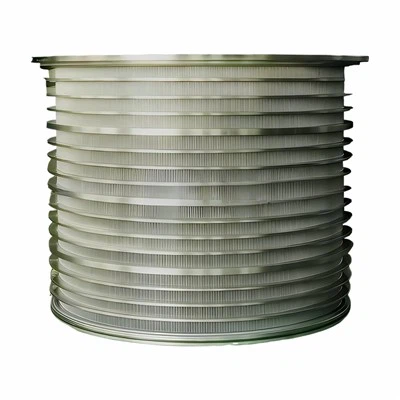
As a leading supplier of dispersing systems, we offer a range of products that incorporate ultrasound technology. Our Disc Heat-Disperser is a state-of-the-art dispersing system that uses ultrasound to achieve efficient and uniform dispersion of particles. The disc heat-disperser is designed to handle a wide range of materials, including high-viscosity liquids and difficult-to-disperse particles.
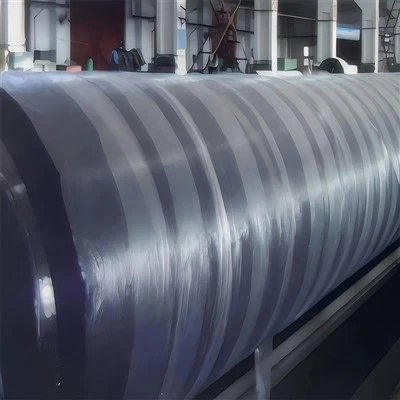
Our Paper Machine Kneader is another innovative dispersing system that utilizes ultrasound technology. The paper machine kneader is specifically designed for the paper industry, where it is used to disperse fibers and additives in the pulp. The ultrasound technology in the paper machine kneader helps to improve the dispersion of fibers, resulting in a stronger and more uniform paper product.


Contact Us for Your Dispersing System Needs
If you are looking for a reliable and efficient dispersing system that incorporates ultrasound technology, look no further. Our team of experts is dedicated to providing you with the best solutions for your specific needs. Whether you are in the pharmaceutical, cosmetics, food and beverage, or paints and coatings industry, we have the expertise and experience to help you achieve optimal dispersion results.
Contact us today to learn more about our dispersing systems and how ultrasound technology can enhance your operations. We look forward to working with you to improve the quality and efficiency of your dispersion processes.
References
- Mason, T. J., Paniwnyk, L., & Lorimer, J. P. (1996). The uses of ultrasound in food technology. Trends in Food Science & Technology, 7(4), 122-128.
- Suslick, K. S., & Flannigan, D. J. (2008). Ultrasound: from the cavitating bubble to sonochemistry. Accounts of Chemical Research, 41(12), 1687-1695.
- Vercruysse, K. P., & Sanders, N. N. (2006). Liposomes and nanoparticles: nanosized vehicles for drug delivery in cancer. Pharmaceutical research, 23(10), 2143-2155.