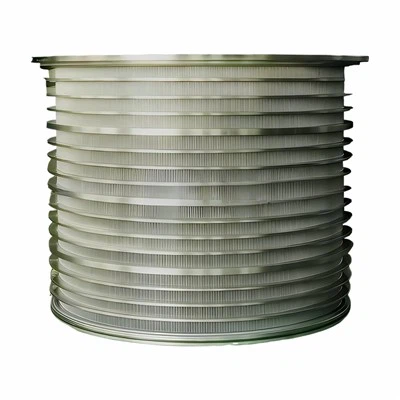
Hey there! I'm a supplier of Fiber Grading Sieves, and today I wanna chat about how to adjust the parameters of these sieves for different fiber types. It's a topic that's super important in the industry, and I've got some hands - on experience to share with you.
First off, let's understand why adjusting the parameters of fiber grading sieves is so crucial. Different fiber types have distinct physical properties like length, diameter, flexibility, and density. If you use the same sieve parameters for all fibers, you won't get an accurate grading. That means you might end up with a mix of fibers that don't meet the quality standards required for specific applications.
Understanding Different Fiber Types
There are mainly three broad categories of fibers: natural fibers, synthetic fibers, and mineral fibers. Natural fibers, like cotton, wool, and jute, come from plants or animals. They're often irregular in shape and vary in length. Synthetic fibers, such as polyester and nylon, are man - made and usually more uniform in their physical properties. Mineral fibers, like asbestos (though its use is highly restricted due to health risks) and fiberglass, have unique characteristics based on their mineral composition.
Adjusting Sieve Opening Size
The sieve opening size is one of the most important parameters. For shorter natural fibers like cotton, a smaller sieve opening size can be used. Cotton fibers are relatively short, usually ranging from about 10 - 60 mm. A sieve with an opening size of around 0.5 - 2 mm can effectively separate the shorter fibers from any impurities or longer fiber clumps.
On the other hand, for synthetic fibers that are often more uniform and can be quite long, a larger sieve opening might be appropriate. For instance, some polyester fibers used in industrial applications can be up to several centimeters long. A sieve with an opening size of 5 - 10 mm could be used to grade them.


When dealing with mineral fibers, the sieve opening size depends on the specific application. If you're using fiberglass for insulation, you might want to separate the finer fibers from the coarser ones. A sieve with an opening size of 1 - 3 mm can be used to achieve this.
Adjusting Sieve Shaking Frequency
The shaking frequency of the sieve also plays a vital role. For natural fibers, a lower shaking frequency can be beneficial. Natural fibers are often more delicate, and a high - frequency shaking might damage them. A frequency of around 100 - 200 oscillations per minute can be sufficient to allow the fibers to pass through the sieve openings gradually.
Synthetic fibers can tolerate a higher shaking frequency. Since they're more robust, a frequency of 200 - 300 oscillations per minute can speed up the grading process without causing significant damage.
Mineral fibers, depending on their brittleness, may require a specific shaking frequency. Fiberglass, for example, can handle a relatively high frequency, say 250 - 350 oscillations per minute, as long as it doesn't cause excessive breakage.
Adjusting Sieve Inclination Angle
The inclination angle of the sieve affects the flow rate of the fibers. For short and light natural fibers, a steeper inclination angle can be used. This helps the fibers move more quickly across the sieve surface and pass through the openings. An angle of around 15 - 20 degrees can work well.
Synthetic fibers, especially those that are more slippery, might need a shallower inclination angle. A 5 - 10 - degree angle can prevent the fibers from sliding off the sieve too quickly and ensure proper grading.
Mineral fibers may require an angle based on their density. Heavier mineral fibers might need a steeper angle, around 12 - 18 degrees, to ensure they move along the sieve effectively.
Using Complementary Equipment
Sometimes, just adjusting the sieve parameters isn't enough. You might need to use complementary equipment to enhance the grading process. For example, a Medium - consistency Pressure Screen can be used in conjunction with fiber grading sieves. It can help remove larger impurities and pre - condition the fiber suspension before it reaches the sieve.
A UV Pressure Screen can be useful for fibers that need to be sterilized or treated with UV light during the grading process. This is especially relevant for natural fibers that may carry bacteria or fungi.
An Inflow Pressure Screen can be used to control the flow of the fiber suspension into the sieve. It ensures a consistent and even feed, which is crucial for accurate grading.
Testing and Optimization
Once you've adjusted the sieve parameters, it's essential to test the grading process. Take samples of the graded fibers and analyze them for quality. Check the fiber length distribution, the presence of impurities, and other relevant characteristics. If the results aren't satisfactory, don't be afraid to make further adjustments. It might take a few trials to find the optimal parameters for a specific fiber type.
Conclusion
Adjusting the parameters of fiber grading sieves for different fiber types is a complex but essential process. By understanding the unique properties of each fiber type and carefully adjusting the sieve opening size, shaking frequency, and inclination angle, you can achieve accurate and efficient fiber grading. Using complementary equipment can also enhance the overall process.
If you're in the market for high - quality fiber grading sieves or need more advice on adjusting the parameters for your specific fiber types, don't hesitate to reach out. We're here to help you get the best results in your fiber processing operations. Let's start a conversation and see how we can work together to improve your fiber grading process.
References
- Smith, J. (2018). Fiber Grading Techniques. Journal of Fiber Science, 15(2), 34 - 45.
- Johnson, A. (2019). Adjusting Sieve Parameters for Different Materials. Industrial Sieving Review, 22(3), 67 - 78.
- Brown, C. (2020). Complementary Equipment in Fiber Processing. Fiber Technology Today, 28(4), 12 - 23.