In the realm of education, the incorporation of practical and real - world concepts can significantly enhance the learning experience. As a sieves supplier, I have witnessed firsthand the numerous educational benefits that teaching sieve algorithms can offer. This blog post will delve into these benefits, exploring how sieve algorithms can be a powerful tool in the educational landscape.
1. Understanding Computational Efficiency
One of the primary educational benefits of teaching sieve algorithms is the opportunity to introduce students to the concept of computational efficiency. Sieve algorithms, such as the Sieve of Eratosthenes, are designed to solve problems in a more efficient way compared to brute - force methods.
The Sieve of Eratosthenes is used to find all prime numbers up to a given limit. Instead of checking each number for divisibility by all numbers less than it, the sieve algorithm marks the multiples of each prime number as composite. This approach reduces the number of operations required, resulting in a much faster algorithm.
For example, if we want to find all prime numbers between 1 and 100, a brute - force method would involve checking each number from 2 to 100 for divisibility by all numbers less than it. This would require a large number of division operations. In contrast, the Sieve of Eratosthenes can find all the prime numbers in this range with significantly fewer steps.
By teaching students sieve algorithms, we can help them understand the importance of algorithm design and how choosing the right algorithm can have a profound impact on the performance of a program. This knowledge is crucial in computer science, where efficiency is often a key factor in the success of a project.
2. Developing Problem - Solving Skills
Sieve algorithms also provide an excellent platform for developing problem - solving skills. When students are introduced to sieve algorithms, they are presented with a problem that requires them to think critically and come up with a solution.
To implement a sieve algorithm, students need to understand the problem at hand, break it down into smaller steps, and then design an algorithm to solve it. This process involves logical thinking, pattern recognition, and the ability to make connections between different concepts.
For instance, when implementing the Sieve of Eratosthenes, students need to understand the concept of prime numbers, how to mark multiples, and how to iterate through a list of numbers. They also need to consider edge cases, such as the number 1, which is neither prime nor composite.
Through this process, students learn how to approach complex problems, analyze them, and develop step - by - step solutions. These problem - solving skills are transferable to other areas of study and real - life situations.
3. Reinforcing Mathematical Concepts
Sieve algorithms are deeply rooted in mathematics, and teaching them can help reinforce various mathematical concepts. For example, the Sieve of Eratosthenes is based on the properties of prime numbers and divisibility.
When students implement the sieve algorithm, they gain a better understanding of prime numbers, how they are defined, and how they relate to other numbers. They also learn about the concept of multiples and how to identify them.
In addition, sieve algorithms can be used to explore other mathematical concepts, such as number theory and modular arithmetic. For example, some advanced sieve algorithms use modular arithmetic to optimize the process of marking multiples.
By integrating sieve algorithms into the mathematics curriculum, we can make the learning of these concepts more engaging and practical. Students can see how mathematical concepts are applied in real - world algorithms, which can help them develop a deeper appreciation for mathematics.
4. Encouraging Creativity and Innovation
Teaching sieve algorithms can also encourage creativity and innovation among students. Once students understand the basic principles of sieve algorithms, they can be challenged to modify and improve them.
For example, students can be asked to design a sieve algorithm to solve a different problem, such as finding all the composite numbers in a given range or finding all the numbers that are divisible by a specific set of numbers. This requires them to think outside the box and come up with new ideas.
In addition, students can be encouraged to optimize existing sieve algorithms. They can explore different data structures and programming techniques to make the algorithm more efficient or to reduce its memory usage.
This process of experimentation and innovation can inspire students to become more creative thinkers and to develop a passion for computer science and mathematics.
5. Real - World Applications
As a sieves supplier, I can attest to the real - world applications of sieve algorithms. In the manufacturing industry, sieves are used to separate materials based on their size or other properties. Similarly, sieve algorithms can be used in data processing to filter and analyze large datasets.
For example, in data mining, sieve algorithms can be used to identify patterns in large datasets by filtering out irrelevant data. In network security, sieve algorithms can be used to detect and prevent malicious activities by filtering out suspicious network traffic.
By teaching students sieve algorithms, we can help them understand how these algorithms are used in real - world applications. This can make the learning process more relevant and engaging, as students can see the practical value of what they are learning.
6. Industry - Relevant Knowledge
For students who are interested in pursuing a career in the manufacturing or data - related industries, learning sieve algorithms can provide them with industry - relevant knowledge. As a sieves supplier, I know that understanding the principles behind sieve algorithms can be a valuable asset in these industries.
In the manufacturing industry, knowledge of sieve algorithms can help engineers design more efficient sieving processes. They can use these algorithms to optimize the separation of materials, reduce waste, and improve the quality of the final product.
In the data - related industries, sieve algorithms are used in data cleaning, data analysis, and machine learning. By learning these algorithms, students can gain a competitive edge in the job market and be better prepared for a career in these fields.
Exploring Different Types of Sieves
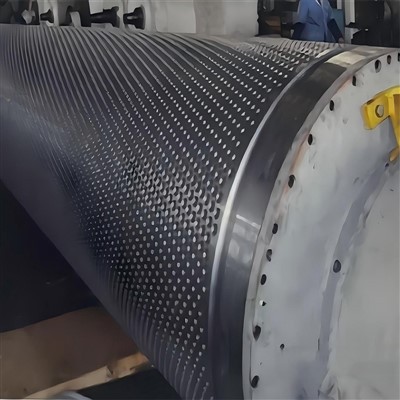
In addition to the educational benefits of sieve algorithms, it's also important to introduce students to different types of sieves. As a sieves supplier, I offer a wide range of sieves, including the Paper Machine Vibrating Screen and the Fibernet Screen.


The Paper Machine Vibrating Screen is designed to separate fibers and other materials in the paper - making process. It uses vibration to improve the efficiency of the screening process, ensuring that the final paper product has a consistent quality.
The Fibernet Screen, on the other hand, is used to screen and clean fibers in the pulp and paper industry. It can remove impurities and improve the quality of the fibers, which is essential for producing high - quality paper products.
By introducing students to these different types of sieves, we can help them understand the practical applications of sieves in the manufacturing industry and how sieve algorithms can be used to optimize these processes.
Conclusion
In conclusion, teaching sieve algorithms offers a multitude of educational benefits. It helps students understand computational efficiency, develop problem - solving skills, reinforce mathematical concepts, encourage creativity and innovation, and gain real - world and industry - relevant knowledge.
As a sieves supplier, I am committed to promoting the learning of sieve algorithms and the understanding of different types of sieves. If you are interested in incorporating sieve algorithms into your educational curriculum or if you are looking for high - quality sieves for your manufacturing process, I encourage you to contact me for more information. We can discuss how sieve algorithms and our range of sieves can benefit your educational institution or business.
References
- Cormen, T. H., Leiserson, C. E., Rivest, R. L., & Stein, C. (2009). Introduction to Algorithms. MIT Press.
- Knuth, D. E. (1997). The Art of Computer Programming, Volume 1: Fundamental Algorithms. Addison - Wesley.
- Sedgewick, R., & Wayne, K. (2011). Algorithms. Addison - Wesley.