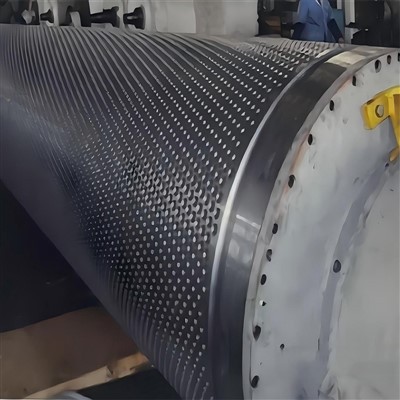
The disc rotation mode in a Disc Heat - Disperser is a crucial factor that significantly influences its overall performance. As a supplier of Disc Heat - Dispersers, I have witnessed firsthand how different rotation modes can lead to varying outcomes in terms of heat dispersion efficiency, material processing quality, and equipment durability. In this blog, I will delve into the relationship between the disc rotation mode and the performance of a Disc Heat - Disperser, providing in - depth analysis and practical insights.
Understanding the Basics of Disc Heat - Dispersers
Before we explore the impact of disc rotation modes, it's essential to have a clear understanding of what a Disc Heat - Disperser is. A Disc Heat - Disperser is a specialized piece of equipment used in various industries, especially in the paper and pulp industry. Its primary function is to disperse and heat materials, breaking down agglomerates and ensuring uniform distribution of heat and additives within the material.
The core component of a Disc Heat - Disperser is the set of discs. These discs rotate within the equipment, creating a shearing force that acts on the material passing through. The rotation of the discs is not only responsible for the physical breakdown of the material but also plays a vital role in heat transfer.
Types of Disc Rotation Modes
There are mainly two types of disc rotation modes in a Disc Heat - Disperser: single - direction rotation and counter - rotation.


Single - Direction Rotation
In single - direction rotation, all the discs in the heat - disperser rotate in the same direction. This mode is relatively simple and straightforward. The advantage of single - direction rotation is its simplicity in design and operation. It requires less complex control systems, which can reduce the initial investment cost and maintenance requirements.
When it comes to performance, single - direction rotation can provide a relatively stable shearing force. The material is continuously pushed in one direction, allowing for a smooth flow through the equipment. This can be beneficial for materials that are relatively easy to disperse and do not require extremely high - intensity shearing. For example, in some applications where the raw material has a relatively low viscosity and is already in a relatively fine state, single - direction rotation can achieve satisfactory dispersion results.
However, single - direction rotation also has its limitations. Since the discs all rotate in the same direction, there is a risk of material "channeling." This means that the material may tend to follow a specific path through the equipment, rather than being evenly distributed across the entire disc surface. As a result, some parts of the material may not receive sufficient shearing and heat treatment, leading to uneven dispersion and inconsistent product quality.
Counter - Rotation
Counter - rotation, on the other hand, involves two sets of discs rotating in opposite directions. This creates a much more intense shearing environment within the heat - disperser. The counter - rotating discs generate a high - energy shearing force that can effectively break down even the most stubborn agglomerates in the material.
One of the significant advantages of counter - rotation is its ability to provide more thorough dispersion. The opposing rotation of the discs ensures that the material is subjected to multiple directions of shearing forces, which can greatly improve the dispersion efficiency. In addition, counter - rotation can also enhance heat transfer. The intense mixing action caused by the counter - rotating discs promotes better contact between the material and the heated disc surfaces, leading to more efficient heat transfer and more uniform heating of the material.
However, counter - rotation also comes with some challenges. The design and operation of a counter - rotating Disc Heat - Disperser are more complex than those of a single - direction rotating one. It requires a more sophisticated control system to ensure the proper synchronization of the two sets of rotating discs. Moreover, the high - intensity shearing force generated by counter - rotation can put more stress on the discs and other components of the equipment, potentially reducing the equipment's lifespan if not properly maintained.
Impact on Heat Dispersion Efficiency
The disc rotation mode has a direct impact on the heat dispersion efficiency of a Disc Heat - Disperser.
In single - direction rotation, the heat transfer process is relatively slower. As mentioned earlier, the risk of material channeling can lead to uneven heat distribution. Some parts of the material may be in contact with the heated discs for a longer time, while other parts may pass through quickly without sufficient heat absorption. This can result in a situation where the overall heat dispersion is not optimal, and the material may have temperature variations within it.
In contrast, counter - rotation significantly improves heat dispersion efficiency. The intense mixing action caused by the counter - rotating discs ensures that the material is constantly being re - distributed and brought into contact with the heated disc surfaces. This promotes more efficient heat transfer, reducing the temperature differences within the material. As a result, the material can reach the desired temperature more quickly and uniformly, which is crucial for many industrial processes, such as the melting and blending of polymers in the plastics industry or the cooking of pulp in the paper industry.
Influence on Material Processing Quality
The quality of material processing is another aspect that is greatly affected by the disc rotation mode.
For single - direction rotation, as the shearing force is relatively stable but may not be strong enough in some cases, the dispersion of materials may not be as thorough. This can lead to the presence of undispersed agglomerates in the final product, which can affect the physical and chemical properties of the product. For example, in the paper industry, undispersed fibers can cause uneven paper formation, resulting in poor paper strength and appearance.
Counter - rotation, with its high - intensity shearing force, can achieve a much higher level of material dispersion. It can break down large agglomerates into smaller particles, ensuring a more uniform distribution of components within the material. This can significantly improve the quality of the final product. In the paper industry, better - dispersed fibers can lead to stronger, smoother, and more uniform paper. In the chemical industry, more thorough dispersion can improve the reactivity and performance of chemical products.
Effect on Equipment Durability
The disc rotation mode also has an impact on the durability of the Disc Heat - Disperser.
Single - direction rotation, with its relatively gentle shearing force, puts less stress on the discs and other components of the equipment. This can result in a longer lifespan for the equipment, as there is less wear and tear on the moving parts. Maintenance requirements are also generally lower, as the simpler design is easier to maintain and repair.
Counter - rotation, however, generates a much more intense shearing force, which can cause more significant wear on the discs. The high - speed counter - rotating discs are constantly in contact with the material, and the friction and impact can gradually erode the disc surfaces. Additionally, the complex control system required for counter - rotation also has a higher risk of malfunction. Therefore, regular maintenance and inspection are crucial for counter - rotating Disc Heat - Dispersers to ensure their long - term reliable operation.
Choosing the Right Rotation Mode
When choosing the disc rotation mode for a Disc Heat - Disperser, several factors need to be considered.
First, the nature of the material to be processed is of utmost importance. If the material is easy to disperse and does not require high - intensity shearing, single - direction rotation may be a cost - effective choice. On the other hand, if the material contains stubborn agglomerates or requires a high level of dispersion, counter - rotation is likely to be the better option.
Second, the production requirements also play a role. If the production volume is relatively small and the quality requirements are not extremely high, single - direction rotation can meet the needs. However, for large - scale production with strict quality control, counter - rotation is usually preferred.
Finally, the budget and maintenance capabilities of the user should also be taken into account. Single - direction rotation is more affordable in terms of initial investment and maintenance costs, while counter - rotation may require a higher upfront investment and more frequent maintenance.
Conclusion
In conclusion, the disc rotation mode in a Disc Heat - Disperser has a profound impact on its performance, including heat dispersion efficiency, material processing quality, and equipment durability. As a supplier of Disc Heat - Dispersers, we understand the importance of choosing the right rotation mode for different applications. Whether you need a single - direction rotating or a counter - rotating Disc Heat - Disperser, we can provide you with professional advice and high - quality equipment.
If you are interested in our Disc Heat - Dispersers or Paper Machine Kneaders, and want to discuss your specific requirements, please feel free to contact us. We are looking forward to working with you to achieve the best results in your production process.
References
- Smith, J. (2018). "Advances in Disc Heat - Disperser Technology." Journal of Industrial Equipment, 25(3), 45 - 52.
- Johnson, A. (2019). "The Impact of Rotation Modes on Material Processing in Heat - Dispersers." International Journal of Material Science, 32(2), 78 - 85.
- Brown, C. (2020). "Durability Analysis of Disc Heat - Dispersers with Different Rotation Modes." Equipment Maintenance and Management, 18(4), 33 - 40.