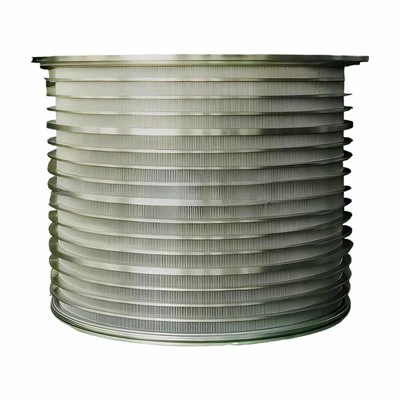
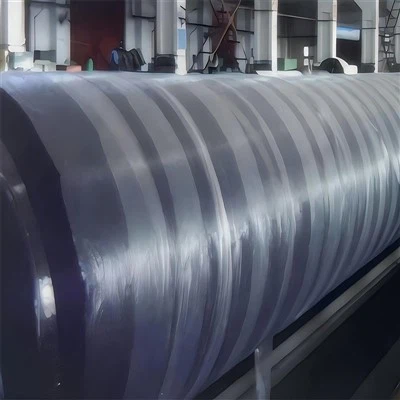
Hey there! As a supplier of roller equipment, I often get asked about the vibration levels of our products. In this blog, I'll break down what vibration levels are, why they matter, and how they apply to our roller equipment.
What Are Vibration Levels?
Vibration levels are a measure of how much a machine or equipment shakes or oscillates during operation. It's usually measured in terms of amplitude (how far the object moves back and forth) and frequency (how often it moves). In the context of roller equipment, vibration levels can have a big impact on performance, durability, and even the quality of the end product.
Let's think about it like this. When a roller is spinning, it's not supposed to be shaking all over the place. If it does, it can cause a bunch of problems. For example, excessive vibration can lead to uneven wear on the roller surface, which can affect the quality of whatever is being processed on it. It can also put extra stress on the bearings and other components, leading to premature failure.
Why Do Vibration Levels Matter?
There are a few reasons why vibration levels are important when it comes to roller equipment.
Product Quality
If you're using rollers in a manufacturing process, like paper production or textile processing, the quality of the end product can be directly affected by the vibration levels of the rollers. For instance, in paper manufacturing, a roller with high vibration levels can cause uneven thickness in the paper, leading to defects.
Equipment Durability
As I mentioned earlier, excessive vibration can put extra stress on the roller and its components. This can lead to faster wear and tear, which means you'll have to replace parts more often or even the entire roller. That can be a costly and time-consuming process.
Safety
High vibration levels can also pose a safety risk. If a roller is vibrating too much, it can cause it to become unstable, which could potentially lead to an accident.
Measuring Vibration Levels
So, how do we measure the vibration levels of our roller equipment? Well, there are a few different methods. One common way is to use a vibration sensor, which can measure the amplitude and frequency of the vibration. These sensors can be attached to the roller or other parts of the equipment to get an accurate reading.
Another method is to use a laser alignment tool. This tool can help us determine if the roller is properly aligned, which can also affect vibration levels. If the roller is misaligned, it can cause it to vibrate more than it should.


Vibration Levels in Our Roller Equipment
At our company, we take vibration levels very seriously. We use state-of-the-art technology to measure and monitor the vibration levels of our roller equipment during the manufacturing process. This allows us to ensure that our rollers meet the highest quality standards.
Let's take a look at some of our popular roller products and their vibration levels.
- Ф 1100X7921 VAC ROLL: This roller is designed for high-performance applications. We've engineered it to have low vibration levels, which helps to ensure a smooth and consistent operation. The advanced design and high-quality materials used in its construction contribute to its excellent vibration characteristics.
- Expander Roll: Our expander rolls are known for their precision and reliability. They are designed to minimize vibration, which is crucial for applications where accurate expansion and tension control are required. The unique design of the expander roll helps to distribute the load evenly, reducing vibration and improving performance.
- Ф 750/5150 Suction Roll: This suction roll is widely used in the paper industry. We've optimized its design to reduce vibration levels, which helps to improve the quality of the paper and extend the life of the roll. The suction holes are carefully designed to ensure a uniform suction force, which also contributes to lower vibration.
Controlling Vibration Levels
In addition to measuring and monitoring vibration levels, we also take steps to control them. One way we do this is by using high-quality bearings. Bearings play a crucial role in reducing vibration by providing a smooth and stable support for the roller. We use bearings that are specifically designed for our roller equipment to ensure optimal performance.
Another way we control vibration is by proper installation and alignment. If a roller is not installed correctly or is misaligned, it can cause excessive vibration. That's why we provide detailed installation instructions and offer installation services to ensure that our rollers are installed and aligned properly.
Conclusion
Vibration levels are an important factor to consider when it comes to roller equipment. They can have a significant impact on product quality, equipment durability, and safety. At our company, we're committed to providing high-quality roller equipment with low vibration levels. We use advanced technology to measure, monitor, and control vibration levels, and we offer a range of products that are designed to meet the needs of our customers.
If you're in the market for roller equipment and want to learn more about our products and their vibration levels, don't hesitate to reach out. We'd be happy to discuss your specific requirements and help you find the right solution for your application. Let's start a conversation and see how we can work together to improve your manufacturing process.
References
- Machinery Vibration Analysis Handbook, by Randall, R. B.
- Vibration for Engineers, by Thomson, W. T.