Hey there! As a supplier of dispersing systems, I've been getting a lot of questions lately about the difference between dispersing systems in liquids and gases. So, I thought I'd take a moment to break it down for you.
First off, let's talk about what a dispersing system is. In simple terms, a dispersing system is a setup that helps to distribute one substance evenly within another. This can be super useful in a whole bunch of industries, from food and beverage to paper manufacturing.
Dispersing Systems in Liquids
When we're dealing with a dispersing system in a liquid, we're typically looking at something like mixing two or more liquids together, or getting solid particles to spread out uniformly in a liquid. For example, in the food industry, you might use a dispersing system to mix flavors and colors evenly into a beverage. In the pharmaceutical industry, it could be used to disperse active ingredients in a liquid medicine.
One of the key characteristics of a liquid dispersing system is the viscosity of the liquid. Viscosity refers to how thick or thin a liquid is. If you're trying to disperse something in a high - viscosity liquid, like honey, it's going to be a lot more challenging than in a low - viscosity liquid, like water. You'll need a more powerful dispersing system to overcome the resistance of the thick liquid and get everything mixed properly.
Another important factor is the solubility of the substance you're trying to disperse. If the substance is highly soluble in the liquid, it'll be easier to get it to spread out. But if it's not very soluble, you might need to use special techniques or additives to help with the dispersion.
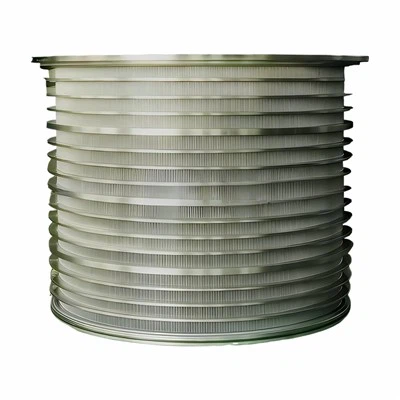
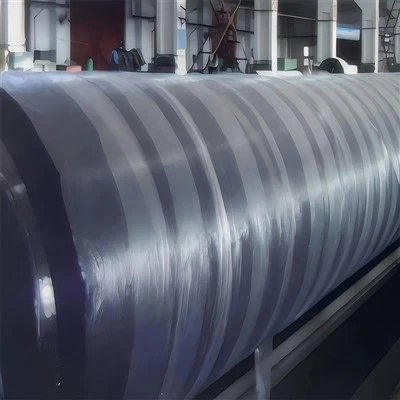
Let's take a look at some of the equipment we offer for liquid dispersing systems. Our Paper Machine Kneader is a great example. It's designed to work with pulp and other materials in the paper - making process. The kneader uses a combination of mechanical force and mixing action to break down fibers and disperse them evenly in the liquid pulp. This helps to improve the quality of the paper produced.
Dispersing Systems in Gases
Now, let's switch gears and talk about dispersing systems in gases. When we're working with gases, we're usually looking at things like getting fine particles to spread out in the air, or mixing different gases together. This is important in industries like environmental science, where you might need to disperse pollutants for testing, or in the chemical industry, for processes like gas - phase reactions.
One of the big differences between gas and liquid dispersing systems is the density of the medium. Gases are much less dense than liquids, which means that the forces acting on the particles being dispersed are different. In a gas, particles are more likely to be affected by Brownian motion, which is the random movement of particles due to collisions with gas molecules. This can both help and hinder the dispersion process. On one hand, it can help to spread out the particles naturally. On the other hand, it can make it harder to control the dispersion and get a uniform distribution.
The flow rate of the gas is also a crucial factor. A high - flow gas stream can carry particles more quickly, but it might also cause the particles to collide and agglomerate. A low - flow gas stream, on the other hand, might not be able to carry the particles far enough or disperse them evenly. You need to find the right balance for your specific application.
Our Disc Heat - Disperser is a great piece of equipment for gas - related dispersing applications. It uses a combination of heat and mechanical action to break down and disperse particles in a gas stream. This can be really useful in processes where you need to treat exhaust gases or disperse catalysts in a gas - phase reaction.
Comparing the Two
So, what are the main differences between dispersing systems in liquids and gases?
- Density and Viscosity: As I mentioned earlier, liquids are denser and more viscous than gases. This means that liquid dispersing systems generally need more power to operate because they have to overcome the greater resistance of the liquid. Gas dispersing systems can often rely more on natural forces like Brownian motion and gas flow.
- Solubility vs. Diffusion: In liquids, solubility plays a big role in how easily a substance can be dispersed. In gases, diffusion is the key concept. Diffusion is the process by which particles move from an area of high concentration to an area of low concentration. This is how substances spread out in a gas.
- Equipment Design: The equipment used for liquid and gas dispersing systems is often quite different. Liquid dispersing systems might use things like mixers, kneaders, and homogenizers. Gas dispersing systems, on the other hand, might use things like spray nozzles, fluidized beds, and our disc heat - dispersers.
Choosing the Right Dispersing System
When it comes to choosing the right dispersing system for your needs, there are a few things you need to consider. First, think about the nature of the substances you're working with. Are they liquids or gases? What are their properties, like viscosity, solubility, or density?
Next, consider the scale of your operation. Are you working on a small - scale laboratory project, or a large - scale industrial production? This will affect the size and capacity of the dispersing system you need.
Finally, think about your budget and the level of control you need. Some dispersing systems are more expensive but offer more precise control over the dispersion process. Others are more budget - friendly but might not give you as much control.
If you're still not sure which dispersing system is right for you, don't hesitate to reach out. We're here to help you find the perfect solution for your specific application. Whether you're in the paper industry, the chemical industry, or any other field that requires dispersing systems, we've got the expertise and the equipment to meet your needs.
In conclusion, understanding the difference between dispersing systems in liquids and gases is crucial for choosing the right equipment and getting the best results. Each type of system has its own unique challenges and requirements, but with the right knowledge and the right tools, you can achieve excellent dispersion in both liquids and gases.


If you're interested in learning more about our dispersing systems or have any questions about which one is right for you, feel free to contact us. We'd love to have a chat and discuss your specific needs. Let's work together to find the perfect dispersing solution for your business.
References
- McCabe, W. L., Smith, J. C., & Harriott, P. (2005). Unit Operations of Chemical Engineering. McGraw - Hill.
- Perry, R. H., & Green, D. W. (1997). Perry's Chemical Engineers' Handbook. McGraw - Hill.