As a respected supplier of the Screw Press Thickener, I'm often approached by clients eager to understand the precise discharge method of this remarkable piece of equipment. It's not just a simple technological curiosity; an in - depth knowledge of the discharge method is crucial for maximizing the efficiency and effectiveness of the thickening process. In this blog, I will comprehensively explain the discharge method of a screw press thickener, offering insights that are both scientifically sound and practically useful.
The Basics of a Screw Press Thickener
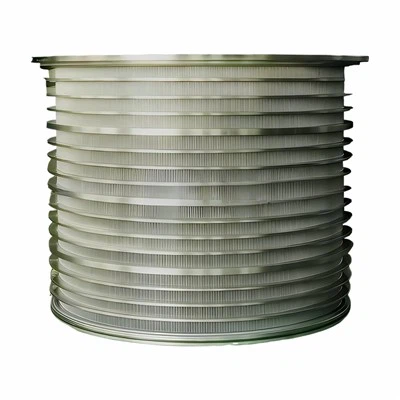
Before delving into the discharge method, it's essential to have a basic understanding of what a Screw Press Thickener is. Screw Press Thickener is a machine widely used in various industries, such as pulp and paper, wastewater treatment, and food processing. It operates on the principle of using a rotating screw to convey and compress material, gradually separating the liquid from the solid components.
The thickening process generally starts with the feed of a mixture containing solid and liquid into the inlet of the screw press thickener. As the screw rotates, it moves the material towards the discharge end while applying pressure. This pressure causes the liquid to be squeezed out through the perforated screen or other separation mechanisms surrounding the screw, leaving behind a thickened solid phase.
Types of Discharge in Screw Press Thickeners
Gravity Discharge
The most straightforward type of discharge method in a screw press thickener is gravity discharge. In this method, the thickened material falls out of the discharge end of the screw press under the influence of gravity. Once the screw has compressed the material sufficiently, and the liquid has been removed, the solid residue reaches the end of the screw flight path. Since there is no obstacle preventing it from moving downward, the thickened material simply drops out of the machine.
Gravity discharge is suitable for materials that have relatively high fluidity and can easily flow out under the force of gravity. It is a cost - effective and low - maintenance option as it does not require additional mechanical or pneumatic assistive devices. However, it may not be the best choice for materials that tend to stick to the screw or the discharge chute. In such cases, the material may not fall smoothly, leading to blockages and reduced efficiency.
Pneumatic Discharge
Pneumatic discharge is another common method used in screw press thickeners. In this approach, compressed air is used to assist the discharge of the thickened material. A blast of air is directed at the discharge end of the screw press, pushing the material out of the machine. This method is particularly useful for materials that are difficult to discharge by gravity alone, such as those with high viscosity or materials that have a tendency to adhere to the equipment.
Pneumatic discharge offers several advantages. It can ensure a more consistent and reliable discharge, reducing the risk of blockages. It also allows for better control of the discharge rate and can be easily integrated into an automated system. However, it requires a reliable source of compressed air, which means additional energy consumption and maintenance of the pneumatic system.
Mechanical Discharge
Mechanical discharge methods involve the use of additional mechanical components to facilitate the discharge of the thickened material. For example, some screw press thickeners are equipped with a discharge gate or a conveyor belt at the discharge end. The discharge gate can be opened or closed to control the flow of the material, while the conveyor belt can be used to transport the thickened material away from the screw press.
Mechanical discharge solutions are highly adaptable and can be customized according to the specific requirements of different applications. They are often used in large - scale industrial processes where a continuous and efficient discharge is essential. However, the addition of mechanical components increases the complexity of the equipment, which can result in higher initial investment and maintenance costs.
Factors Affecting the Discharge Method Selection
The choice of the discharge method for a screw press thickener depends on several factors.
Material Properties
The physical and chemical properties of the material being processed are of utmost importance. If the material is free - flowing and has low viscosity, gravity discharge may be sufficient. On the other hand, materials with high moisture content, high viscosity, or those that are sticky require more advanced discharge methods such as pneumatic or mechanical discharge.
For example, in the pulp and paper industry, pulp with a high fiber content and relatively low moisture can often be discharged by gravity. However, when dealing with pulp that has been treated with certain chemicals or has a higher moisture content, a pneumatic or mechanical discharge system may be necessary to ensure smooth operation.
Production Capacity
The required production capacity also plays a significant role in selecting the discharge method. In high - volume production facilities, a continuous and efficient discharge method is essential. Pneumatic or mechanical discharge methods are often preferred in such cases because they can handle larger volumes of material and maintain a consistent discharge rate. In contrast, for small - scale operations, gravity discharge may be adequate due to the lower production requirements.
Process Requirements
The specific requirements of the overall process can influence the choice of the discharge method. For instance, if the thickened material needs to be immediately transferred to another processing step, a conveyor - based mechanical discharge system may be the best option as it can directly transport the material to the next stage. If the process requires precise control of the discharge rate, a discharge gate or a pneumatic system with adjustable air pressure can be used.
Optimization of the Discharge Process
Once the appropriate discharge method has been selected, there are several ways to optimize the discharge process in a screw press thickener.
Regular Maintenance
Regular maintenance of the screw press thickener and its discharge components is crucial. This includes cleaning the screw, the discharge chute, and any pneumatic or mechanical devices. Accumulated material can cause blockages and reduce the efficiency of the discharge process. By keeping the equipment clean, we can ensure a smooth and continuous discharge.
Adjustment of Operating Parameters
The operating parameters of the screw press thickener, such as the screw speed and the pressure applied, can also affect the discharge process. By adjusting these parameters, we can achieve the desired thickening ratio and ensure that the material is discharged in the most efficient manner. For example, increasing the screw speed may increase the production capacity but may also affect the quality of the discharge if not properly adjusted.


Monitoring and Feedback
Implementing a monitoring system to track the discharge process is essential. This can include sensors to measure the flow rate, the moisture content of the discharged material, and any signs of blockages. Based on the feedback from these sensors, adjustments can be made to the operating parameters or the discharge method to optimize the process.
Conclusion and Call to Action
Understanding the discharge method of a screw press thickener is vital for industries that rely on this equipment for efficient solid - liquid separation. Whether it's the simple and cost - effective gravity discharge, the reliable pneumatic discharge, or the adaptable mechanical discharge, each method has its own advantages and applications. By carefully considering the material properties, production capacity, and process requirements, the most suitable discharge method can be selected and optimized for maximum efficiency.
If you are in need of a high - quality Screw Press Thickener or have any questions about the discharge method or other aspects of the equipment, I encourage you to reach out to us. We are a professional supplier with extensive experience in providing solutions for various industries. We can offer you customized advice and support based on your specific needs. Whether it's for a small - scale operation or a large - scale industrial project, we are committed to helping you achieve the best results with our equipment.
In addition to our Screw Press Thickener, we also offer other high - performance equipment such as the High - speed Washer. Our team of experts is ready to assist you in selecting the most appropriate equipment and ensuring its smooth operation. Get in touch with us today to start a discussion about your procurement needs.
References
- Smith, J. (2015). Principles of Solid - Liquid Separation in Industrial Processes. Industrial Press.
- Brown, A. (2018). Advances in Screw Press Technology. Journal of Separation Science, 41(5), 890 - 902.