The efficiency of a screw press thickener in thickening sludge is a crucial aspect that industries dealing with sludge management need to understand thoroughly. As a supplier of Link: Screw Press Thickener, I am well - versed in the technicalities and performance metrics of these machines.
Understanding the Basics of Sludge Thickening
Sludge thickening is a process that aims to increase the solids concentration of sludge by removing a significant portion of the water content. This process is essential in various industries such as wastewater treatment, pulp and paper, and food processing. By thickening sludge, the volume of the sludge is reduced, which in turn lowers the cost of transportation and subsequent disposal.
How a Screw Press Thickener Works
A screw press thickener operates on a relatively simple yet effective principle. The sludge is introduced into the feed hopper of the thickener. Inside the thickener, a rotating screw conveys the sludge along the length of the press. As the screw rotates, it compresses the sludge against a screen or filter. The water in the sludge is forced through the screen, leaving behind a thickened sludge with a higher solids content.
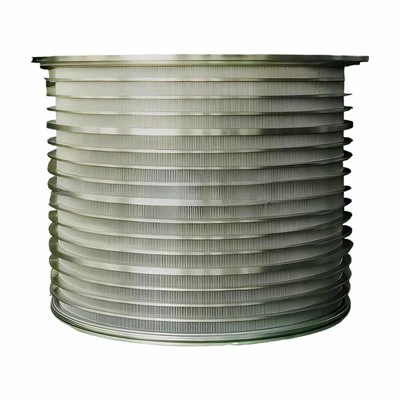
The design of the screw plays a crucial role in the efficiency of the thickening process. The pitch of the screw gradually decreases along its length, which increases the pressure on the sludge as it moves towards the discharge end. This increasing pressure helps in squeezing out more water from the sludge. Additionally, the screen or filter used in the screw press thickener is carefully selected to ensure maximum water removal while retaining the solids.
Factors Affecting the Efficiency of a Screw Press Thickener
Sludge Characteristics
The characteristics of the sludge being thickened have a significant impact on the efficiency of the screw press thickener. The type of sludge, its initial solids concentration, and its particle size distribution all play a role. For example, sludge with a high organic content may be more compressible, which can lead to better thickening efficiency. On the other hand, sludge with a high concentration of fine particles may clog the screen, reducing the efficiency of the thickener.
Screw Design and Speed
The design of the screw, including its pitch, diameter, and length, affects how effectively it can compress the sludge. A well - designed screw can ensure uniform compression and efficient water removal. The speed of the screw also matters. If the screw rotates too quickly, the sludge may not have enough time to be properly compressed, resulting in lower thickening efficiency. Conversely, if the screw rotates too slowly, the throughput of the thickener will be reduced.
Screen or Filter Quality
The screen or filter used in the screw press thickener is responsible for separating the water from the solids. A high - quality screen with the appropriate pore size can allow for efficient water passage while retaining the solids. If the screen is damaged or has the wrong pore size, it can lead to poor thickening efficiency or even cause solids to leak through.
Measuring the Efficiency of a Screw Press Thickener
The efficiency of a screw press thickener can be measured using several parameters. One of the most common metrics is the solids capture rate, which is the percentage of solids in the incoming sludge that are retained in the thickened sludge. A high solids capture rate indicates that the thickener is effectively separating the solids from the water.
Another important metric is the reduction in moisture content. This is calculated as the difference in the moisture content of the incoming sludge and the thickened sludge. A significant reduction in moisture content means that a large amount of water has been removed from the sludge, which is the primary goal of the thickening process.
Real - World Applications and Efficiency
In the wastewater treatment industry, screw press thickeners are widely used to thicken the sludge generated during the treatment process. The efficiency of these thickeners can have a significant impact on the overall cost and performance of the treatment plant. For example, a well - functioning screw press thickener can reduce the volume of sludge to be disposed of, which in turn reduces the cost of landfill or incineration.
In the pulp and paper industry, screw press thickeners are used to thicken the pulp before further processing. The efficiency of the thickening process can affect the quality of the final paper product. A higher solids concentration in the thickened pulp can lead to better paper strength and quality.
Comparison with Other Thickening Technologies
There are other thickening technologies available in the market, such as gravity thickeners and belt filter presses. While each technology has its own advantages, screw press thickeners offer several unique benefits in terms of efficiency.
Gravity thickeners rely on the natural settling of solids under the force of gravity. This process is relatively slow and may not be suitable for sludges with a low solids concentration or high organic content. Screw press thickeners, on the other hand, can achieve higher thickening rates in a shorter period of time.


Belt filter presses use a continuous belt to squeeze the sludge and remove water. While they can be effective, they require more maintenance and have a higher risk of clogging compared to screw press thickeners.
Our Screw Press Thickener Offerings
As a Link: Screw Press Thickener supplier, we offer a range of high - quality thickeners designed to meet the diverse needs of our customers. Our thickeners are built with precision engineering and the latest technology to ensure maximum efficiency.
We use high - quality materials in the construction of our screw press thickeners, which ensures durability and long - term performance. Our screws are designed to provide optimal compression, and our screens are carefully selected to offer the best balance between water removal and solids retention.
In addition to our standard models, we also offer customized solutions for customers with specific requirements. Our team of experts can work closely with you to understand your sludge characteristics and process needs, and then design a screw press thickener that is tailored to your exact specifications.
Related Equipment
In addition to Link: Screw Press Thickener, we also supply Link: High - speed Washer, which can be used in conjunction with the thickener in some processes. The high - speed washer can effectively clean and purify the sludge or pulp, further improving the overall efficiency of the treatment process.
Conclusion and Call to Action
The efficiency of a screw press thickener in thickening sludge is determined by multiple factors, including sludge characteristics, screw design, and screen quality. As a supplier of Link: Screw Press Thickener, we are committed to providing our customers with the most efficient and reliable thickening solutions.
If you are in need of a high - efficiency screw press thickener for your sludge management needs, we invite you to contact us for more information. Our team of experts will be happy to discuss your requirements and provide you with a customized solution that meets your specific needs and budget.
References
Folarin, B. A., & Choi, J. (2019). A Review on Sludge Thickening Technologies: Current Status, Challenges, and Future Perspectives. Journal of Environmental Management, 247, 109232.
Metcalf & Eddy, Inc., Tchobanoglous, G., Stensel, H. D., & Tchobanoglous, G. (2014). Wastewater Engineering: Treatment and Resource Recovery. McGraw - Hill Education.
Wang, J., Yang, Y., & Li, Y. (2018). Performance and mechanism of sludge thickening by a novel screw press thickener. Environmental Technology, 39(19), 2497 - 2505.