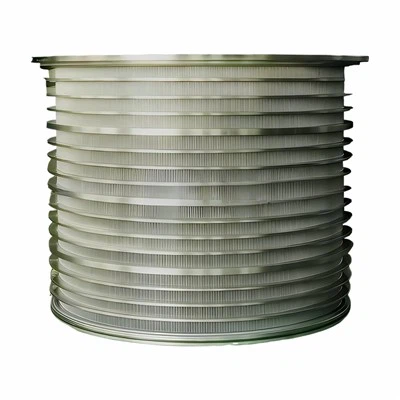
Hey there, paper industry enthusiasts! I'm a supplier of Paper Machine Kneader, and today I want to dive into an interesting topic: what's the impact of the kneading speed on the paper's smoothness in a paper machine kneader?
First things first, let's understand what a paper machine kneader does. It's a crucial piece of equipment in the papermaking process. Its main job is to break down and disperse fibers in the pulp, making the pulp more homogeneous. This helps in creating paper with better quality and properties.
Now, let's talk about kneading speed. The kneading speed refers to how fast the kneading action occurs in the machine. It's measured in revolutions per minute (RPM) in many cases. Different kneading speeds can have a significant effect on the paper's smoothness.
When the kneading speed is relatively low, say around 50 - 100 RPM, the fibers in the pulp have more time to interact gently. This slow kneading allows the fibers to align in a more orderly manner. As a result, the surface of the paper formed from this pulp tends to be smoother. The slow movement gives the fibers a chance to lay flat and bond well with each other, reducing the roughness on the paper surface. However, there's a downside. A low kneading speed means the production rate is slower. In a large - scale paper mill, this can lead to lower overall output, which might not be cost - effective in the long run.


On the other hand, a high kneading speed, for example, above 300 RPM, has its own characteristics. The high - speed kneading can break the fibers more aggressively. While it can quickly disperse impurities in the pulp, it may also cause the fibers to be cut into shorter lengths. Shorter fibers are less able to form a smooth and continuous surface on the paper. The paper may end up with a rougher texture because the broken fibers don't align as neatly as they do at lower speeds. But high - speed kneading can increase the production capacity of the paper machine. More pulp can be processed in a shorter time, which is beneficial for meeting large - scale production demands.
So, finding the right kneading speed is a bit of a balancing act. It depends on the type of paper you're making. For high - end printing paper, where smoothness is of utmost importance, a lower kneading speed might be preferred. This ensures that the paper has a surface that can hold ink well and produce sharp, clear images. For packaging paper, where strength and production speed are more critical, a higher kneading speed could be a better choice, even if it sacrifices a bit of smoothness.
Another factor to consider is the type of pulp used. Different pulps, such as hardwood pulp and softwood pulp, respond differently to kneading speeds. Hardwood pulp fibers are generally shorter and stiffer. A slightly higher kneading speed might be needed to achieve good dispersion, but care must be taken not to over - break the fibers. Softwood pulp, on the other hand, has longer fibers. A lower kneading speed can help maintain the fiber length and promote better smoothness.
In addition to the direct impact on fiber alignment and length, the kneading speed also affects the temperature and pressure inside the kneader. At high speeds, more friction is generated, which can increase the temperature. Higher temperatures can change the physical properties of the pulp, such as its viscosity. This can, in turn, influence the way the fibers interact and the final smoothness of the paper.
Let's talk about some real - world scenarios. In a small - scale artisanal paper - making operation, where quality and uniqueness are key, the operator can afford to use a lower kneading speed. They can take their time to ensure the paper has a perfect smoothness for high - end art prints or handmade cards. In contrast, a large commercial paper mill that supplies newspapers or packaging materials needs to focus on high - volume production. They might opt for a higher kneading speed, but they also need to use other techniques, like surface coating, to improve the paper's smoothness.
Now, if you're in the paper - making business and you're looking for a reliable Paper Machine Kneader, we've got you covered. Our kneaders are designed with the latest technology to offer a wide range of adjustable kneading speeds. You can fine - tune the speed according to your specific requirements, whether you're making ultra - smooth printing paper or strong packaging materials.
Apart from the kneader, we also offer Disc Heat - Disperser, which is another great addition to your paper - making process. It helps in further refining the pulp and improving the overall paper quality.
If you're interested in learning more about our products or have any questions regarding the impact of kneading speed on paper smoothness, don't hesitate to reach out. We'd love to have a chat and discuss how we can help you optimize your papermaking process. Whether you're a small - scale paper maker or a large industrial plant, we're here to support you in achieving the best paper quality possible. Contact us today and let's start a fruitful business relationship!
References
- 《Handbook of Pulp and Paper Technology》
- Research papers on papermaking processes from reputed academic journals in the field of pulp and paper engineering.