What is the maximum pulp consistency that a Toothed Deflaker can handle?
As a supplier of Toothed Deflakers, I often encounter questions from customers regarding the maximum pulp consistency that our equipment can handle. This is a crucial aspect, as the pulp consistency significantly impacts the performance and efficiency of the deflaking process in the pulp and paper industry.
Understanding Pulp Consistency
Pulp consistency refers to the ratio of the mass of dry pulp fibers to the total mass of the pulp - water mixture, usually expressed as a percentage. In the pulp and paper manufacturing process, different stages require different levels of pulp consistency. Low - consistency pulp (around 0.5% - 3%) is common in processes like hydraulic pulping and initial fiber suspension flow. Medium - consistency pulp (around 8% - 15%) is used in some refining and bleaching operations, while high - consistency pulp (above 15% and can go up to 35% or more) is typically associated with energy - efficient refining and certain special treatment processes.
Factors Affecting the Maximum Pulp Consistency of a Toothed Deflaker
1. Mechanical Design
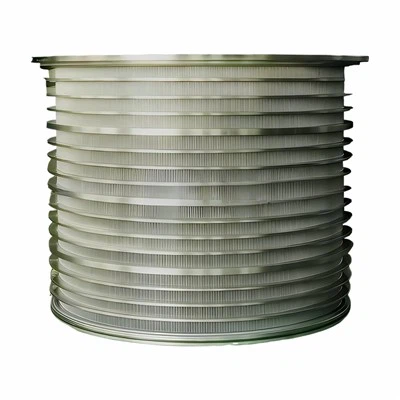
The design of a Toothed Deflaker plays a fundamental role in determining the maximum pulp consistency it can handle. Our Toothed Deflaker Toothed Deflaker is engineered with a robust and efficient tooth configuration. The shape, size, and spacing of the teeth are carefully calculated to ensure that they can effectively break up pulp bundles and knots even at relatively high consistencies. The rotor and stator of the deflaker are also designed to withstand the higher mechanical forces exerted by the thick pulp. A well - designed rotor can generate sufficient centrifugal force to move the high - consistency pulp through the deflaking zone, while the stator provides the necessary counter - force for effective deflaking.
2. Power and Drive System
The power and drive system of the Toothed Deflaker is another critical factor. Handling high - consistency pulp requires more power compared to low - or medium - consistency pulp. Our Toothed Deflakers are equipped with high - power motors that can deliver the necessary torque to operate the rotor at the required speed. The drive system is also designed to be efficient and reliable, ensuring smooth operation even under heavy loads. A powerful and stable power source allows the deflaker to maintain its performance when dealing with thick pulp, preventing stalling or excessive wear on the equipment.
3. Flow and Circulation
Proper flow and circulation of the pulp within the deflaker are essential for handling high - consistency pulp. At high consistencies, the pulp is more viscous and less fluid, which can lead to blockages and uneven processing if not managed properly. Our Toothed Deflaker is designed with a well - thought - out flow path. The inlet and outlet ports are sized and positioned to ensure a continuous and smooth flow of pulp through the deflaking chamber. Additionally, internal baffles and guides are used to direct the pulp flow, ensuring that all parts of the pulp are effectively deflaked.
The Maximum Pulp Consistency of Our Toothed Deflaker
Based on our extensive research and practical experience, our Toothed Deflaker can handle pulp consistencies of up to 12%. This is a significant advantage in the industry, as many similar deflakers on the market can only handle lower consistencies, typically in the range of 3% - 8%. Handling higher pulp consistency offers several benefits to our customers.
1. Energy Efficiency
Processing high - consistency pulp requires less water, which means less energy is needed for subsequent dewatering and drying processes. By using our Toothed Deflaker to handle pulp at up to 12% consistency, our customers can significantly reduce their energy consumption, leading to cost savings in the long run.
2. Space and Equipment Savings
Since less water is involved in the high - consistency deflaking process, the overall volume of the pulp - water mixture is reduced. This allows for smaller equipment sizes and less floor space requirements in the pulp and paper mill. Additionally, fewer pumps and pipes are needed to transport the pulp, further reducing capital and operating costs.
3. Improved Fiber Quality
High - consistency deflaking can have a positive impact on fiber quality. The mechanical action of the Toothed Deflaker at higher consistencies can more effectively separate individual fibers from pulp bundles and knots, resulting in a more uniform fiber distribution. This can improve the strength and quality of the final paper products.
Comparison with Other Refining Equipment
In addition to our Toothed Deflaker, we also offer other refining equipment such as the KZM Series Conical Refiner and the DD Series Double Disc Refiner. Each type of equipment has its own advantages and is suitable for different pulp consistencies and processing requirements.
The KZM Series Conical Refiner is designed for medium - to high - consistency refining. It can handle pulp consistencies in the range of 8% - 20%. This refiner is particularly effective in improving fiber fibrillation and strength development. The conical shape of the refiner plates allows for a gradual and efficient refining process, making it suitable for a wide range of pulp types.
The DD Series Double Disc Refiner is commonly used for low - to medium - consistency refining. It can handle pulp consistencies of around 3% - 6%. This refiner is known for its high - speed refining action, which can quickly break down pulp fibers and improve the pulp's freeness. However, due to its design, it is not as suitable for handling high - consistency pulp as our Toothed Deflaker.
Conclusion and Call to Action
In conclusion, the maximum pulp consistency that a Toothed Deflaker can handle is an important consideration for pulp and paper manufacturers. Our Toothed Deflaker, with its ability to handle pulp consistencies of up to 12%, offers significant advantages in terms of energy efficiency, space savings, and fiber quality improvement.


If you are in the pulp and paper industry and are looking for high - quality deflaking and refining equipment, we invite you to contact us for more information. We can provide you with detailed product specifications, performance data, and customized solutions based on your specific requirements. Let's work together to optimize your pulp and paper manufacturing process.
References
- Smith, J. (2018). Pulp and Paper Manufacturing: A Comprehensive Guide. Paper Industry Press.
- Johnson, R. (2019). Advances in Refining Equipment for the Pulp and Paper Industry. Journal of Pulp Technology, 25(3), 123 - 135.