Yo, folks! As a supplier of dispersing systems, I've been getting a lot of questions lately about the principle of sedimentation in these systems. So, I thought I'd break it down for you in a way that's easy to understand.
First off, let's talk about what a dispersing system is. In simple terms, it's a setup that helps to distribute particles evenly in a fluid. This can be super important in a bunch of industries, like papermaking, food processing, and chemical manufacturing. For example, in papermaking, a good dispersing system can ensure that the fibers are well - spread, leading to better - quality paper.
Now, sedimentation is a natural process that occurs when particles in a fluid start to settle down due to gravity. In a dispersing system, we're often trying to prevent or control this sedimentation to keep the particles uniformly dispersed.
Let's dig into the science behind it. The force that causes sedimentation is gravity. Every particle in a fluid experiences a gravitational force pulling it downwards. The magnitude of this force depends on the mass of the particle. Heavier particles will experience a stronger gravitational pull compared to lighter ones.


But it's not just gravity that's at play here. There are also other forces acting on the particles. One of these is the drag force. As a particle moves through a fluid, it has to push the fluid out of the way, and this creates a resistance or drag force. The drag force acts in the opposite direction of the particle's motion.
The relationship between the gravitational force and the drag force determines how fast a particle will sediment. According to Stokes' law, the terminal velocity of a spherical particle in a viscous fluid can be calculated using the following formula:
[v = \frac{2r^{2}(\rho_{p}-\rho_{f})g}{9\eta}]
Here, (v) is the terminal velocity of the particle, (r) is the radius of the particle, (\rho_{p}) is the density of the particle, (\rho_{f}) is the density of the fluid, (g) is the acceleration due to gravity, and (\eta) is the viscosity of the fluid.
From this formula, we can see a few key things. First, larger particles (bigger (r)) will sediment faster. Also, particles with a higher density compared to the fluid ((\rho_{p}-\rho_{f}) is larger) will have a higher sedimentation velocity. And if the fluid has a lower viscosity ((\eta) is smaller), the particles will sediment more quickly.
In a dispersing system, we want to keep the particles from sedimenting too fast. One way to do this is by increasing the viscosity of the fluid. We can add thickeners or other additives to make the fluid more viscous. This increases the drag force on the particles, slowing down their sedimentation.
Another approach is to use mechanical agitation. By constantly stirring or mixing the fluid, we can keep the particles in motion and prevent them from settling. This is where our dispersing systems come in handy.
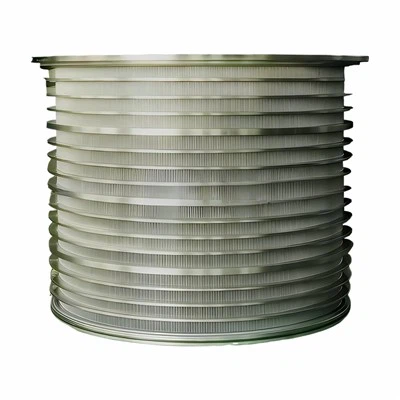
We offer a range of products designed to handle different types of dispersing needs. For instance, our Disc Heat - Disperser is a great option for applications where you need to disperse materials while also applying heat. It uses a series of discs to break up and distribute particles evenly in the fluid.
Our Paper Machine Kneader is specifically designed for the papermaking industry. It helps to knead and disperse the pulp fibers, ensuring a uniform distribution and better paper quality.
Now, let's talk about some real - world scenarios. In a food processing plant, sedimentation can be a big problem. For example, in a juice production line, if the pulp particles sediment at the bottom of the tanks, it can lead to inconsistent product quality. Our dispersing systems can be used to keep the pulp particles evenly dispersed throughout the juice, giving consumers a consistent and high - quality product.
In the chemical industry, sedimentation can cause issues in the production of paints and coatings. If the pigment particles settle, it can result in uneven color distribution in the final product. Our systems can be used to maintain a stable dispersion of the pigments, ensuring a uniform and high - quality finish.
So, if you're facing sedimentation problems in your dispersing processes, we've got the solutions. Whether you're in the papermaking, food, or chemical industry, our products can help you achieve better particle dispersion and improve the quality of your products.
If you're interested in learning more about our dispersing systems or want to discuss your specific needs, don't hesitate to reach out. We're always happy to have a chat and see how we can help you optimize your processes. Contact us for a free consultation and let's work together to solve your sedimentation challenges.
References
- Bird, R. B., Stewart, W. E., & Lightfoot, E. N. (2007). Transport Phenomena. John Wiley & Sons.
- McCabe, W. L., Smith, J. C., & Harriott, P. (2005). Unit Operations of Chemical Engineering. McGraw - Hill.