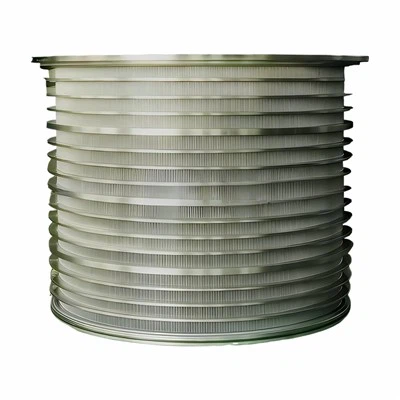
The toothed deflaker is a crucial piece of equipment in the pulp and paper industry. It plays a significant role in breaking up pulp bundles and improving the quality of the pulp. One of the key operational parameters of a toothed deflaker is the speed range of the rotor. In this blog, as a reliable toothed deflaker supplier, I will delve into the speed range of the rotor in a toothed deflaker, its importance, and how it impacts the overall performance of the equipment.
Understanding the Toothed Deflaker
Before we discuss the rotor speed range, let's briefly understand what a toothed deflaker is. A Toothed Deflaker is designed to disperse and defibrate pulp. It consists of a rotor and a stator, both of which are equipped with teeth. As the rotor rotates, the pulp passes through the gap between the rotor and the stator, and the teeth on the rotor and stator work together to break up the pulp bundles into individual fibers.
Importance of Rotor Speed in a Toothed Deflaker
The speed of the rotor in a toothed deflaker is a critical factor that affects the deflaking process. It determines the intensity of the mechanical action on the pulp, which in turn influences the quality of the deflaked pulp. A proper rotor speed can ensure efficient deflaking, reduce energy consumption, and improve the overall performance of the pulp and paper production line.
Factors Affecting the Rotor Speed Range
Several factors influence the appropriate speed range of the rotor in a toothed deflaker. These factors include the type of pulp, the consistency of the pulp, the desired quality of the deflaked pulp, and the design and capacity of the toothed deflaker itself.
Type of Pulp
Different types of pulp have different physical and chemical properties, which require different rotor speeds for optimal deflaking. For example, hardwood pulp generally has shorter and stiffer fibers compared to softwood pulp. As a result, a higher rotor speed may be required to break up the hardwood pulp bundles effectively. On the other hand, softwood pulp with longer and more flexible fibers may require a relatively lower rotor speed to avoid excessive fiber damage.
Pulp Consistency
The consistency of the pulp, which refers to the percentage of dry pulp in the pulp - water mixture, also affects the rotor speed. Higher pulp consistency means there are more fibers in a given volume, which requires a higher rotor speed to generate enough mechanical force to break up the pulp bundles. However, if the rotor speed is too high at high consistency, it may lead to excessive heat generation and fiber damage. Conversely, at lower pulp consistency, a lower rotor speed may be sufficient for deflaking.
Desired Pulp Quality
The quality requirements of the final deflaked pulp also play a role in determining the rotor speed. If a high - quality pulp with well - dispersed fibers is desired, a more precise control of the rotor speed is necessary. For instance, in applications where the pulp is used for high - grade paper production, a moderate and stable rotor speed may be required to ensure uniform fiber dispersion without excessive fiber cutting.
Equipment Design and Capacity
The design and capacity of the toothed deflaker itself limit the rotor speed range. Larger and more powerful deflakers can generally accommodate higher rotor speeds. The design of the rotor and stator teeth, as well as the overall mechanical structure of the deflaker, also influence the optimal speed range. For example, a deflaker with a more advanced tooth design may be able to operate at a wider speed range while maintaining efficient deflaking.
Typical Rotor Speed Range
In general, the rotor speed range of a toothed deflaker can vary from around 1000 RPM (revolutions per minute) to 3000 RPM. However, this is a broad range, and the actual speed used in a specific application may be much narrower.
For low - consistency pulp (around 2 - 4% consistency), the rotor speed may typically range from 1000 - 1500 RPM. At this consistency, the pulp is relatively fluid, and a lower speed can still provide sufficient mechanical action to break up the pulp bundles.
When dealing with medium - consistency pulp (around 4 - 8% consistency), the rotor speed usually falls in the range of 1500 - 2500 RPM. The higher consistency requires more intense mechanical force, so a higher rotor speed is needed.
For high - consistency pulp (above 8% consistency), the rotor speed may be set between 2000 - 3000 RPM. At high consistency, the fibers are more densely packed, and a higher speed is necessary to overcome the resistance and break up the pulp bundles effectively.
Impact of Rotor Speed on Deflaking Performance
The rotor speed has a direct impact on the deflaking performance in several aspects.
Fiber Dispersion
A proper rotor speed can ensure good fiber dispersion. When the rotor speed is within the appropriate range, the mechanical action between the rotor and stator teeth can break up the pulp bundles into individual fibers and disperse them evenly in the pulp suspension. If the speed is too low, the pulp bundles may not be broken up completely, resulting in poor fiber dispersion. On the other hand, if the speed is too high, the fibers may be cut into shorter lengths, which can affect the strength properties of the final paper product.
Energy Consumption
The rotor speed also affects energy consumption. Generally, a higher rotor speed requires more energy input. Therefore, it is important to find the optimal speed that can achieve efficient deflaking with the least amount of energy. By adjusting the rotor speed according to the pulp properties and deflaking requirements, energy consumption can be significantly reduced.
Wear and Tear of Equipment
The rotor speed can influence the wear and tear of the toothed deflaker. A very high rotor speed can cause excessive friction and impact between the rotor and stator teeth, leading to faster wear of the teeth and other components. This not only increases the maintenance cost but also reduces the service life of the equipment. Therefore, operating the deflaker at a reasonable rotor speed can help prolong the equipment's lifespan.
Complementary Equipment and Rotor Speed
In a pulp and paper production line, the toothed deflaker often works in conjunction with other refining equipment such as the KZM Series Conical Refiner and KTF Refiner. The rotor speed of the toothed deflaker needs to be coordinated with the operation of these complementary equipment.


For example, if the toothed deflaker is used before a conical refiner, the deflaked pulp should be in a suitable state for further refining in the conical refiner. Adjusting the rotor speed of the toothed deflaker can ensure that the pulp has the right fiber properties and consistency for the subsequent refining process.
Conclusion
In conclusion, the speed range of the rotor in a toothed deflaker is a complex parameter that is influenced by multiple factors. Understanding these factors and choosing the appropriate rotor speed is crucial for achieving efficient deflaking, improving pulp quality, reducing energy consumption, and prolonging the service life of the equipment.
As a toothed deflaker supplier, we have in - depth knowledge and rich experience in this field. We can provide you with high - quality toothed deflakers and professional technical support to help you determine the optimal rotor speed for your specific application. If you are interested in our toothed deflakers or have any questions about the rotor speed and deflaking process, please feel free to contact us for procurement and further discussion.
References
- "Pulp and Paper Handbook", TAPPI Press
- "Refining Technology in the Pulp and Paper Industry", Wiley - VCH Verlag GmbH & Co. KGaA